
Half-day rainforest walks occupy an awkward middle ground in travel planning. They’re long enough to feel substantive but short enough that you’re constantly aware of the clock. After years of moving through rainforests on varying schedules, I’ve learned that the difference between a satisfying half-day walk and a frustrating one usually comes down to understanding what you’re actually trying to experience and where you can realistically get it.
The first thing to accept is that a half-day walk in rainforest isn’t about covering distance. You’re working with roughly three to four hours of actual walking time once you factor in transportation to the trailhead, a brief orientation, and the need to return before dark or before your accommodation’s evening activities begin. That constraint shapes everything. You’re not trying to summit anything or reach a distant waterfall. You’re trying to be inside the rainforest long enough to stop noticing the noise and start noticing the details.
The best half-day walks I’ve encountered share a specific characteristic: they loop rather than out-and-back. A loop means you’re not retracing your steps, which preserves the psychological sense of progress even when the total distance is modest. It also means the landscape changes enough to keep your attention engaged. A three-mile loop feels more substantial than a three-mile out-and-back, even though they’re identical in distance.
Where Elevation Matters More Than You’d Think
Rainforests at different elevations feel like different ecosystems, and a half-day is actually the right amount of time to experience that contrast. Lowland rainforest walks tend to be hotter, muggier, and visually denser – the canopy is lower, the understory thicker, the air heavier. You’ll see more insects and amphibians but often feel more claustrophobic. Midland or montane rainforest walks, typically between 2,000 and 4,000 feet, offer more breathing room. The canopy is higher, visibility is better, and the temperature is noticeably cooler. The trade-off is that you’re working harder against elevation gain.
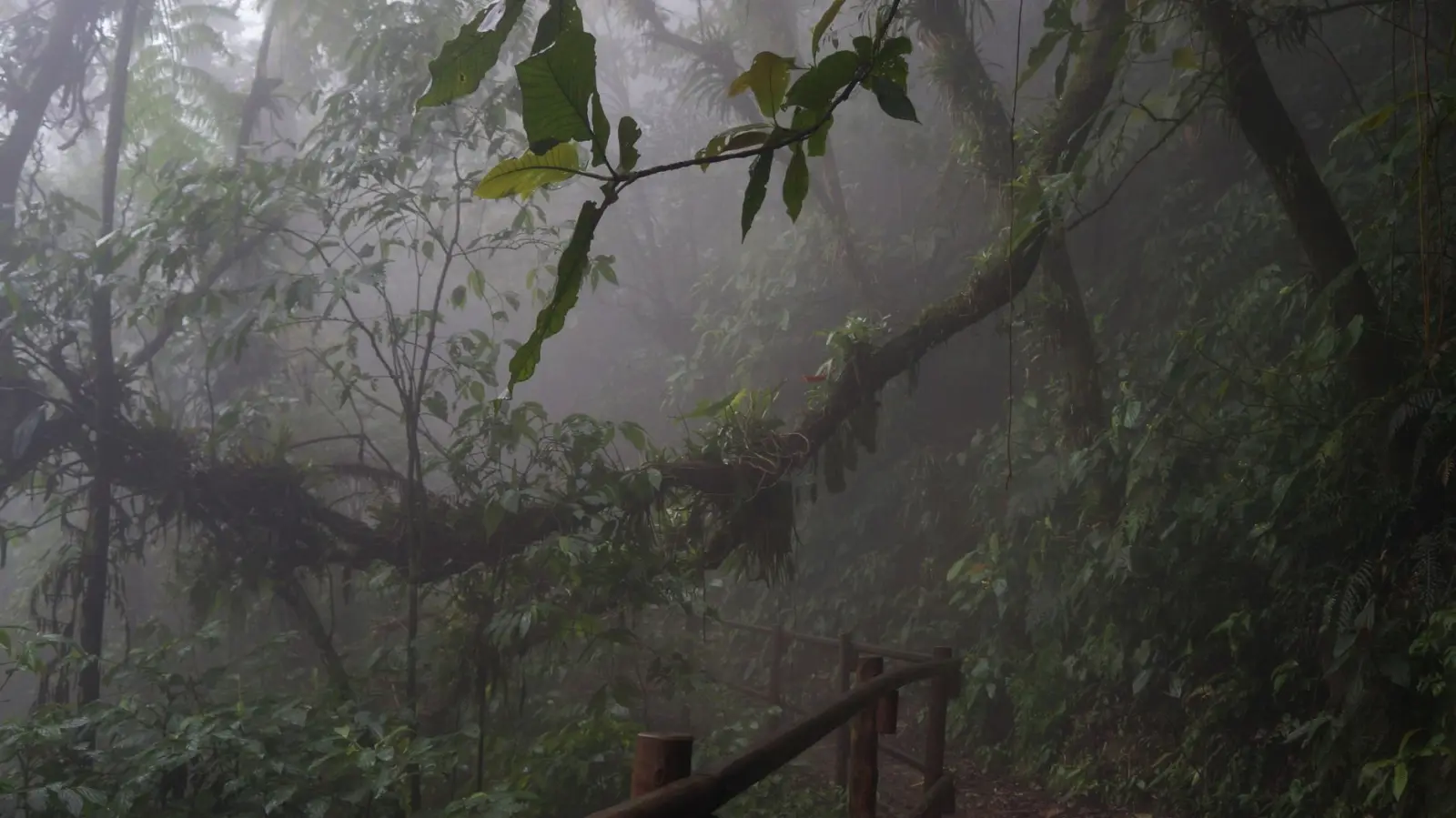
For a half-day specifically, I’ve found that midland rainforest works better than lowland. The elevation gain is usually modest enough that you’re not spent by hour two, but the altitude change means you’re actually moving through different vegetation zones. You might start in dense forest and emerge into cloud forest or elfin forest. That vertical movement, even if it’s only 500 or 800 feet, creates the sense of a journey rather than a walk through a uniform environment.
Lowland rainforest walks work best as half-days only if they’re structured around a specific feature – a waterfall, a river crossing, a wildlife platform. Without that focal point, lowland walks can feel repetitive and exhausting in the heat. The humidity doesn’t decrease as you walk, and the visual sameness of dense lowland forest can make time feel slower.
Timing and the Reality of Rainforest Light
Starting time matters more than most people realize. Rainforests don’t get bright until mid-morning, and they start dimming again by mid-afternoon. If you start a half-day walk at 1 p.m., you’re essentially walking in fading light for the last 45 minutes. The forest becomes harder to see, insects and birds are less active, and you’re mentally rushing to finish before dark. Starting at 7 or 8 a.m. means you’re walking during the forest’s most active period – birds are calling, insects are moving, the light is clearer. You finish by 11 a.m. or noon, which gives you the rest of the day for other activities.
Weather in rainforests is predictable in its unpredictability. Afternoon rain is common in many tropical regions, and a half-day morning walk gets you off the trail before the heaviest downpours. This isn’t just about comfort. Wet trails become slippery quickly, and the psychological experience of walking in heavy rain shifts from adventure to endurance. Morning walks also mean you’re not competing with afternoon tour groups, which matters in popular rainforest areas.
The Practical Matter of What You Can Actually See
Rainforest visibility is genuinely limited compared to temperate forests. The canopy is dense, the understory is thick, and most large animals are either nocturnal or avoid trails. A half-day walk won’t reliably deliver wildlife encounters, and I’ve learned not to frame it that way. What you will see are insects, birds if you’re quiet and patient, and the architecture of the forest itself – the way vines climb, how trees compete for light, what lives on the forest floor.
Guides make a significant difference here, but not always in the way people expect. A good rainforest guide doesn’t necessarily spot more animals. They explain what you’re looking at. They point out camouflaged insects, explain why certain plants grow where they do, and help you understand the forest as a system rather than a scenic backdrop. For a half-day walk, this context is more valuable than the number of species you encounter. A guide also handles logistics – they know the trail conditions, they know what time the light is best, they know which sections are most interesting.
Routes That Work Consistently
The Arenal area in Costa Rica has several half-day loops that work well because they move through different vegetation zones without excessive elevation gain. The trails around the Arenal Observatory Lodge offer forest immersion without the crowds of the national park, and the volcanic landscape means the forest composition changes noticeably even on a short walk.
In Ecuador, the trails around Mindo are structured for exactly this kind of half-day adventure. They’re close to Quito, they move through cloud forest, and the elevation means you’re not overheating. The birdwatching is legitimate without being the only reason to go.
The Daintree in Australia works for half-days because the rainforest there is visually distinct – the vegetation is different from tropical rainforests elsewhere, and the walks are well-maintained. The Cooper Creek Wilderness area has several loops that take two to three hours and feel complete rather than truncated.
Southeast Asian rainforests, particularly in Borneo and Peninsular Malaysia, have excellent half-day options. The trails around Kinabalu Park and the Sepilok area move through primary and secondary forest, and the biodiversity is high enough that you’re seeing something new regularly. The humidity is intense, but the trails are designed for exactly this duration.
What these places share is accessibility without sacrifice. You’re not on a heavily developed tourist trail that feels like a nature park. You’re also not on a remote expedition route that requires serious fitness or navigation skills. The sweet spot for a half-day rainforest walk is a trail that’s maintained enough to be safe and clear, but not so developed that it feels artificial.
The physical reality of a half-day rainforest walk is that you’ll be tired by the end, but not exhausted. You’ll have seen enough to feel like you’ve been in the rainforest, not just walked through a section of it. You’ll likely have questions about what you saw, which means the walk worked. And you’ll have energy left for the rest of your day, which matters when you’re traveling and have other things to do. That balance – substantive without being punishing – is what separates a good half-day rainforest walk from one that leaves you wishing you’d done something else.