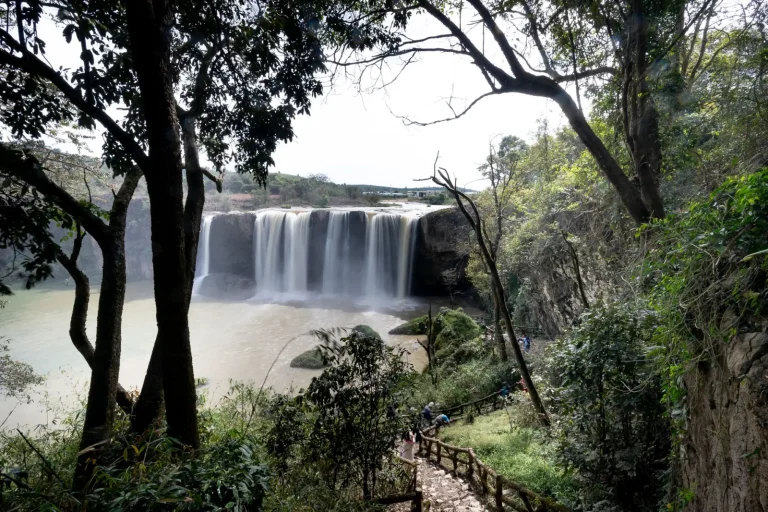

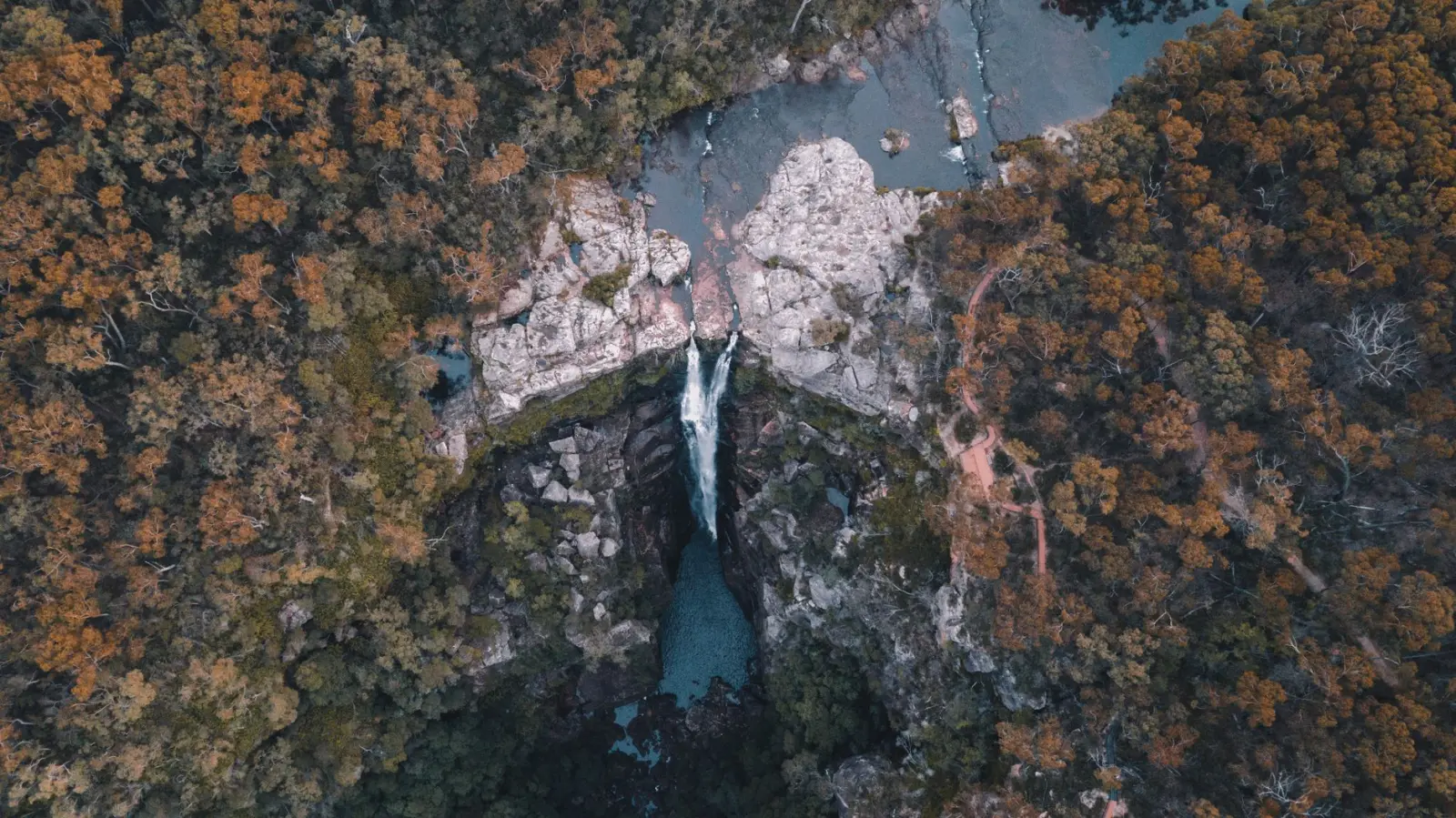
The forest around Minyon Falls sits in a pocket of northern New South Wales that feels removed from the usual coastal tourist routes. Most people come for the waterfall itself – a 100-metre drop into a dark pool – but the surrounding forest is where the walk actually happens, and it’s considerably more demanding than the distance alone suggests. I’ve walked this area dozens of times across different seasons, and the experience shifts noticeably depending on when you arrive and how prepared you are for what the terrain actually delivers.
The main approach involves descending into the Minyon Falls gorge, which means you’re committed to a significant elevation change in both directions. The descent is roughly 250 metres over about 1.5 kilometres, which sounds manageable until you’re actually on the track in humid subtropical forest with loose volcanic rock underfoot. The ascent on the return is where most people feel the real cost of the walk. By the time you’re climbing back up in the afternoon, fatigue compounds every step, and the forest’s steepness becomes less forgiving.
The Forest Floor and Navigation
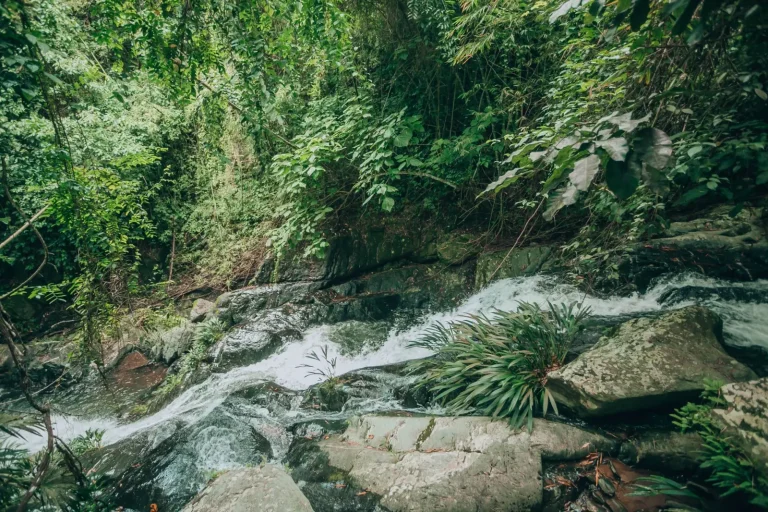
The walking surface changes depending on recent weather and maintenance. After rain, the volcanic basalt rock becomes genuinely slippery. I’ve seen experienced walkers lose their footing on sections that seemed straightforward in dry conditions. The forest floor itself is a mix of root systems, loose stone, and areas where erosion has created small channels that funnel water downslope. These aren’t dramatic obstacles, but they accumulate over the length of the walk and slow your pace more than you’d anticipate.
Navigation is straightforward if you stay on the main track, but the forest is dense enough that wandering off-trail becomes disorienting quickly. The canopy is thick – eucalypts, subtropical rainforest species, and dense understorey vegetation create a space where sky visibility is limited. Mobile signal is unreliable, so you’re not relying on real-time GPS correction. The established track is generally clear, but in places where maintenance has lapsed, the path becomes ambiguous. I’ve encountered walkers who took minor detours and spent 20 minutes reorienting themselves.
Timing and Heat Management
Starting early matters significantly. The forest provides shade, which is valuable, but the gorge itself holds moisture and stays cool even in summer. What catches people is the combination of sustained physical effort and the inability to cool down effectively while climbing. The ascent back up the gorge is where you’ll generate the most heat, and there’s limited opportunity to rest in a genuinely cool spot. The pool at the base of the falls is cold, but by the time you’ve finished swimming and need to climb, you’re already fatigued.
I’ve noticed that walkers who start after 9 or 10 in the morning often find themselves climbing out of the gorge in the hottest part of the afternoon. This isn’t just uncomfortable – it increases the risk of dehydration and poor decision-making on steep sections. The forest doesn’t offer many shaded rest spots on the ascent itself. You’re either moving or you’re standing still in a steep, humid environment with limited breeze. Carrying adequate water is non-negotiable, and most people underestimate how much they’ll drink on the return journey.
Seasonal Variation and Hazards
The forest changes character across seasons. In summer, the humidity is oppressive, and insects become more active. In winter, the rock dries out faster, but the forest floor can be slippery from moisture and decomposing leaf matter. Spring brings water runoff that can make the track more treacherous in certain sections. I’ve found that late autumn and early winter offer the most manageable conditions – cooler temperatures, lower humidity, and stable ground conditions.
Wildlife encounters are rare but worth acknowledging. Snakes are present, particularly in warmer months, though they’re typically encountered stationary on or near the track rather than aggressively. I’ve seen brown snakes and carpet snakes in the gorge area. The more common irritants are leeches in wet conditions and insects, particularly around the waterfall pool. Neither is dangerous, but leeches can be persistent and unsettling if you’re not expecting them.
What People Consistently Underestimate
The ascent is harder than the descent. This is obvious in theory but feels different when you’re experiencing it. Many walkers pace themselves poorly on the way down, arriving at the falls with energy reserves already depleted. The psychological shift from descending into a cool gorge to climbing back out in the afternoon heat is steeper than the actual slope.
Fitness requirements are moderate but specific. You don’t need to be an athlete, but you need sustained aerobic capacity and leg strength for climbing. The walk isn’t technical, but it’s relentless. Walkers with poor ankle stability or knee issues often struggle more than their overall fitness level would suggest, because the uneven volcanic rock demands constant micro-adjustments.
The forest itself is the walk, not just the backdrop. The appeal of Minyon Falls is the waterfall, but the experience is defined by moving through dense subtropical forest, managing heat and humidity, reading the track, and pacing yourself across an elevation change. If you’re thinking of it as a quick trip to see a waterfall, you’re misreading what the place demands. It’s a half-day commitment that requires planning and realistic self-assessment.