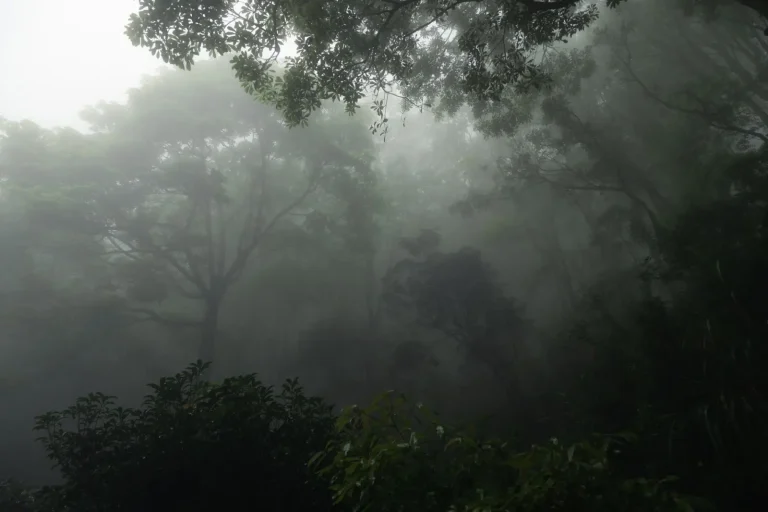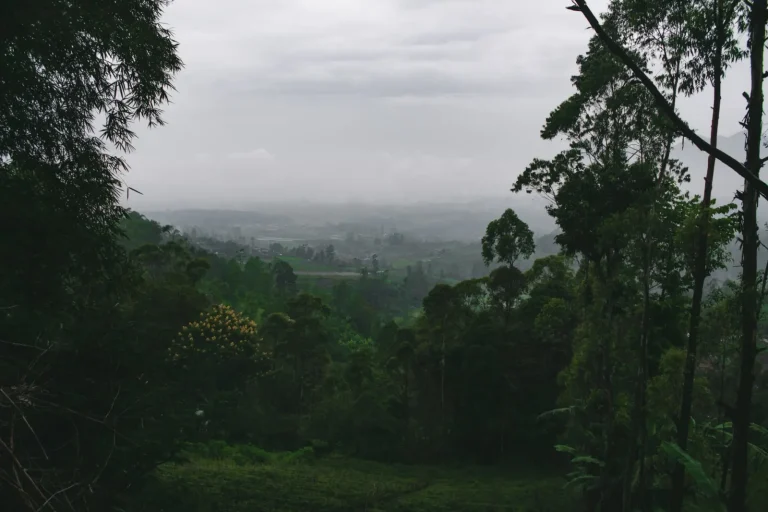

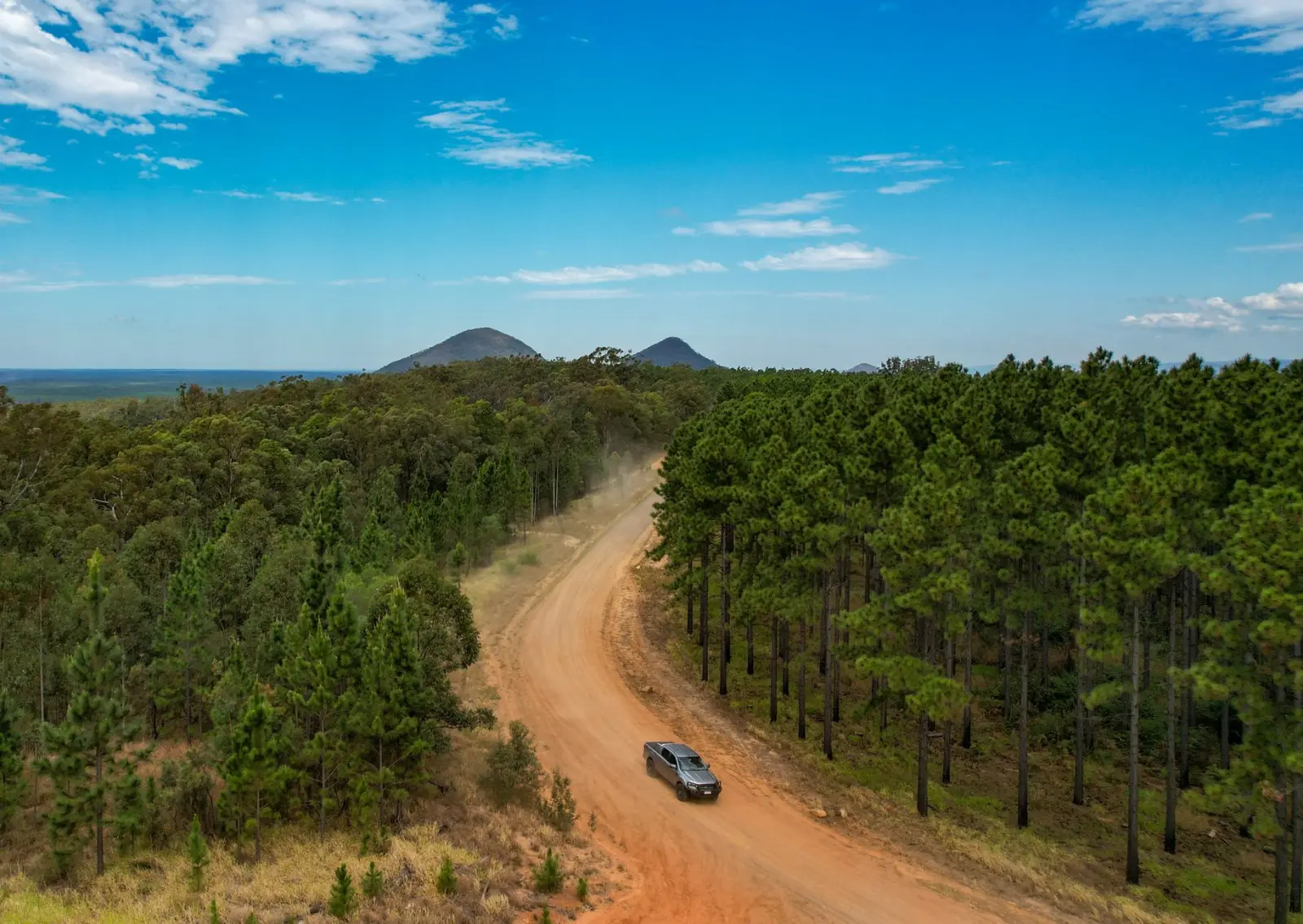
The bunya pine forests scattered across inland Queensland occupy a peculiar ecological niche that most visitors misunderstand. They are not the dense, impenetrable rainforests of the coast. Instead, they are open woodlands where massive conifers rise above a sparse understory, and the forest floor remains visible from a distance. After spending time moving through these landscapes – both in the wet season and during drought – you begin to understand why they persist in their current form and why they matter.
These forests exist in pockets across the Great Dividing Range, primarily in the Bunya Mountains and scattered locations inland from Toowoomba. The bunya pine itself, Araucaria bidwillii, is a living fossil of sorts. It has existed in this region for millions of years, surviving climate shifts that eliminated its relatives elsewhere. The trees are massive – reaching heights of 50 meters or more – and their thick, dark foliage creates a distinctive silhouette against Queensland’s sky. But what strikes you first when walking beneath them is the silence. The canopy is so dense that wind noise diminishes, and the forest absorbs sound in a way that open woodland does not.
Fire, Soil, and the Structure of Survival
The bunya forests owe their existence to a specific combination of rainfall, soil type, and fire history. The region receives adequate moisture – typically 1,200 to 1,600 millimeters annually – enough to support tall timber but not so much that rainforest species dominate entirely. The volcanic soils are rich in minerals, particularly in the Bunya Mountains, which gives the trees the nutrient base they need to grow to their impressive size.
Fire is the overlooked factor. These forests have burned repeatedly over thousands of years, and the bunya pine has adapted to survive it. The thick bark of mature trees resists fire damage, and the species regenerates after disturbance. However, the relationship is not simple. Frequent, low-intensity fires – the kind that occurred under Indigenous land management – maintained the open structure of these forests. They prevented the accumulation of dense undergrowth and allowed sunlight to reach the forest floor. When fire was excluded during the European settlement period, the understory became choked with smaller trees and shrubs, fundamentally altering the forest’s character. You can see this difference clearly when comparing managed areas to those where fire has been absent for decades.
What the Forests Look Like on the Ground
Visiting a bunya forest in person reveals details that photographs cannot convey. The ground is often carpeted with fallen needles, creating a soft, spongy surface that is pleasant to walk on but can be slippery when wet. The air has a distinctive smell – resinous, cool, and slightly mineral. In autumn, the bunya pines produce large, heavy cones that fall to the forest floor with considerable force. Historically, these cones were a food source for Indigenous peoples and early settlers, and they remain a notable feature of the landscape. Walking beneath fruiting trees requires some caution; a falling cone can cause serious injury.
The understory varies depending on location and recent fire history. In areas that have burned within the last 10 to 15 years, the understory is relatively open, with scattered shrubs and young trees. In areas protected from fire for longer, the understory becomes dense and difficult to navigate. This density changes the entire experience of moving through the forest. What feels like a pleasant walk in an open section becomes exhausting and claustrophobic in a choked section just a few hundred meters away.
The bunya pines themselves are not uniform in age or size. You find massive old trees, clearly hundreds of years old, standing alongside younger specimens of various ages. This age diversity is important ecologically because it means the forest is regenerating, but it also creates a visually complex landscape. There is no neat, even canopy layer. Instead, the forest has depth and variation, which is part of what makes it feel alive rather than managed.
Seasonal Shifts and Visitor Timing
The forests change noticeably between seasons, and when you visit matters. During the wet season – roughly November through March – the forest is lush and green, but access can be limited. Trails become muddy, and the combination of moisture and warmth creates ideal conditions for leeches and insects. The air is humid, and the temperature remains warm even in the early morning. Many visitors find the wet season less comfortable for extended exploration, though the forest is undeniably more vibrant.
The dry season, from May through September, is more popular with visitors. The trails are firmer, insects are less aggressive, and the temperature is cooler, particularly in the early morning and late afternoon. However, the forest also appears drier and less lush. The color palette shifts toward browns and grays, and the sense of abundance diminishes. This is also the season when fire risk increases, and some areas may be closed to the public during extreme fire danger periods.
Spring – September and October – is perhaps the most balanced time to visit. The forest is beginning to green up, the temperature is mild, and the trails are still in good condition. The bunya pines are not fruiting at this time, which means fewer falling cones and a slightly safer experience underfoot.
Practical Realities of Access and Movement
Getting to the bunya forests requires planning. The main accessible areas are in the Bunya Mountains, approximately 90 minutes inland from Toowoomba. The drive itself is winding and takes longer than the distance alone suggests. Once you arrive, parking is limited in some areas, and popular trails can become crowded, particularly on weekends. This is not a wilderness experience in the sense of being remote or rarely visited. It is a managed forest with infrastructure, and that infrastructure shapes how you experience the place.
Walking trails range from short, easy loops of 2 to 3 kilometers to longer routes of 8 kilometers or more. The terrain is generally not steep, but the forest floor can be uneven, with exposed roots and rocks. Fatigue accumulates faster than you might expect because of the uneven surface and the psychological effect of the dense surroundings. A trail that feels like it should take 90 minutes often takes two hours or more in practice.
The forest is also home to wildlife that you are unlikely to see but should be aware of. Snakes are present, though encounters are rare. Ticks are more common and more likely to affect your visit. Wearing long pants and checking yourself thoroughly after walking is standard practice. The forest is not dangerous in any dramatic sense, but it requires the kind of practical awareness that comes from understanding you are moving through habitat that belongs to other species.
The bunya forests persist because they are ecologically resilient and because they occupy a specific environmental niche that few other forest types can fill. They are not pristine or untouched – they have been shaped by fire, by Indigenous management, by European settlement, and by modern conservation efforts. What you experience when you walk through them is the result of all these forces working together. The forests are worth visiting not because they are spectacular in the way that a waterfall or a mountain vista is spectacular, but because they represent a particular way that a landscape can persist and adapt over deep time.