
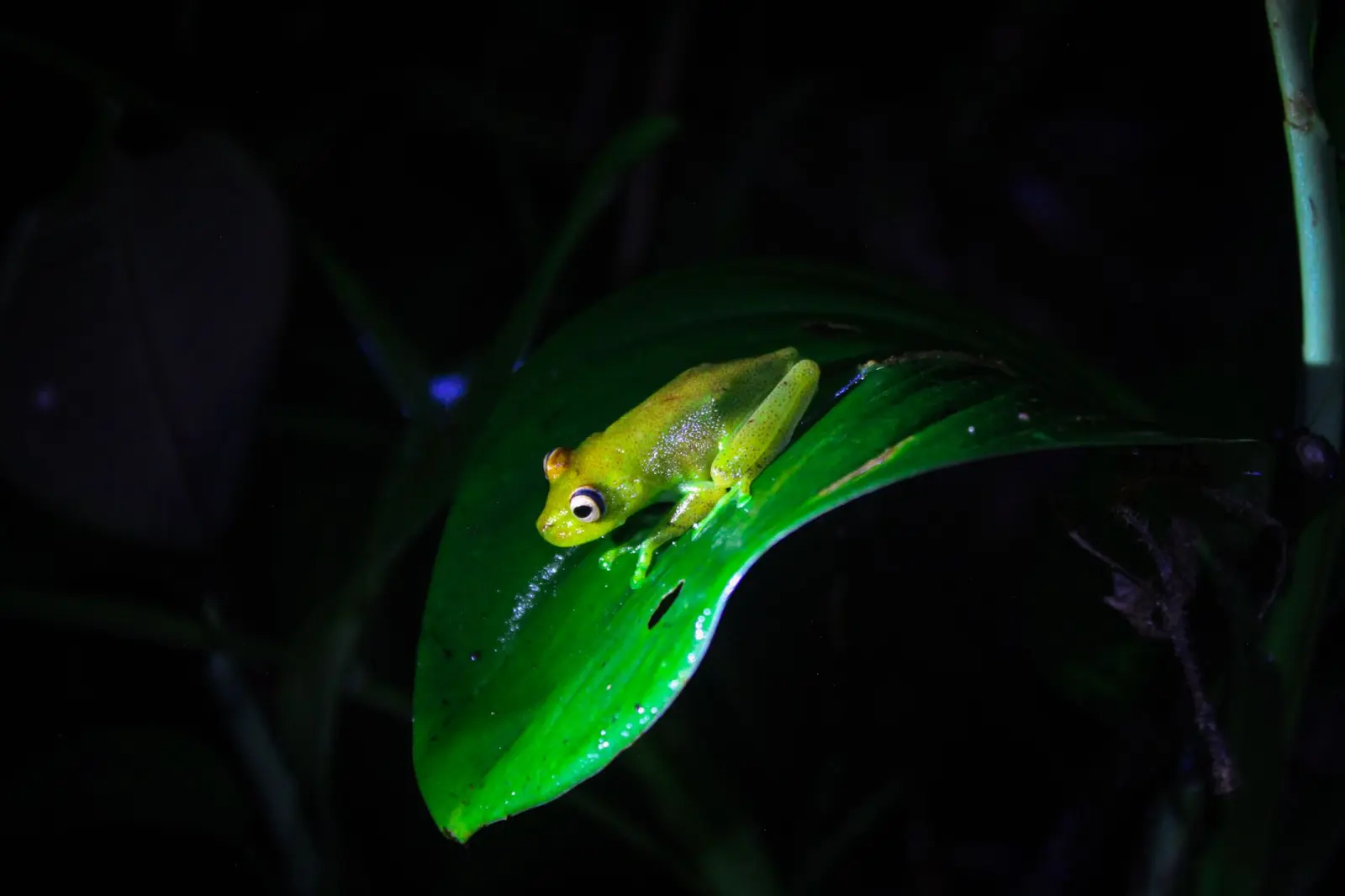
Spend enough time in a rainforest, and you begin to notice how much of the animal activity revolves around water. Not just drinking it, but living in it, breeding in it, and depending on its chemical composition in ways that seem almost fragile. Amphibians – frogs, salamanders, caecilians – are particularly sensitive to water conditions in ways that most land animals are not. Their permeable skin means they absorb water directly from their environment, and their aquatic or semi-aquatic life cycles make them vulnerable to contamination at every stage of development.
I’ve observed this firsthand in Central American rainforests, where a single tributary can support dozens of amphibian species, each with specific water requirements. When that water changes – whether through sedimentation, chemical pollution, or even subtle shifts in pH – the effect on local populations is often immediate and severe. Amphibians cannot simply relocate to cleaner water the way many other animals can. They are bound to their breeding sites by instinct and geography, and if those sites become unsuitable, the population often collapses.
Why Amphibians Are So Dependent on Water Quality
The relationship between amphibians and water goes far deeper than hydration. Most rainforest amphibians lay eggs in water or in moist microhabitats, and the tadpoles or developing larvae spend weeks or months in aquatic environments before metamorphosis. During this vulnerable period, they are exposed to whatever is in the water column. Dissolved oxygen levels, acidity, nutrient concentration, and the presence of toxins all directly influence survival rates and development speed.
The permeable skin that allows amphibians to breathe and absorb water is also their liability. Unlike fish, which have scales and gills designed to filter and process water, amphibians absorb substances directly through their skin. A fungal pathogen, a pesticide residue, or heavy metal can enter their bodies without any barrier. I’ve seen tadpole populations crash within days of water contamination that would barely register as a problem for fish in the same ecosystem.
Adult amphibians, too, depend on water quality for reproduction and survival. Many species must return to water to breed, and the condition of that water determines whether eggs develop normally, whether tadpoles reach the right size before metamorphosis, and whether emerging juveniles have the energy reserves to survive their first weeks on land. A degraded breeding site doesn’t just reduce reproduction – it can eliminate it entirely.
Sedimentation and Clarity: The Most Common Problem
In my experience, sedimentation is the single most common water quality issue affecting rainforest amphibians. Logging, agriculture, and even natural erosion from heavy rainfall can wash sediment into streams and small pools where amphibians breed. The water becomes cloudy, and the consequences cascade through the ecosystem.
Suspended sediment reduces light penetration, which slows algae growth and reduces oxygen production in the water. It also clogs the gills and feeding structures of tadpoles, making it harder for them to extract oxygen and filter food. Over time, tadpoles in heavily sedimented water grow more slowly, metamorphose at smaller sizes, and have lower survival rates. I’ve compared tadpole populations in clear streams to those in silted tributaries just a few kilometers away, and the difference in growth and development is striking.
Sediment also smothers the substrate where many amphibians lay eggs. Some species deposit eggs on rocks or vegetation just above the waterline, and a layer of fine silt can prevent water from reaching developing embryos or can physically bury them. Other species lay eggs directly in the substrate, and sedimentation can make those areas unsuitable for egg deposition.
Chemical Contamination and Acidity
Beyond sediment, chemical pollution poses a more insidious threat. Rainforests are increasingly adjacent to agricultural areas where fertilizers and pesticides drain into waterways. Nitrogen and phosphorus from agricultural runoff cause algal blooms, which deplete oxygen when they decompose. Pesticides, particularly insecticides, directly poison amphibians and their prey.
Acidity is another factor I’ve observed affecting amphibian populations. In some regions, acid rain or naturally acidic soils can lower water pH to levels that stress amphibian development. Eggs laid in acidic water may fail to develop normally, and even if tadpoles survive, they often show skeletal deformities or developmental delays. Different species have different tolerance ranges, so acidification can selectively eliminate certain species while others persist, shifting the composition of the amphibian community.
Heavy metals – mercury, lead, cadmium – accumulate in sediments and bioaccumulate in amphibians and their prey. I’ve documented populations with elevated heavy metal loads, and while the immediate effects may not be obvious, chronic exposure reduces immune function, impairs reproduction, and increases susceptibility to disease.
Temperature and Oxygen: The Overlooked Factors
Water temperature and dissolved oxygen are often overlooked, but they are critical. Rainforest streams are typically cool and well-oxygenated because of constant flow and shade from the canopy. When forests are cleared, streams warm up and oxygen levels drop. Amphibians adapted to cool, oxygen-rich water struggle in warmer conditions, and many species have narrow temperature tolerances.
Stagnant water – which can result from damming, beaver activity, or the creation of artificial pools – becomes oxygen-depleted and unsuitable for most amphibian larvae. I’ve seen breeding sites that were productive for decades become dead zones after water flow was disrupted. The amphibians simply stopped breeding there, moving to alternative sites if they existed, or disappearing from the area entirely.
Disease and Water Conditions
Water quality also influences disease susceptibility. The chytrid fungus that has devastated amphibian populations worldwide thrives in certain water conditions and spreads more readily in stressed populations living in poor-quality water. Amphibians in clean, well-oxygenated water with stable pH seem more resistant to infection, though the fungus can still establish itself. Those in degraded water succumb much more quickly.
Parasites and bacterial infections also increase in frequency when water quality declines. A weakened immune system from poor water conditions makes amphibians more vulnerable to pathogens that might otherwise be managed. I’ve observed this pattern repeatedly: as water quality deteriorates, disease prevalence increases, and population crashes accelerate.
The relationship between water quality and amphibian health is not linear or simple. It involves multiple stressors acting simultaneously, and the threshold at which a population becomes unstable varies by species, by season, and by the overall resilience of the population. What I’ve learned from years of field observation is that amphibians are not simply sensitive to water pollution – they are indicators of it. When amphibian populations decline, the water is almost always the problem. Restoring it is the only reliable path to recovery.