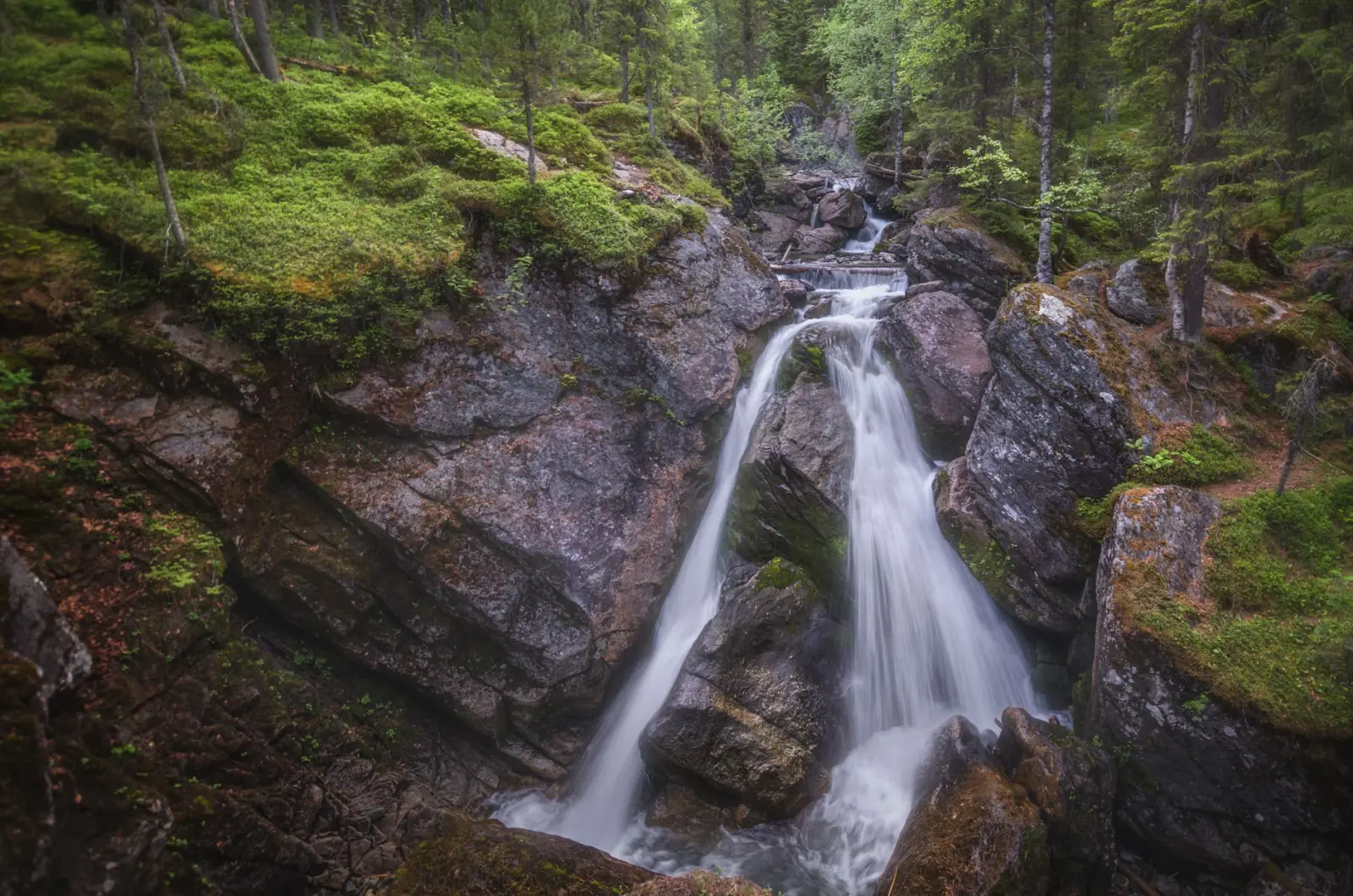
Curtis Falls sits in the Gold Coast hinterland, about forty minutes inland from the coast, and the forest around it operates on rhythms most day-trippers don’t account for. I’ve walked this area dozens of times across different seasons, and the experience varies dramatically depending on when you arrive and how far you’re willing to push beyond the main attraction. The waterfall itself is a minor cascade – nothing that photographs dramatically – but the forest surrounding it holds far more interest than the standard loop walk suggests.
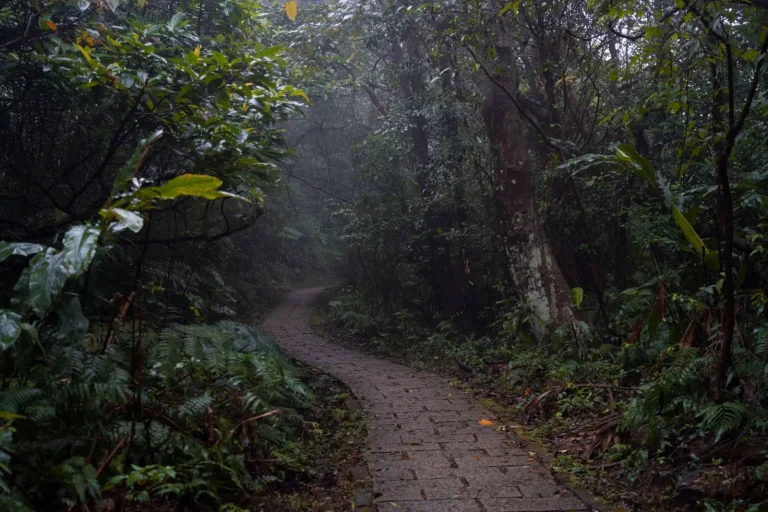
The main track is heavily trafficked on weekends, particularly between 10 a.m. and 2 p.m. During those hours, you’ll encounter families, school groups, and tourists moving through in a fairly predictable flow. The path itself is well-maintained, wide enough for two people to walk side by side, and the gradient is gentle enough that most people manage it without difficulty. What catches people off guard isn’t the difficulty – it’s the humidity. Even on days when the coast feels pleasant, the forest here sits in a pocket where moisture accumulates. You’ll feel the difference within five minutes of entering the treeline.
Timing and What You Actually See
Early morning visits, before 8 a.m., change the entire character of the walk. The forest is quieter, the light filters differently through the canopy, and you’re more likely to encounter wildlife – not the spectacular kind, but the actual kind. Lyrebirds move through the undergrowth, and you’ll hear them more often than see them. The air temperature is noticeably cooler, which matters more than it sounds when you’re moving through dense vegetation. I’ve noticed that people who arrive early tend to venture further along the secondary tracks that branch off from the main loop. Those routes aren’t marked prominently, and they’re less obvious, but they lead into older forest where the canopy closes more completely.
Afternoon visits after 3 p.m. work differently. The main trail empties out, but the forest itself becomes more challenging to navigate. The light angles lower, creating deep shadows under the dense vegetation, and it becomes harder to read the terrain. The humidity often peaks in late afternoon, and you’re working against the day’s accumulated heat still radiating from the soil. If you’re planning an afternoon walk, you need to be more deliberate about your route and timing for getting back to the carpark before dusk.
The Terrain Beyond the Main Loop
The official Curtis Falls circuit takes about thirty to forty minutes for most people. It’s a straightforward there-and-back walk to the waterfall viewing area, with a minor loop option that adds another ten minutes. But the forest extends considerably beyond that, and the character changes noticeably once you move past the main viewing platform.
To the south and west of the falls, the forest becomes noticeably steeper and more complex. The undergrowth thickens, and the canopy closes to the point where it’s genuinely dark midday. This isn’t particularly dangerous terrain, but it requires more attention to footing and route-finding. The soil here tends to be wetter, with small seepage areas creating muddy sections even days after rain. If you’re wearing standard trail runners, you’ll notice the difference. Proper hiking boots with ankle support and grip make a real difference on these slopes. The vegetation itself – lawyer vine and wait-a-while thorns – becomes more prevalent, and you need to watch your arms and face more carefully.
Most people don’t venture this far because the payoff isn’t obvious. There’s no viewpoint, no waterfall, no defined destination. What you get instead is a sense of how the forest actually functions – the density of the canopy, the way the understory is layered, the sound of water moving through the gullies that feed the falls. It’s less dramatic than the main attraction, but it’s also where you understand why this forest exists in this particular form.
Water and Seasonal Changes
The waterfall itself is entirely dependent on recent rainfall. After a week of dry weather, it’s barely a trickle. After heavy rain, it becomes more substantial, though even then it’s modest compared to falls in other parts of the hinterland. This matters for planning because if you’re coming specifically to see the falls, checking recent rainfall patterns is more useful than checking the weather forecast for your visit day. The creek that feeds it runs year-round, but its flow varies enormously.
The forest floor changes seasonally in ways that affect how you move through it. During wetter months (roughly December through March), the ground is perpetually damp, and moss covers most of the rocks and fallen logs. This creates a soft, spongy surface that’s actually easier to walk on than you’d expect, but it’s also slippery if you’re moving quickly. During drier periods, the forest floor becomes harder and more exposed, with more leaf litter and exposed roots. Neither condition is particularly difficult, but they require different footwear choices and different pacing.
What Most Visitors Overlook
The forest around Curtis Falls contains several eucalyptus species that are worth noticing if you’re paying attention. The tallest trees – the emergents that rise above the general canopy – are typically blackbutts or brush box. These aren’t rare or particularly unusual for the region, but they’re genuinely old trees, and their scale becomes apparent only when you’re standing beneath them. The understory is dominated by rainforest species – palm ferns, sassafras, and various smaller trees that create the dense, humid environment that defines the walk.
Most day-trippers focus entirely on the waterfall and miss the actual forest structure. They’re not wrong to do so – the waterfall is the obvious destination – but it means they’re experiencing the location as a photo opportunity rather than as a place. If you spend time actually looking at the vegetation, at how the gullies are carved, at the way the creek has shaped the landscape over time, the walk becomes considerably more interesting.
The carpark fills up by mid-morning on weekends, and once it’s full, entry is restricted. This isn’t a major issue if you’re arriving early, but it’s worth knowing if you’re planning a casual weekend visit. The facilities are basic – toilet block, picnic tables, water tap – but they’re adequate for a short walk. There’s no food available on-site, so bring water and snacks if you’re planning to spend more than an hour in the forest.
After many visits across different seasons and times of day, the most consistent observation is that this forest rewards patience and early starts. The walk itself is accessible and straightforward, but the experience of it varies dramatically based on when you arrive and how far you’re willing to move beyond the obvious destination. The falls are worth seeing, but the forest itself – the actual structure and ecology of it – is what makes the location worth returning to.