Mapleton Falls sits in the hinterland west of the Sunshine Coast, and the forest around it isn’t dramatic or particularly remote. It’s accessible, well-established, and popular enough that you’ll rarely feel alone on the main paths. That said, there’s a difference between knowing a place exists and understanding how to move through it efficiently, what the ground actually feels like underfoot, and when conditions shift enough to change your plans.
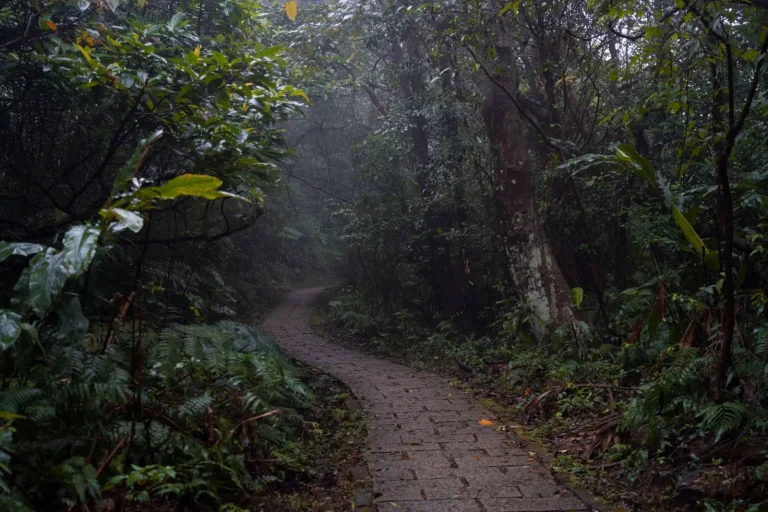
The forest here is subtropical rainforest transitioning into eucalypt woodland. The canopy is dense enough to keep things cool and damp, but the undergrowth varies considerably depending on which section you’re walking. Near the falls themselves, the track is well-maintained and receives regular foot traffic. Move away from the main attraction, and the paths become narrower, muddier, and less predictable. This isn’t a problem in itself, but it means your pace and energy expenditure change noticeably once you venture beyond the obvious circuit.
Understanding the Ground and Drainage
The soil around Mapleton Falls drains poorly in sections, particularly on the eastern side where water accumulates after rain. If you’ve walked here after a wet spell, you’ll notice the track becomes a series of small streams and muddy patches rather than a defined path. This isn’t temporary – it’s the baseline condition for roughly half the year. The rock underneath is often exposed where foot traffic has worn away the topsoil, creating a slippery surface when wet. Wearing shoes with genuine grip matters here more than on drier trails.
The western side of the forest dries faster because the slope faces away from persistent moisture and receives more direct sun. If you’re planning to walk after rain and want to avoid the worst of the mud, timing your route to follow the western approaches makes a measurable difference. The difference between a muddy but manageable walk and a genuinely frustrating one often comes down to which direction you approach from and how recently the rain fell.
Timing and Crowd Patterns
The carpark fills predictably on weekends, particularly between 9 a.m. and 2 p.m. If solitude matters to you, walking early morning or late afternoon is the obvious choice, but it also means finishing your walk in dimmer light. The forest canopy reduces visibility significantly, and once you’re off the main circuit, it becomes genuinely dark earlier than you’d expect. Headlamp or phone torch isn’t optional if you’re planning to walk after 4 p.m. during winter months.
Weekday mornings tend to have a different crowd – fewer families, more local regulars who move quickly and know the terrain. The atmosphere changes noticeably. If you’re someone who finds crowded trails frustrating, a Tuesday or Wednesday morning walk produces a fundamentally different experience from a Saturday afternoon.
Distance and Loop Options
The main falls circuit is roughly 2 kilometers and takes most people between 45 minutes and 90 minutes depending on how long they spend at the falls themselves. This is the walk most visitors complete. Extending beyond this requires committing to less-maintained paths, and the distance adds up faster than you’d expect because the pace slows. A loop that incorporates the upper forest sections can easily stretch to 5 or 6 kilometers, which changes the entire character of the outing from a casual stroll to a genuine bushwalk.
Many people underestimate this distance because the main circuit feels short and easy. If you’re planning to extend your walk, factor in that fatigue accumulates differently on uneven, rooty terrain than on flat ground. Your legs might feel fine after the main circuit, but 30 minutes into the upper forest sections, the cumulative effect of stepping over roots and navigating minor elevation changes becomes apparent.
Flora and Fauna Observations
The forest supports a reasonable range of birds, and early morning is genuinely the best time to see them. Kookaburras, lyrebirds, and various honeyeaters are common enough that you’ll hear them regularly. Reptiles are present but rarely encountered on the main paths – snakes exist here, but they tend to move away from vibration and noise. Walking with others and maintaining a steady pace reduces the likelihood of a surprise encounter to nearly zero.
The plant life changes seasonally. Spring brings orchids and wildflowers, particularly in the damper sections. Summer makes the forest dense and humid, which affects how quickly you fatigue. Autumn and winter are drier and cooler, which many people find more comfortable for walking, though the reduced water flow means the falls themselves are less impressive.
One thing worth noting: the forest isn’t pristine. Introduced species are present, and in some sections, the understory has shifted noticeably over the past decade. This doesn’t make it unpleasant to walk through, but it’s worth understanding that this is a managed landscape, not a wilderness experience. The paths themselves are maintained by local volunteers and council, which is why they remain walkable.
Practical Logistics
The carpark has limited facilities. There’s a toilet block, but no water, food, or shelter beyond what you bring. If you’re planning a longer walk, carrying water is essential, particularly during warmer months. The area has mobile reception in most places, though it’s not guaranteed deep in the forest on some networks.
The main track is well-signposted, but secondary paths are less clearly marked. If you’re exploring beyond the main circuit, a basic map or GPS is sensible. People do get turned around occasionally, usually because they’ve followed what looks like a path but is actually a drainage line or animal track. It’s not dangerous, but it’s annoying and wastes time.
The forest around Mapleton Falls is fundamentally a local resource that works well for what it is – accessible, reasonably scenic, and close enough to the coast that it’s a practical half-day outing. The experience you have depends largely on when you go, how far you’re willing to walk, and what you’re expecting. The falls themselves are modest, and the forest is pleasant but not exceptional by hinterland standards. That’s not a criticism; it’s simply the reality of the place. Understanding that going in shapes a more realistic and ultimately more satisfying visit.