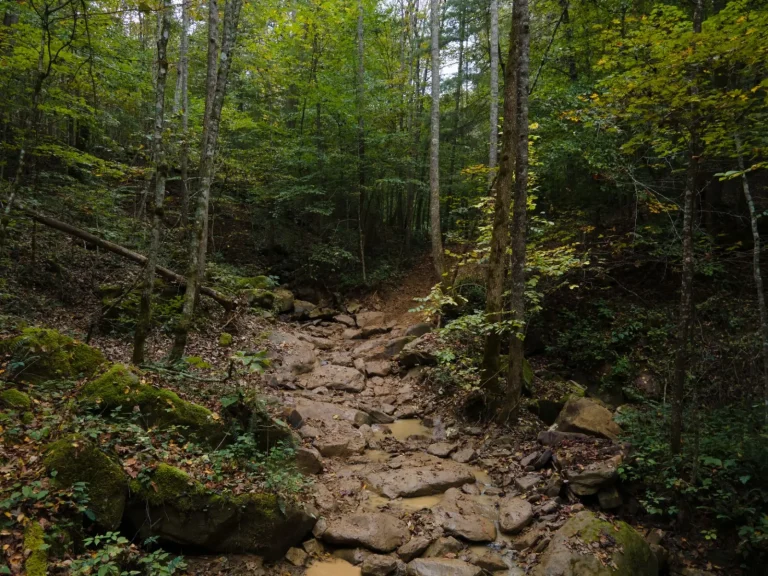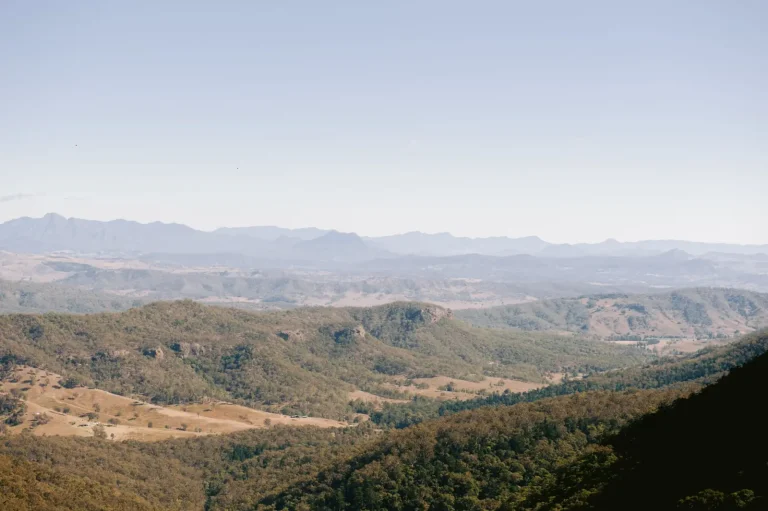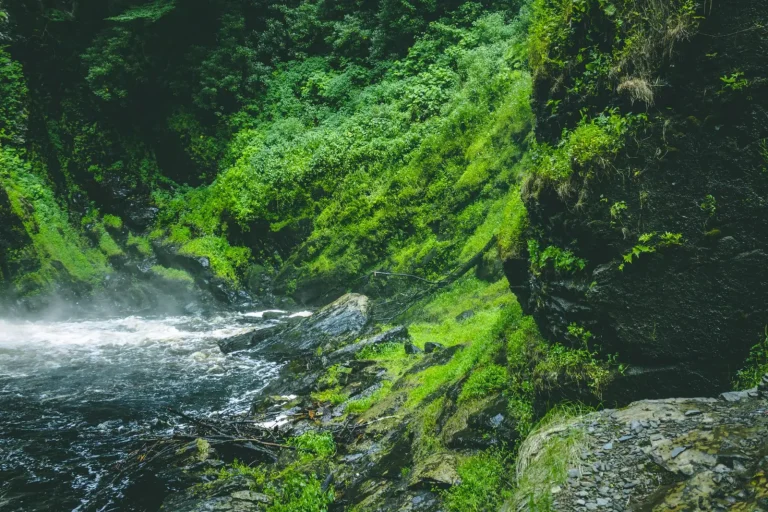

The Gondwana Rainforests stretch across the border between New South Wales and Queensland, covering roughly 37,000 hectares of what remains of a forest system that existed 180 million years ago. When you first approach these forests – whether from the volcanic plateau country around Mount Tamborine or through the subtropical lowlands near Dorrigo – the scale of age hits differently than reading about it. The trees themselves seem incidental to the deeper sense of geological time embedded in the landscape.
This World Heritage listing, formally recognized in 1986 and expanded in 1994, exists because the forests contain a botanical record that cannot be found intact anywhere else on Earth. The designation is not romantic or arbitrary. It reflects a specific scientific reality: these rainforests preserve plant families and ecological relationships that disappeared from most of the planet millions of years ago. Walking through sections of these forests, you encounter trees that have no close relatives anywhere else, species that survived ice ages and continental drift through sheer geographical accident.
The practical experience of visiting these forests requires understanding their geography. They are not a single contiguous block. Instead, they form a series of remnant patches scattered across the McPherson Range and the coastal hinterland. Some sections are easily accessible – the Lamington National Park area, for instance, has well-maintained walking tracks and established visitor infrastructure. Other areas remain genuinely remote, accessible only by serious bushwalking or not at all to the general public. This fragmentation is itself significant. It means the forests exist as islands within a landscape that has been heavily modified by agriculture, logging, and development over the past 150 years.
What the heritage listing protects
The World Heritage status provides legal protection against further clearing, but it does not freeze the forests in time or prevent all change. What it does is establish a framework for management that prioritizes ecological integrity over resource extraction. In practice, this means the forests are managed for conservation rather than timber production, though historical logging scars remain visible in some areas where old growth was selectively harvested decades ago.
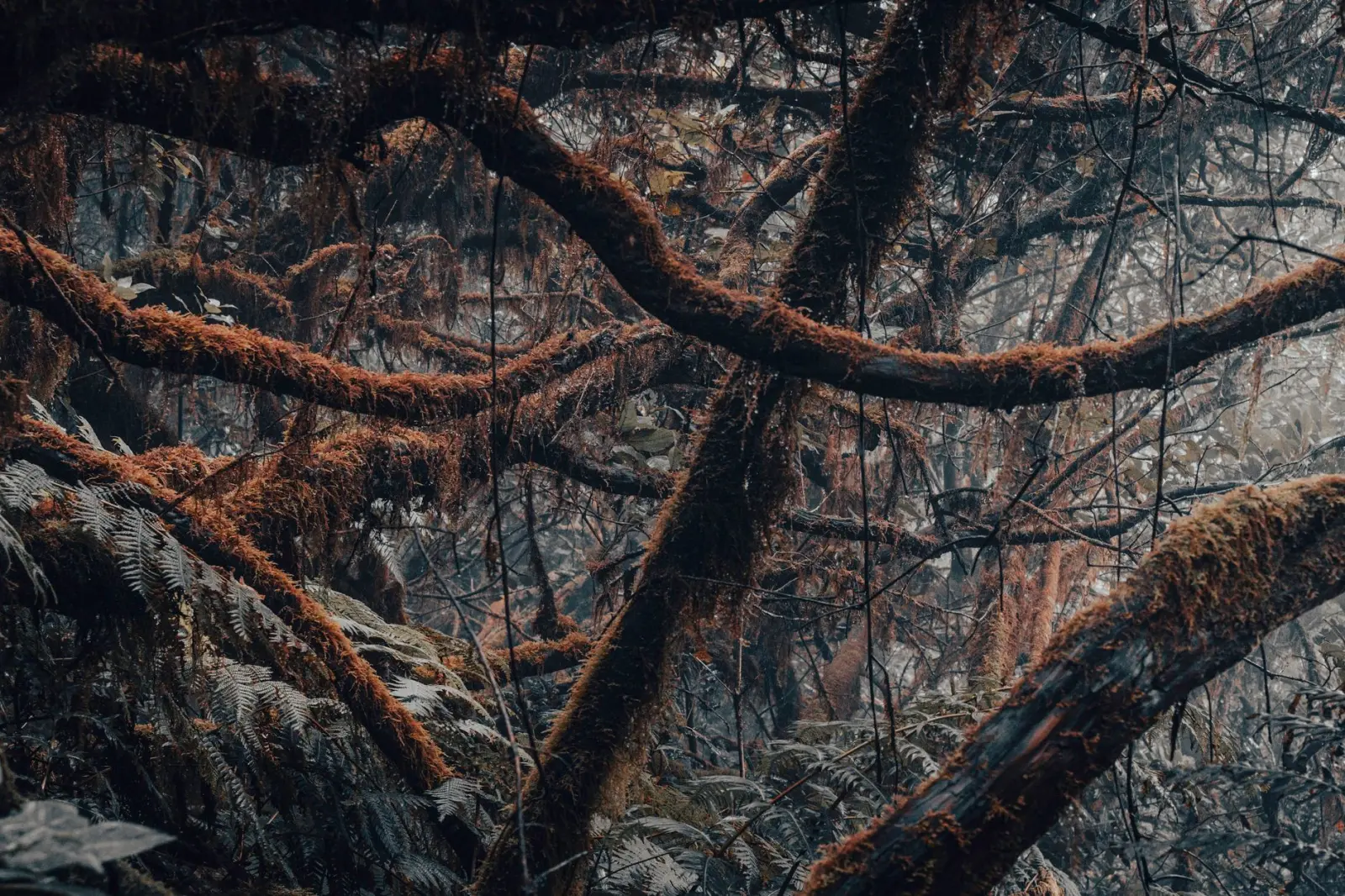
The forests contain around 3,000 plant species, of which roughly 1,200 are found nowhere else. This is not a statistical abstraction. It translates to an ecosystem of extraordinary botanical density and specificity. Ferns that evolved in the Cretaceous period still grow on the forest floor. Primitive flowering plants that disappeared from most continents persist in these wet gullies. Araucarian conifers – ancient relatives of trees that dominated the Mesozoic – tower above the understory. The evolutionary history of the planet is literally readable in the species composition.
Fauna diversity follows from this botanical foundation. The forests support populations of animals found nowhere else: the Richmond birdwing butterfly, certain species of rainforest skinks, small mammals that have adapted to specific forest conditions. These are not charismatic megafauna. They are often small, cryptic, and require specific knowledge to observe. But their presence indicates ecosystem health in ways that are difficult to measure without long-term scientific monitoring.
The tension between access and preservation
One of the recurring practical tensions in managing World Heritage rainforests involves visitor use. The forests draw tourists, researchers, and nature enthusiasts. Increased foot traffic, even on designated tracks, causes measurable impacts: soil compaction, vegetation damage, disturbance to wildlife. The more accessible sections of Lamington and Dorrigo receive thousands of visitors annually. This is not inherently destructive, but it requires active management to prevent degradation.
The management response typically involves track hardening, boardwalk installation in sensitive areas, and visitor education. These interventions are visible and sometimes feel at odds with the idea of pristine wilderness. But they are pragmatic solutions to a real problem. Without them, the most accessible and popular areas would deteriorate rapidly. The alternative – closing forests to public access – creates different problems, including reduced public understanding and political support for conservation.
Seasonal variation affects visitor experience significantly. The subtropical sections are warm and humid year-round, but the highland areas around Mount Tamborine and the New England plateau experience cooler conditions, particularly from June through August. Winter brings lower visitor numbers and different wildlife activity patterns. Spring (September to November) brings flowering events that make the botanical diversity more visible, though this also attracts more visitors. Summer humidity can be oppressive in the lowland sections, and wet season conditions (November to March) create access challenges on some tracks.
The ecological reality beneath the designation
World Heritage status is a conservation tool, not a guarantee of ecological stability. The Gondwana Rainforests face real pressures that the designation alone cannot address. Climate change affects rainfall patterns and temperature regimes. Invasive species – particularly feral pigs and various introduced plants – alter forest composition and structure. Diseases that target specific tree species have emerged in recent decades. These are not abstract threats. They are observable changes that forest managers and researchers document continuously.
The forests also exist within a broader landscape context. Surrounding land use affects water quality, nutrient cycling, and species movement. Fragmentation means populations of many species are isolated, reducing genetic diversity and resilience. Some plant species that depend on specific animal pollinators or seed dispersers face population bottlenecks as those animals become rarer. These ecological relationships are often invisible to casual visitors but represent the actual mechanisms by which forests persist or decline.
Research within the Gondwana Rainforests has been continuous since the mid-20th century. Long-term studies of tree growth, species composition, and wildlife populations provide data on how these forests respond to environmental change. This research is not complete or conclusive – rainforest ecology is complex, and patterns that emerge over decades may shift again. But it provides a foundation for adaptive management, allowing conservation strategies to adjust as conditions change.
The visitor experience and what it reveals
Most visitors to the Gondwana Rainforests experience them through a few key locations: the subtropical rainforest around Lamington National Park, the cool temperate forests of the New England plateau, and the lowland subtropical sections near Dorrigo. Each presents a different forest structure and composition. The subtropical areas feel lush and dense, with dense canopy and complex understory. The highland sections are cooler, with different plant communities and a more open canopy structure in some areas.
Walking through these forests, the sense of age is not metaphorical. You encounter trees that are centuries old, standing among vegetation that has evolved over geological timescales. The biodiversity is often subtle – not the obvious abundance of a tropical rainforest with visible wildlife, but a complex system where much of the biological activity occurs at scales and timescales that are not immediately apparent. Frog calls at dusk indicate amphibian populations. Insect activity in the leaf litter supports the entire food web. Fungal networks in the soil connect trees in ways that are only recently being understood.
The practical reality of visiting involves accepting that much of what makes these forests significant is not easily observable. You can walk through sections of the Gondwana Rainforests and see beautiful forest scenery without encountering the specific species or ecological relationships that justify their World Heritage status. This is not a failing of the experience. It reflects the actual nature of these ecosystems – they are significant for their completeness and their evolutionary history, not for dramatic visual spectacle.
The World Heritage designation represents a recognition that some places matter not because they are economically valuable or visually striking, but because they preserve something irreplaceable about the natural history of the planet. The Gondwana Rainforests embody that principle in concrete form. They are managed as a living archive, a place where ecological and evolutionary processes that have operated for millions of years continue under conditions that, while altered by human activity, still permit those processes to function. That is what the designation protects, and what makes these forests worth the effort required to visit and understand them.