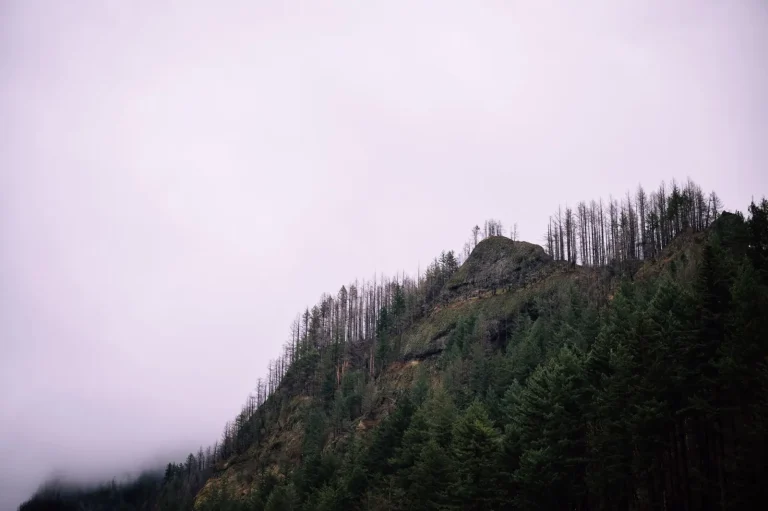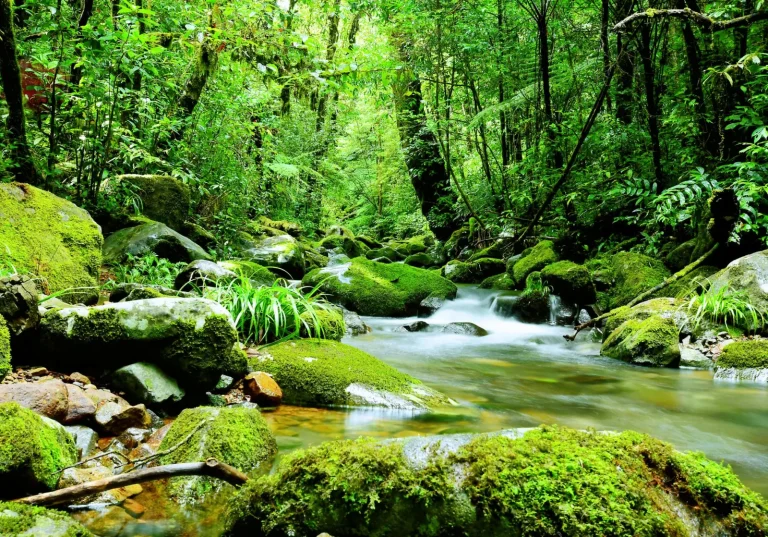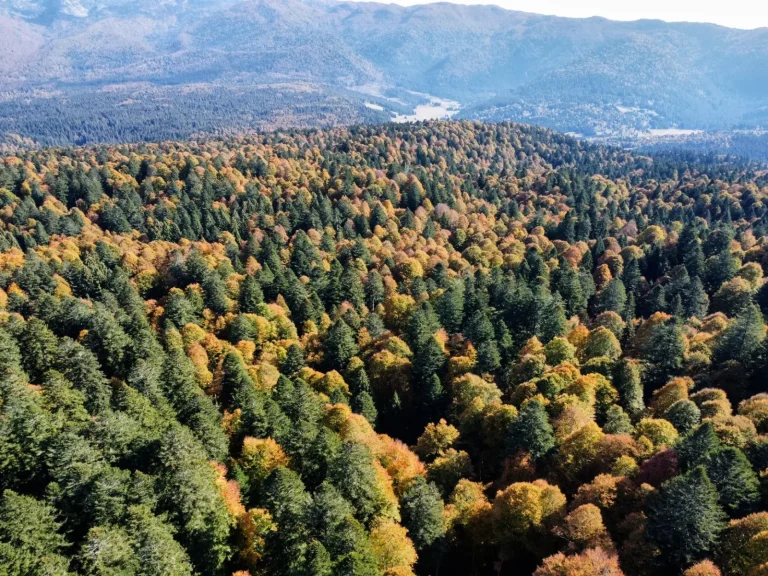
Coastal rainforests exist in a state of constant negotiation with their environment. I’ve spent enough time in these places – walking through them during storms, examining damage after heavy weather, observing seasonal patterns – to understand that survival here isn’t passive. The trees and understory plants have evolved specific responses to salt-laden air and relentless wind that go far deeper than simply being “tough.”
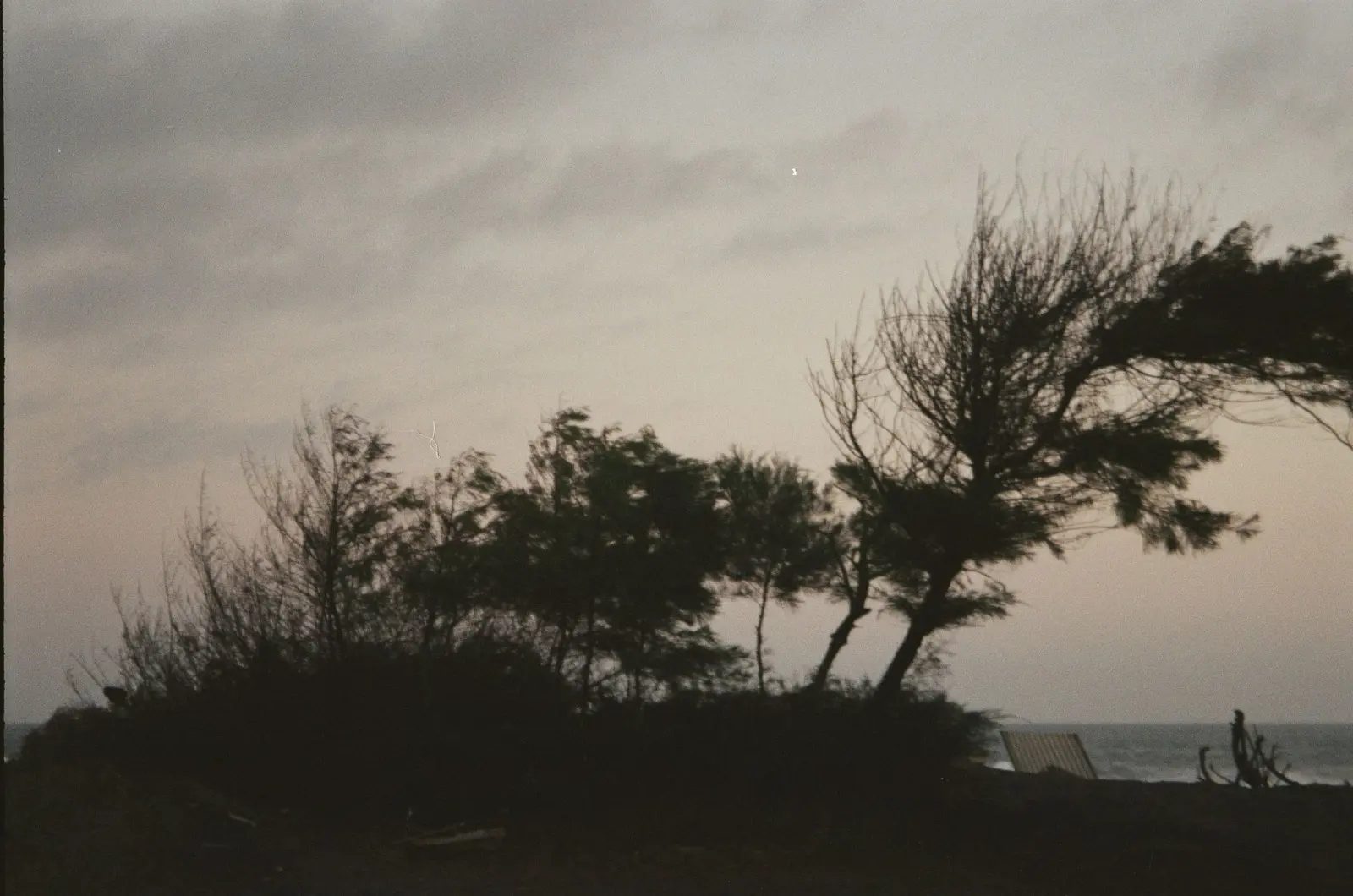
The first thing you notice when you move from a sheltered rainforest into a coastal variant is the change in canopy structure. Trees don’t grow as tall. The layering flattens. What appears chaotic at first glance is actually a deliberate compression, a response to wind exposure that accumulates over decades and generations. The tallest trees in a coastal rainforest might reach heights that their inland cousins achieve in half the time, yet they’re thicker, more densely branched, and their crowns are shaped differently – often asymmetrical, swept in the direction of prevailing winds.
This wind-sculpting isn’t damage; it’s adaptation. The trees that survive in these zones have wood density and branch architecture that can flex without snapping. Their root systems spread wider and shallower than you might expect, creating a broad, stable base rather than the deep tap roots of sheltered forest species. In sandy or rocky coastal soils, this matters enormously. I’ve examined root systems exposed by erosion and storm damage, and the pattern is consistent: lateral spread, multiple anchor points, and wood that bends rather than breaks.
Salt Exposure and Leaf Chemistry
Salt spray is the more insidious challenge. Wind carries salt particles inland, and these accumulate on leaves, in soil, and on bark. Salt damages plant tissue through osmotic stress – it draws water out of cells, essentially desiccating them from the outside. The coastal rainforest plants I’ve observed most closely have developed several overlapping defenses.
Leaf structure is the first line of response. Coastal species tend toward smaller, thicker leaves with waxy or leathery surfaces. This isn’t random variation. The waxy coating, called the cuticle, acts as a barrier that reduces water loss and prevents salt from penetrating directly into the leaf tissue. Some species have evolved leaves with a slightly rolled or curled margin, which reduces the surface area exposed to salt spray and wind. The underside of leaves often has fewer stomata – the pores through which plants exchange gases – which limits the entry points for salt-laden air.
What’s less visible but equally important is what happens inside the leaf. Coastal rainforest plants accumulate salt in specific cell types and compartments, essentially quarantining it away from the photosynthetic machinery. They also produce higher concentrations of organic solutes – sugars, amino acids, and other compounds – that help maintain cell turgor even when salt is present. This is metabolically expensive. The plant is essentially working harder just to maintain basic function in a salty environment.
Soil and Root System Dynamics
The soil beneath a coastal rainforest is often surprising. You might expect it to be heavily saline, but in most cases it isn’t – or at least not uniformly. Rainfall leaches salt downward, and the organic matter accumulation typical of rainforests creates a buffer zone. The upper layers of soil, where most fine roots operate, are usually fresher than the air above them.
Root systems in coastal rainforests are highly selective about where they grow. They avoid the saltiest zones and concentrate in pockets where fresh water percolates through. The mycorrhizal fungi associated with these roots – the fungal partners that help trees absorb nutrients – are themselves salt-tolerant species. I’ve collected soil samples from coastal and inland rainforests and the fungal communities are distinctly different. Coastal varieties are dominated by fungi that can function in higher salt concentrations.
The root-to-shoot ratio in coastal species also tends to be higher. The plant invests more biomass below ground, both in spreading roots and in the fine root hairs that do the actual water and nutrient absorption. This is partly a response to the stress of salt exposure and wind – more roots mean more redundancy, more absorption capacity, and greater stability.
Canopy Architecture and Wind Management
The layering I mentioned earlier serves multiple functions beyond just wind resistance. A compressed, multi-layered canopy creates a microclimate that is less harsh than the open air above it. The outer canopy takes the brunt of salt spray and wind, while interior layers are somewhat protected. Species composition reflects this gradient. The outermost trees are often pioneer species or wind-tolerant shrubs. Moving inward, you find more shade-tolerant, less wind-adapted species that benefit from the shelter provided by the outer layers.
Branching patterns in coastal rainforest trees are distinctive. Rather than a single main trunk with lateral branches, many species develop multiple co-dominant stems from low on the trunk, creating a more bushy, spreading form. This distributes wind loading across multiple points rather than concentrating stress on a single trunk. It also increases the surface area of the canopy relative to its height, which sounds counterintuitive but actually reduces wind resistance because the shape presents less of a sail to the wind.
I’ve observed that coastal rainforests rarely experience the catastrophic windthrow events that can devastate sheltered forests. When a storm passes through, individual branches may snap and some trees may be damaged, but wholesale toppling is uncommon. The adaptation is real and effective.
Seasonal and Spatial Variation
Coastal rainforests aren’t uniform along the entire coast. Exposure varies with aspect, latitude, and local topography. On the most exposed headlands, the rainforest transitions into scrub or grassland. There’s a threshold beyond which the adaptation strategies reach their limits. I’ve walked this transition zone many times, and it’s sharp – not a gradual fade but a distinct boundary where the forest type changes because the environmental stress becomes too extreme for even adapted rainforest species.
Seasonal patterns matter too. In many coastal regions, the most intense salt spray occurs during winter storms when wind speeds are highest and rainfall is abundant. This combination – high salt delivery coupled with heavy rain – creates a dynamic where salt accumulation is prevented by leaching, but the stress of repeated salt exposure is constant. Species that thrive here have evolved to endure this cyclical stress rather than to avoid it entirely.
The understory and ground layer of coastal rainforests show their own adaptations. Ferns and shade plants in these zones tend toward smaller fronds and more leathery texture than their inland counterparts. Mosses and lichens that cover tree trunks and rocks are salt-tolerant species. The entire community, from the tallest emergent trees down to the smallest epiphytes, reflects the selective pressure of salt and wind.
What strikes me most about coastal rainforests, after years of observing them, is that they’re not struggling to survive – they’re optimized for these conditions in ways that inland rainforests simply aren’t. They’ve invested in different strategies: wider root spreads, denser wood, smaller and thicker leaves, salt-exclusion mechanisms, and architectural forms that work with wind rather than against it. The system is coherent and effective, which is why these forests persist in places where other vegetation types would fail.