Coastal rainforests occupy some of the most valuable real estate on Earth, and that alone explains much of their rarity. But the deeper reason goes beyond human pressure. These forests exist in an extraordinarily narrow band where specific atmospheric and geographic conditions align. When you spend time in the few remaining examples – the temperate rainforests of the Pacific Northwest, the subtropical remnants of southeastern Australia, the fragments clinging to the coasts of New Zealand and southern Chile – you begin to see why they’re so uncommon.
The fundamental constraint is moisture combined with latitude. Rainforests, broadly speaking, need abundant water year-round. But coastal regions at most latitudes don’t naturally deliver this. Tropical coasts often do, which is why the Amazon delta and Southeast Asian coastlines support dense forest. Yet even there, human clearing has reduced coastal forest dramatically. The rarer phenomenon is coastal rainforest in temperate zones – places like the Tongass in Alaska or the forests of British Columbia’s west coast. These exist because of a collision of ocean currents, mountain ranges, and prevailing wind patterns that create persistent moisture even at higher latitudes where you’d normally expect seasonal dryness.
The Geography of Moisture Delivery
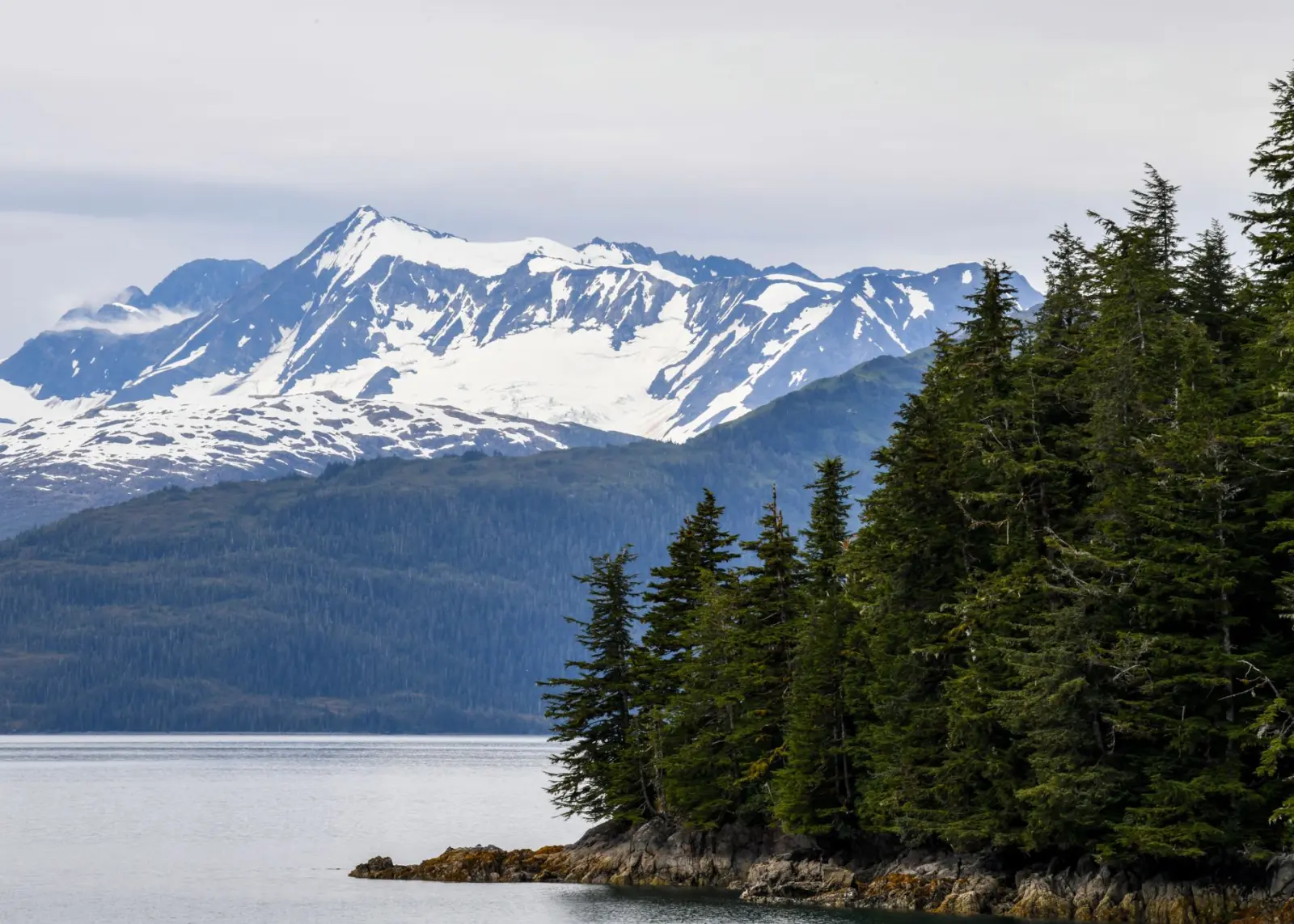
I’ve walked through enough of these forests to recognize the pattern. The most robust coastal rainforests sit where warm ocean currents meet steep coastal mountains. The Pacific Northwest’s temperate rainforests exist because the North Pacific Drift brings warm water northward, and the Cascade and Coast Ranges force moist air upward, wringing out precipitation on the western slopes. This isn’t accidental – it’s the only way you get rainforest conditions at 50 degrees north latitude.
The problem is that these geographic conditions are rare. Most coastlines lack this combination. A steep mountain range directly adjacent to the ocean is already uncommon. Add the requirement for a warm current flowing in the right direction, and you’ve eliminated most of the world’s coastlines. The east coasts of continents in temperate zones – the southeastern United States, much of Europe, eastern China – sit on the wrong side of ocean circulation patterns. Cold currents run there, or the mountains are too far inland. The result is temperate deciduous or mixed forest, not rainforest.
Tropical coasts have their own constraints. Many tropical coastlines face seasonal monsoons that create wet and dry seasons, which prevents the year-round moisture that rainforest vegetation demands. Others sit in rain shadows created by mountains on the opposite side of the continent, or they face trade winds that dry the air as it moves across the ocean. The Amazon’s mouth is an exception partly because the river itself adds so much moisture to the atmosphere that local rainfall becomes self-sustaining. But this is geographically unique.
Why Clearing Accelerates Disappearance
Once you understand the geographic rarity, human impact becomes even more consequential. Coastal rainforests haven’t just been reduced – they’ve been erased from most of their potential range because they occupy land that humans have always wanted. Coastal access meant trade, settlement, and resource extraction. The temperate rainforests of the Pacific Northwest survived partly because they were remote and difficult to log until industrial technology made it feasible. Now they’re mostly gone, replaced by second-growth or cleared land.
What strikes me when visiting these remnants is how quickly they fragment. A coastal rainforest doesn’t tolerate isolation well. The ecosystem depends on continuous moisture input and stable microclimates. When you cut a road through the forest or clear adjacent land, you alter wind patterns and allow drying. Edge effects penetrate deeper than in other forest types because the vegetation is adapted to constant humidity. A gap that might not matter in a temperate deciduous forest becomes a barrier in a rainforest. Species composition shifts within years.
The logging history of these regions also reveals something important: coastal rainforests contain some of the largest trees on Earth, and they grow slowly. The Sitka spruce and western red cedar of the Pacific Northwest take centuries to reach commercial size. Once cleared, the forest doesn’t simply regenerate into the same structure. The soil, the understory composition, the fungal networks – all have been disrupted. What grows back is often a different ecosystem entirely, even if conifers eventually dominate again.
Climate Stability as a Hidden Factor
Another reason coastal rainforests are rare relates to climate stability over deep time. These forests are adapted to consistent conditions. They evolved in regions where temperature and precipitation have remained relatively stable for thousands of years. The Pacific Northwest’s rainforests have existed in roughly their current form since the last glaciation ended. This stability allowed the development of the complex structure – multiple canopy layers, dense understory, massive fallen logs that persist for centuries – that characterizes these forests.
Regions that experienced more dramatic climate swings during the Pleistocene tend not to have rainforests now, even if they have the right latitude and moisture. Much of the eastern United States, for instance, experienced repeated glaciation and deglaciation. The forests that returned after each glacial period had to reestablish quickly, favoring faster-growing species and simpler structure. The result is deciduous or mixed forest, not rainforest. The rainforest structure – with its slow-growing, long-lived species and intricate interdependencies – requires a long period of climatic consistency to develop.
This is also why tropical rainforests, while more extensive than temperate ones, are still concentrated in particular regions. The Amazon, Congo Basin, and Southeast Asian rainforests occupy areas that remained relatively stable during glacial cycles. Other tropical regions that experienced drier conditions during glacial periods never fully redeveloped rainforest structure, even though current climate would support it. The forest type is path-dependent. Where it exists, it’s often because of a long unbroken history in that location.
The Persistence Paradox
There’s a paradox in coastal rainforests that becomes apparent after spending time in them. They’re incredibly productive – the biomass per hectare can exceed that of any other terrestrial ecosystem. Yet they’re fragile in ways that aren’t immediately obvious. The very features that make them productive – deep soils, dense vegetation, high moisture – also make them vulnerable to disruption. A single large storm can fell hundreds of trees. Flooding can reshape the forest floor. But the forest absorbs these disturbances because it’s adapted to them and because the intact ecosystem has the complexity to recover.
Isolation breaks this resilience. A coastal rainforest fragment surrounded by cleared land or different forest type faces constant pressure. Wind damage becomes catastrophic rather than regenerative. Invasive species find easier entry. The moisture regime shifts as the surrounding landscape changes. What remains is a forest in name only, gradually simplifying toward something else.
The rarity of coastal rainforests, then, isn’t a mystery. It’s the result of geography limiting where they can exist, climate history determining where they actually developed, and human settlement targeting exactly those rare locations. The few that remain are valuable precisely because the conditions that created them are so specific and so uncommon. Understanding this helps explain why their loss matters disproportionately – they’re not just one forest type among many, but a product of circumstances that align only in scattered places around the world.