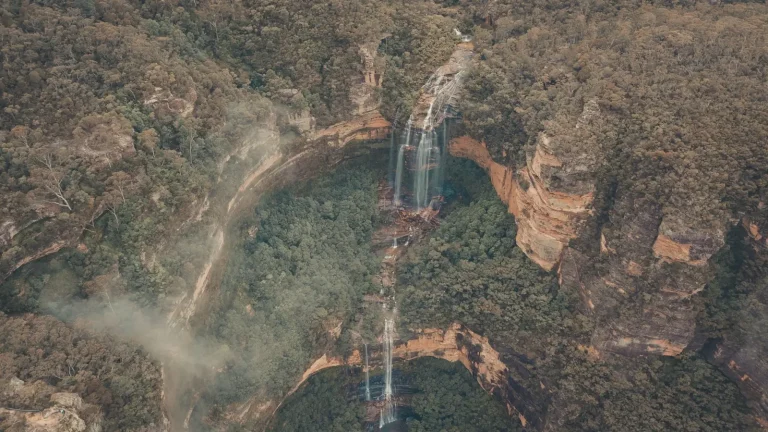
Sheltered gullies are where rainforest expansion happens most visibly and most persistently. After years of moving through tropical landscapes and observing forest behavior across different regions, the pattern becomes unmistakable: wherever a gully exists – a depression, a creek line, a ravine cut into hillside – the forest pushes in with a particular intensity. It’s not random. The conditions that make gullies attractive to human settlement and agriculture are the same conditions that make them irresistible to advancing forest.
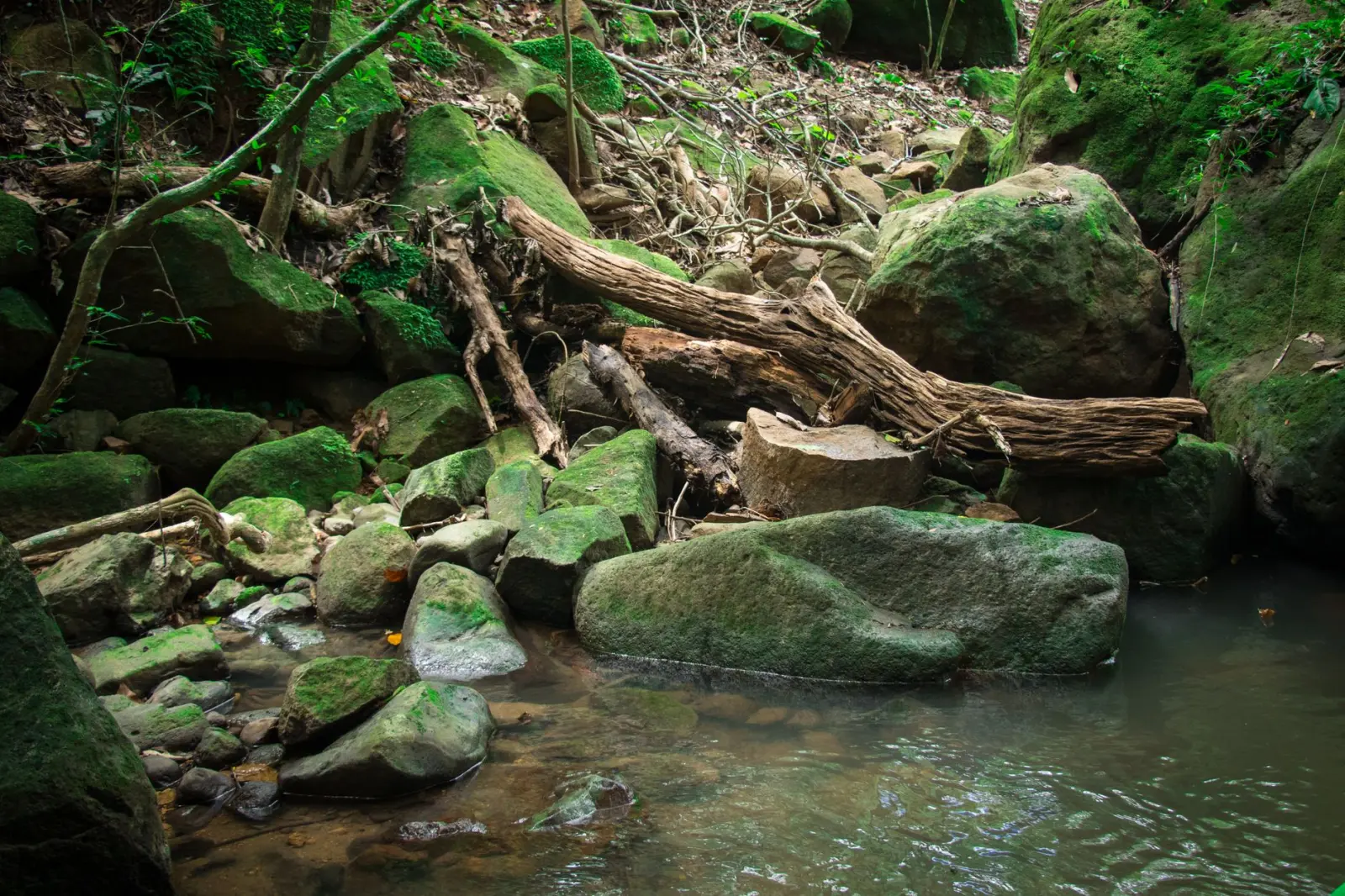
The mechanics are straightforward. A gully concentrates water. Runoff from surrounding slopes funnels downward, creating persistent moisture that persists even during drier months. The soil in these zones tends to be deeper and richer, accumulated from centuries of sediment transport. Shade accumulates too – the walls of the gully itself create a microclimate that is cooler and more humid than the exposed slopes on either side. For rainforest species, these are optimal conditions, far better than the open or degraded land that often surrounds them.
Why Gullies Become Invasion Routes
When you walk through a landscape where rainforest has been cleared or burned back, the gullies are always the first places to green up again. The forest doesn’t expand evenly across a slope. Instead, it advances along these corridors like water finding cracks in pavement. I’ve watched this happen in Central America, Southeast Asia, and northern Australia – the principle holds regardless of which rainforest system you’re observing.
The reason is partly about seed dispersal. Birds and small mammals use gullies as travel routes. They move along creek beds and through the denser vegetation that naturally accumulates there, and they deposit seeds as they go. But more fundamentally, it’s about establishment success. A seed that lands on exposed, compacted soil on a hillside slope faces heat stress, rapid drying, and competition with grasses and pioneer species. The same seed landing in a gully has shade, moisture, and softer soil. Germination rates are higher. Seedlings survive their vulnerable first months at much greater rates.
Over time, this differential survival creates a feedback loop. As pioneer species establish in the gully, they create more shade and hold more moisture in their litter. The microclimate becomes progressively more favorable for shade-tolerant species. Within a few years, you see a distinct band of taller, denser vegetation running through the gully. Within a decade or two, that band has widened and begun to climb the slopes on either side.
The Structural Signature of Advancing Forest
There’s a recognizable structure to how this happens. The leading edge is typically dominated by fast-growing, light-demanding species – vines, small trees, and shrubs that can establish quickly in partial shade. Behind that front line, the forest becomes progressively more closed and complex. You get layering: a canopy of taller trees, an understory of shade-tolerant species, and a dense ground layer of ferns, seedlings, and herbaceous plants.
The width of the advancing zone varies depending on slope angle and soil type. In steep gullies with rocky sides, the expansion might remain confined to a narrow ribbon – sometimes only 10 or 15 meters wide – for years. In broader, more gradual valleys with deep soil, the forest can expand laterally at a pace that’s genuinely noticeable from one year to the next. I’ve marked trees at the forest edge in several locations and returned after five years to find the boundary had moved 20 or 30 meters upslope.
The vegetation composition also shifts as you move away from the gully center. Species that require the highest moisture and deepest shade cluster near the creek line. Moving outward and upslope, you see increasing representation of species that tolerate drier conditions and brighter light. This gradient is not abrupt. It’s a gradual transition, but it’s consistent enough that you can use it to read the history of the gully – how long the forest has been present, how stable the expansion has been.
Disturbance and the Gully Response
What often gets overlooked is how disturbance accelerates this process. A logging road that crosses a gully, a landslide that scars the slope, a fire that burns the surrounding area – these events don’t stop forest expansion into gullies. They often accelerate it. The disturbance removes competing vegetation and exposes soil, but it also increases runoff and erosion, which deepens the gully and concentrates water flow even more. Within a few years, the gully becomes an even more favorable environment for forest establishment.
I’ve seen this repeatedly in areas recovering from agricultural use. A gully that was actively maintained as a drainage line or fence line – kept relatively open through regular clearing – will begin to reforest within months of abandonment. The first colonizers are typically vines and pioneer shrubs, but within three to five years, you have a genuine forest corridor. The speed depends on proximity to seed sources and rainfall patterns, but the direction is always the same.
Climate variability also plays a role that’s easy to underestimate. A series of wetter-than-average years can push forest expansion significantly. Conversely, a drought can slow it or even kill back some of the advancing vegetation. But over decadal timescales, the trend in most tropical regions is expansion. The gullies are where you see it most clearly because the conditions are so favorable and the contrast with surrounding areas is so stark.
Practical Implications for Land Use
If you’re managing land in a tropical region and you want to maintain open areas or prevent forest encroachment, gullies are where your effort will be most concentrated and most continuous. Clearing a slope once might keep it open for years. Clearing a gully requires repeated intervention because the conditions keep favoring forest regrowth. The moisture and shade return quickly after disturbance.
Conversely, if your goal is forest restoration or wildlife corridor creation, gullies are your most efficient starting point. You get more forest for less effort. A small investment in protecting or enhancing a gully can yield a corridor of forest that extends and connects habitat far more effectively than trying to restore open slopes.
The expansion of rainforest into gullies is not a crisis or an emergency. It’s a normal ecological process operating under favorable conditions. Understanding how and why it happens – the moisture gradient, the seed dispersal patterns, the feedback loops – makes it easier to predict where forest will advance next and to plan land use accordingly. The gullies will green up. That’s what they do.