
The rainforest gullies of the Watagan Mountains sit in that awkward middle ground where they’re accessible enough to draw regular foot traffic but wet and unstable enough to catch people off guard. I’ve walked these gullies across different seasons, and the gap between what someone expects and what they actually encounter is often wider than they think. The issue isn’t that the terrain is technically difficult – it’s that water, gravity, and vegetation create conditions that shift faster than most hikers anticipate.
The gullies themselves run through a subtropical rainforest environment where rainfall concentrates and moves downslope. Unlike open ridge walks where you can see weather approaching, a gully walk means you’re already committed to a drainage line. If water rises, you’re in it. The forest canopy also means visibility is limited, so you can’t always judge conditions ahead. This isn’t dramatic or dangerous in the way a cliff or exposed ridge is, but it requires a different kind of attention.
What Water Actually Does Here
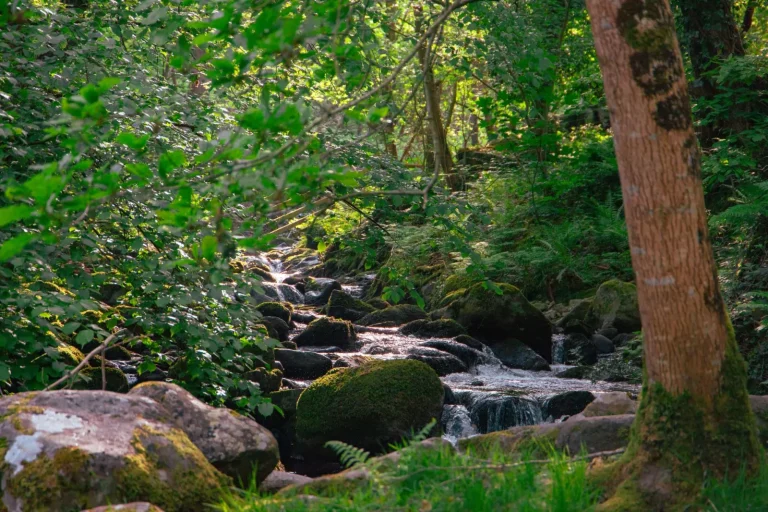
After rain, the gullies don’t just become wet – they become active water channels. The soil in these gullies is often shallow over sandstone bedrock, which means water doesn’t absorb gradually. Instead, it runs fast and moves loose material. What was a stable rock step one week can be undercut and unstable the next. I’ve seen sections where the trail bed has shifted noticeably after moderate rainfall, with rocks that were solid footing now rocking or displaced.
The real problem isn’t the water depth, which rarely exceeds ankle height in the main gullies. It’s the combination of wet rock, leaf litter covering obstacles, and the psychological disorientation that comes from moving through dense vegetation over uncertain ground. Your feet can’t find secure placement the way they would on a dry trail. Moss and algae growth on rock surfaces is constant in this environment, and it makes even gentle slopes feel slippery. Most people adjust their pace, which is fine, but some don’t, and that’s where minor slips become actual falls.
The Timing Question
The Watagan Mountains receive consistent rainfall year-round, but the gullies respond differently depending on the season. Winter and spring bring heavier sustained rain, which means gullies can stay elevated for days. Summer can produce intense downpours that spike water levels suddenly, then drop just as fast. Autumn tends to have drier spells, but leaf fall creates its own hazard – a thick carpet of wet leaves hiding rocks, roots, and small drop-offs.
I’ve noticed that people often underestimate how long a gully stays problematic after rain. A 20-millimeter rainfall in the afternoon doesn’t mean the gully is fine by the next morning. The ground is still saturated, water is still running, and the footing is still compromised. Waiting 48 hours after rain is a reasonable rule if you want genuinely safe conditions. Waiting 24 hours is optimistic unless it was very light rain.
Rock and Root Hazards
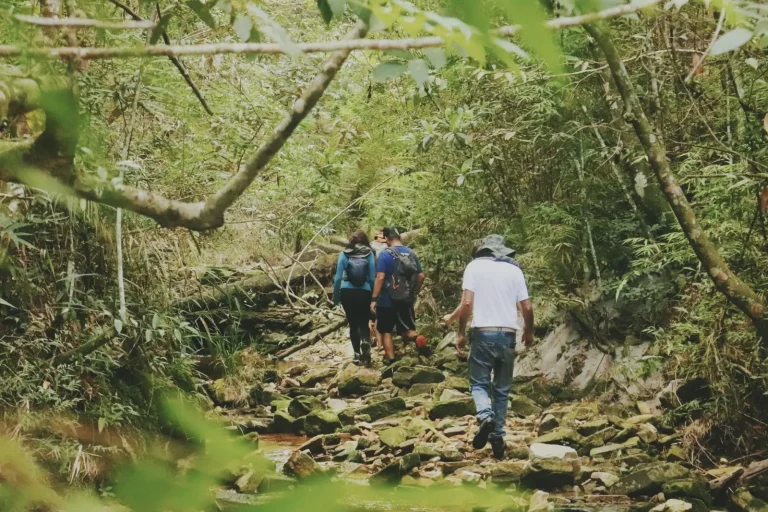
The gullies have exposed bedrock in sections, and this is where experience matters. Dry sandstone in these gullies can be surprisingly grippy, but wet sandstone is slick in a specific way – it doesn’t feel as slippery as wet marble or slate, but your boot can slide without warning. The texture is deceptive. Roots are everywhere, and they’re not the obvious thick ones you step over. They’re the thin ones at ankle height that catch your foot if you’re not watching, or the ones that have created a slight ridge in the trail that catches your toe. Most of these are minor, but on steep sections or near water, a caught foot can matter.
Rock steps in the gullies are often uneven and sometimes loose. The bedrock is fractured, and sections can shift slightly under weight, especially after water has moved through. I’ve learned to test each step on steeper sections rather than committing my full weight immediately. This slows progress, but it’s the reality of moving safely through these gullies.
Visibility and Navigation
The forest is dense enough that trail markers can be hard to spot, and the gullies have multiple branches. In dry conditions, this is manageable. In wet conditions with reduced visibility from mist or rain, navigation becomes the limiting factor rather than the physical difficulty. I’ve seen groups spend time backtracking because they took a minor tributary instead of the main gully. The markers are there, but you have to be actively looking for them, not just following what looks like the obvious path.
Mobile signal is unreliable in the gullies due to the tree canopy and the terrain. If you’re relying on GPS navigation, have your route downloaded beforehand. A printed map is genuinely useful here, not just as backup but as a way to understand the gully system before you’re in it.
Footwear and Grip
The type of boot matters here more than it does on many Australian trails. Smooth-soled boots or trail runners with minimal tread struggle on wet rock and roots. Boots with deeper, more aggressive tread patterns maintain contact better. The sole also needs to be reasonably stiff – a soft, flexible sole lets your foot bend over rocks and roots, which increases the chance of a turned ankle. I’ve noticed that people who hike regularly in these gullies tend to use boots designed for scrambling or mixed terrain, not lightweight trail runners.
Gaiters aren’t essential, but they’re useful. The gullies have low vegetation that sheds water and debris, and gaiters keep your lower legs and boot tops drier. This is a comfort issue more than a safety one, but comfort affects decision-making and pace.
The Watagan rainforest gullies are rewarding to walk, but they’re not forgiving of inattention. They’re also not difficult in a technical sense – there are no scrambles or exposed sections that require climbing skills. What they require is patience, realistic timing, and acceptance that conditions change. The gullies teach you something that applies to a lot of Australian hiking: the most dangerous moments often come from underestimating something that looks straightforward.