Creek crossings in rainforest environments occupy a strange middle ground in hiking. They’re neither technical climbing nor simple walking, yet they demand a different kind of attention than either. After spending years moving through tropical forests – from Southeast Asia to Central America to Australia’s wet tropics – I’ve noticed that most people approach these crossings with either too much caution or not enough. The reality sits somewhere in between, shaped entirely by water volume, rock stability, and how recently it rained upstream.
The first thing that changes your understanding of rainforest creek walks is recognizing that water levels are not static. A trail that feels manageable in the dry season becomes genuinely dangerous after heavy rain. This isn’t obvious until you’ve felt the force of moving water around your ankles and realized how quickly your footing shifts. The rocks that seemed solid become slippery, the current gains speed, and what was a calf-deep crossing becomes thigh-deep within hours. This is why local guides – when available – are worth their cost. They know the seasonal patterns, the exact spots where water rises fastest, and which crossings are genuinely risky versus merely uncomfortable.
The Physical Reality of Moving Through Water
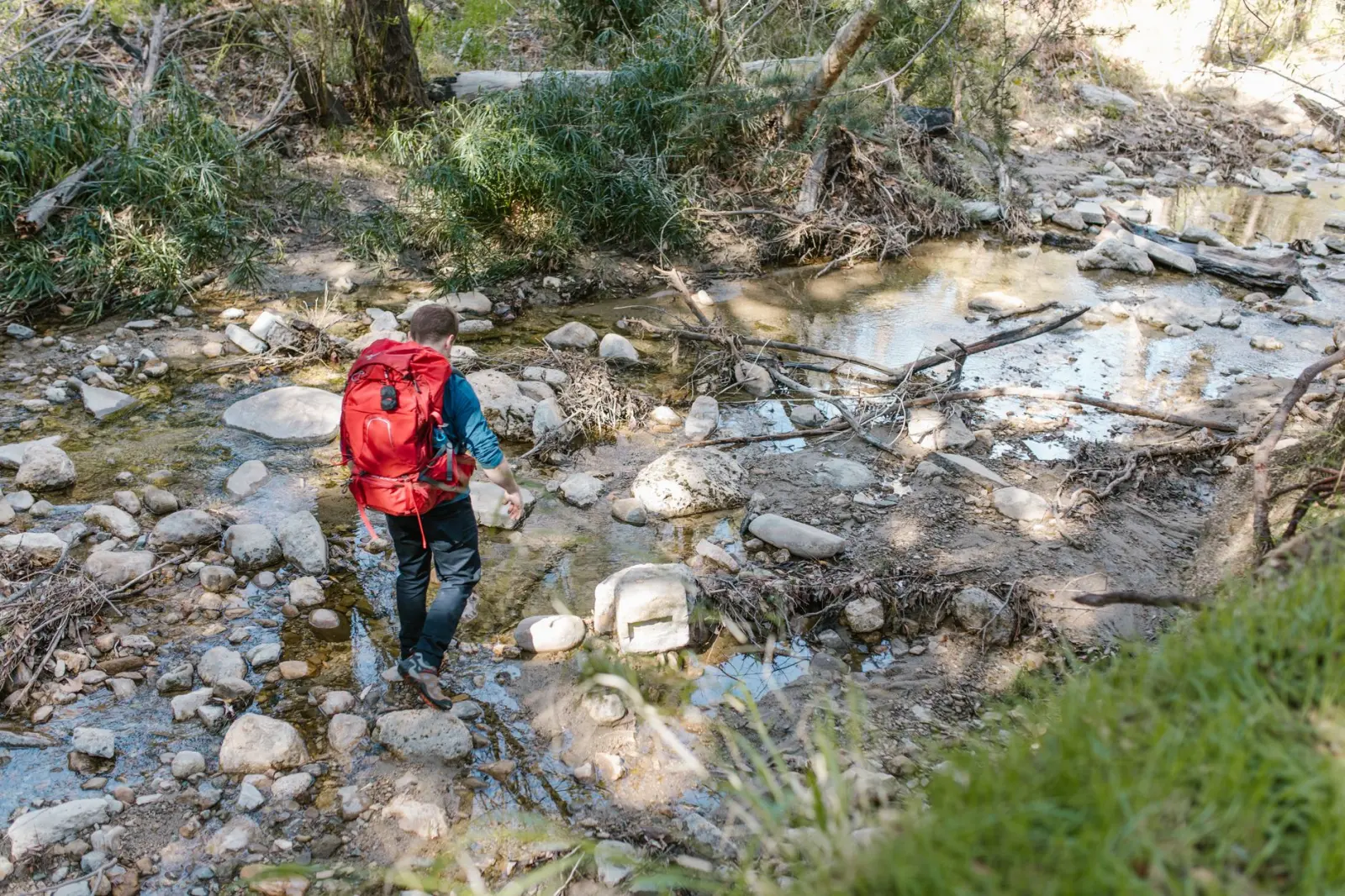
Walking through creek water while carrying a pack changes your balance in ways that are hard to predict. The pack’s weight doesn’t just pull you backward; it shifts your center of gravity and makes lateral stability harder to maintain. I’ve watched experienced hikers slip not because they were careless but because they underestimated how the pack would affect their ability to correct a misstep on a wet rock. The standard advice to face upstream and move sideways works, but only if you’ve practiced it or if the water is genuinely shallow. In deeper crossings, you’re better off moving slowly forward, testing each step, and accepting that you’ll move like someone twice your age.
Rock selection matters more than people assume. Moss-covered rocks and smooth river stones are treacherous in ways that rougher, more weathered rock is not. The moss feels like ice underfoot, and smooth stone offers nothing for your boot to grip. I’ve learned to look for rocks with visible texture, preferably ones that have been recently exposed to sun and are actually dry on top. In heavily shaded rainforest creeks, this is rare. Most rocks are perpetually damp. The ones that work best are often the ones that look least appealing – angular, uneven, with visible cracks. They’re ugly, but they hold your foot.
Footwear becomes a real consideration, not just a minor detail. Trail shoes with good grip are genuinely better than hiking boots in creek crossings, though this contradicts what many people expect. Boots offer ankle support, which matters on uneven terrain, but they’re heavier, take longer to dry, and the extra weight actually increases your instability in water. Trail shoes drain faster, weigh less, and let your foot feel the rock beneath you more directly. Some people prefer water sandals or even crossing barefoot, which works if the creek bed is smooth and free of sharp debris. I’ve done both, and both have their moments of regret. The real answer is whatever you’ve practiced in, which is why many experienced hikers carry a specific pair of shoes just for creek work.
Timing, Fatigue, and Decision-Making
The number of creek crossings on a trail matters more than their individual difficulty. A single challenging crossing is manageable. Five or six moderate crossings across a full day’s walk is where fatigue becomes the real problem. Your legs get tired from the constant micro-adjustments needed to stay upright on unstable ground. Your concentration drops. By the fourth or fifth crossing, people make mistakes they wouldn’t make on the first one. I’ve seen this pattern repeat enough times to trust it completely. This is why the best rainforest creek walks are the ones where crossings are spaced out and where there’s solid, easy terrain between them. It’s not about the difficulty of individual crossings; it’s about recovery time.
The time of day affects how you perceive and navigate creek crossings more than most people realize. Morning crossings, when you’re fresh and the rocks haven’t been warmed by sun, feel different than afternoon crossings. This is partly psychological and partly physical – your muscles are less fatigued, your attention span is sharper, and there’s genuinely less algae growth on rocks that haven’t been baked by tropical sun. If a trail has multiple significant crossings, starting early isn’t just about finishing before dark; it’s about doing the hardest water work when you’re most capable.
Specific Walks That Actually Deliver
The Inca Trail near Machu Picchu includes creek crossings, but they’re minor compared to what people expect. The real challenge on that walk is elevation and distance, not water. The crossings are almost incidental, which is why it’s often oversold as a “creek crossing” experience. The Routeburn Track in New Zealand has more substantial water work, with multiple crossings that demand attention, especially after rain. The track is well-maintained and the crossings are marked, but the water moves fast and the rocks are genuinely slippery. I’ve seen people turn back on that walk not because they couldn’t cross, but because they didn’t want to deal with the repetition and the cold water temperature.
The Milford Track, also in New Zealand, includes creek crossings that are more about persistence than technical skill. The track is wet almost constantly, and the creeks are cold. What makes it manageable is that it’s a well-traveled route with established crossing points and good drainage between sections. The Routeburn and Milford are worth doing, but they’re not exceptional for creek crossings specifically. They’re exceptional for the overall experience, and the water work is just one component.
In Southeast Asia, the trails around Chiang Mai and northern Thailand include genuine creek work. The terrain is steeper, the water is warmer, and the rocks are more varied. Some of these walks are unmarked or minimally marked, which changes the dynamic completely. You’re not just crossing creeks; you’re also navigating by terrain and water flow. The creeks here tend to be smaller but more frequent. The water is usually warm enough that getting wet isn’t a cold-water shock, which makes people less cautious than they should be. I’ve seen more injuries on these trails from people underestimating the current and the slipperiness of rocks than on any marked trail in developed countries.
What Goes Wrong and Why
The most common injury on rainforest creek walks is a twisted ankle from stepping into a hole or onto an unstable rock. This usually happens not during the crossing itself but during the approach or exit, when people are distracted or moving too quickly. The second most common issue is cold water shock, which affects even experienced swimmers. Rainforest creeks can be surprisingly cold, especially if they’re fed by mountain runoff. Falling into deep water when you’re not expecting it, even if you’re a strong swimmer, can trigger a gasp reflex that leads to water inhalation. This is why moving slowly and deliberately, even when it feels overly cautious, is actually the right approach.
Packs getting wet is inevitable on creek walks. Most people try to avoid this and end up taking unnecessary risks by holding their pack above their head or moving too quickly. The pack will get wet. Accept this. A good waterproof pack liner or dry bag for electronics is the only real solution. Trying to keep your pack dry usually means keeping your attention on the pack instead of on your footing, which is backwards.
The walks that deliver the most satisfying creek-crossing experience are the ones that aren’t famous for it. They’re local trails where water crossings are just part of the terrain, not the selling point. They’re walks where the creek work is genuine but not extreme, where the surrounding forest is the main attraction, and where the crossings feel like a natural part of moving through the landscape rather than a challenge to overcome. These tend to be trails that require local knowledge or a guide, which is exactly why they’re worth seeking out.