
Rainforests with children operate under a different set of constraints than adult-only expeditions. After years of moving families through dense jungle environments across Central America, South America, and Southeast Asia, I’ve learned that the gap between what looks appealing in travel writing and what actually unfolds on the ground is substantial. The humidity, the insects, the uneven terrain, and the sheer sensory intensity of a rainforest affect children differently than adults, and planning around this reality matters far more than chasing the most photogenic location.
The first thing to understand is that rainforests are fundamentally uncomfortable places for sustained periods. They’re hot, wet, and the air feels thick enough to drink. For children under eight, this discomfort compounds quickly. A four-year-old who is fine for two hours of gentle forest walking will deteriorate rapidly after that point. The humidity makes exertion feel harder, sweat doesn’t evaporate, and the sensory overload of constant insect sounds and unfamiliar vegetation can trigger fatigue that has nothing to do with physical tiredness. I’ve watched families arrive with ambitious plans to spend full days exploring and abandon those plans by midday because the children are overwhelmed or exhausted.
Timing and Pacing Matter More Than Distance
The most successful rainforest experiences I’ve witnessed with families follow a pattern: short, focused sessions rather than marathon outings. Three hours in the forest is often the realistic ceiling for children aged five to ten. This isn’t a failure of planning – it’s an acknowledgment of how the environment works. A guided walk of two to three kilometers that takes three hours, with frequent stops and minimal pressure to keep moving, produces better outcomes than a longer distance covered quickly.
The time of day shapes the experience significantly. Early morning walks, starting around 6 or 6:30 AM, catch the forest at its most active and the temperature at its most tolerable. By 9 AM, the heat intensifies and the insect activity becomes heavier. Afternoon walks tend to be slower and quieter, which some families prefer, but the heat is more oppressive. Late afternoon brings rain in many rainforest regions, which can be refreshing or miserable depending on the child’s disposition and the infrastructure available. I’ve found that families who plan for two shorter sessions – one in early morning, one in late afternoon – cover more ground and maintain better morale than those attempting single long expeditions.
Guided Walks Versus Self-Directed Exploration
A competent local guide transforms the experience for children. This isn’t about luxury or premium pricing – it’s about practical safety and engagement. Guides know where the canopy is most active, where the trails are most stable, and crucially, they can identify animals and plants in real time. Children respond to this. When a guide spots a poison dart frog or points out a howler monkey, the forest becomes a puzzle to solve rather than a place to endure. The guide also manages pace naturally, stopping when children need breaks without requiring parents to negotiate.
Self-directed walks work only in very specific circumstances: established, well-maintained trails with minimal elevation change, clear signage, and short distances. Even then, the experience is flatter. Parents spend mental energy on navigation and safety rather than observation. In my experience, families with children under ten almost always benefit from hiring a guide, even for short walks. The cost is modest relative to the overall trip expense, and the difference in engagement and safety is measurable.
Physical Challenges and What to Prepare For
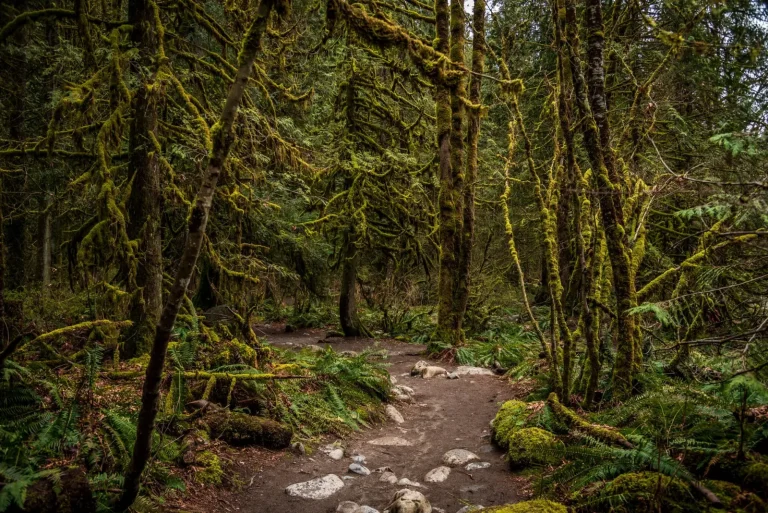
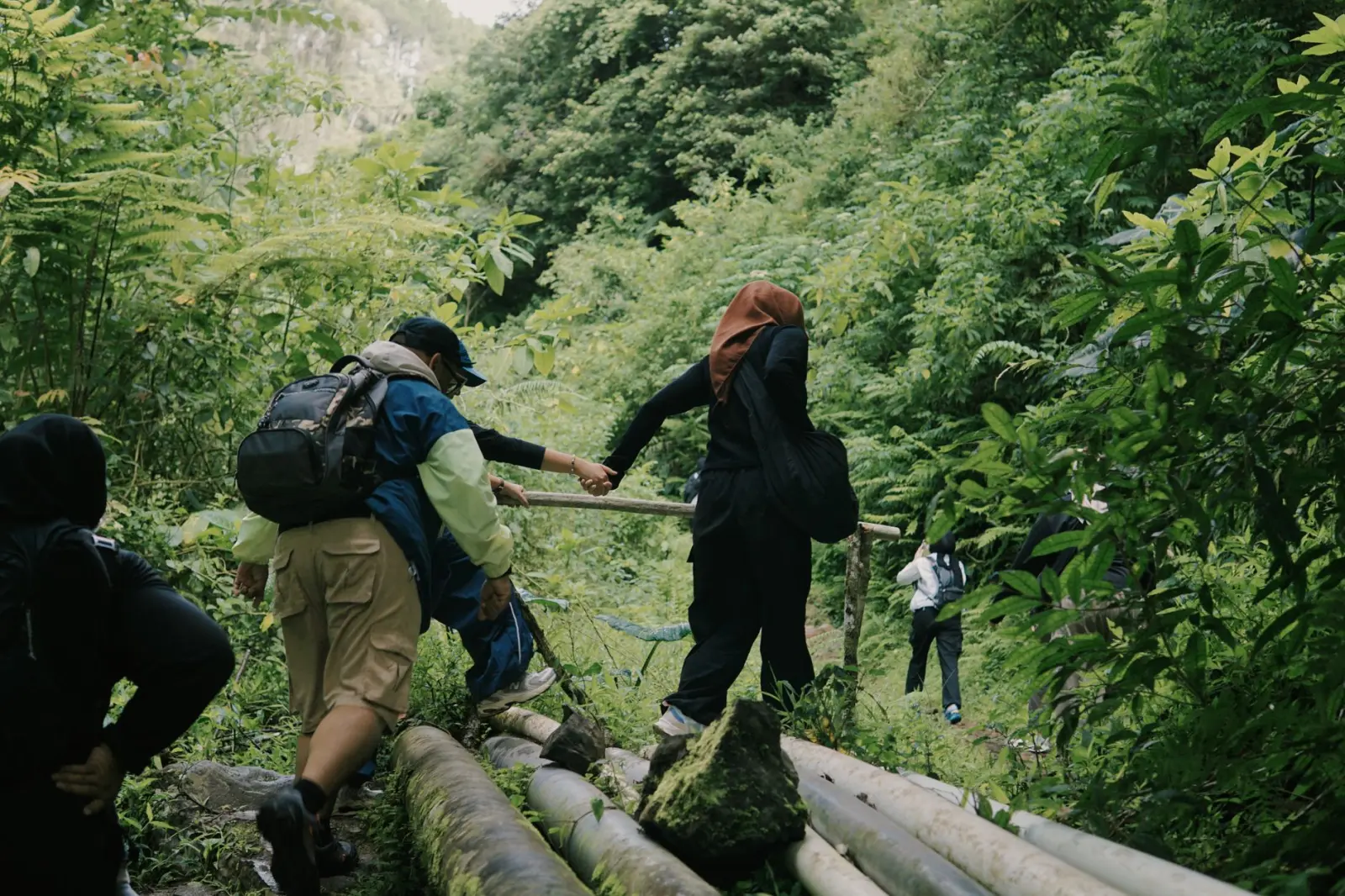
Rainforest trails are not like maintained nature walks in temperate regions. Roots cross the path constantly. The ground is often muddy or slick even when it hasn’t rained recently. Elevation changes are frequent and sometimes steep. Children who are confident on flat suburban trails may struggle with the uneven footing. Proper footwear – sturdy hiking boots or trail shoes with real grip – is not optional. I’ve seen families arrive in sneakers or sandals and regret it within the first thirty minutes.
The humidity and heat create dehydration risk that parents often underestimate. Children don’t always communicate thirst clearly in unfamiliar environments, and by the time they mention it, they’re already dehydrated. Carrying more water than seems necessary is standard practice. A two-liter capacity per child is not excessive for a three-hour walk. Electrolyte drinks or tablets help maintain salt balance, particularly for children who sweat heavily.
Insects are inevitable and managing expectations around them is important. Mosquitoes, flies, and various biting insects are present in most rainforests. Insect repellent with DEET is effective but needs reapplication. Long sleeves and pants, while hot, reduce bites significantly. Some children become anxious about insects after a few bites, and this anxiety can dominate the experience. Framing insects as part of the environment rather than threats – and modeling calm responses to bites – helps children stay engaged rather than distressed.
Accommodation and Recovery
Where you stay shapes how much rainforest time children can tolerate. A basic lodge with a pool or river access allows children to cool off and decompress between forest sessions. Air conditioning matters more than it sounds. After hours in humid heat, a cool room becomes restorative rather than a luxury. Families staying in rustic accommodations without climate control often find children are more fatigued and irritable, which limits subsequent forest time.
Meal timing and quality affect forest tolerance more than people expect. Children who are hungry or thirsty deteriorate quickly in heat and humidity. Eating a substantial breakfast before early morning walks, packing snacks for the trail, and ensuring adequate lunch before afternoon sessions prevents much of the crankiness that derails plans. Dehydration and low blood sugar compound each other in hot environments.
Age-Appropriate Expectations
Children aged three to five engage with rainforests primarily through sensory experience – the sounds, the colors, the smell. They’re not interested in bird identification or ecosystem complexity. Short walks with frequent stops, where they can touch plants, listen to animals, and splash in streams, work well. Children aged six to nine begin to develop curiosity about how things work. Guides who explain predator-prey relationships, camouflage, and adaptation keep this age engaged. Teenagers can handle longer walks and more technical information, though they often prefer specific activities – wildlife photography, canopy walks, or river exploration – over general forest wandering.
The animals children actually see matter less than the experience of looking for them. A rainforest walk where you don’t see large mammals is not a failed walk. Most wildlife is hidden or nocturnal. Insects, birds, and smaller creatures are abundant if you know where to look, and guides excel at this. Families who arrive expecting to see jaguars or sloths regularly are disappointed. Families who arrive expecting to discover small things – leaf-cutter ants, poison frogs, unusual insects – find the forest endlessly interesting.
Canopy walks and elevated platforms offer a different perspective and appeal to children who find ground-level walks monotonous. These structures are generally safe and provide views unavailable from the forest floor. The novelty often sustains engagement for children who might otherwise tire of walking. Some regions offer zip-lining through the canopy, which works for older children but is generally too intense for younger ones.
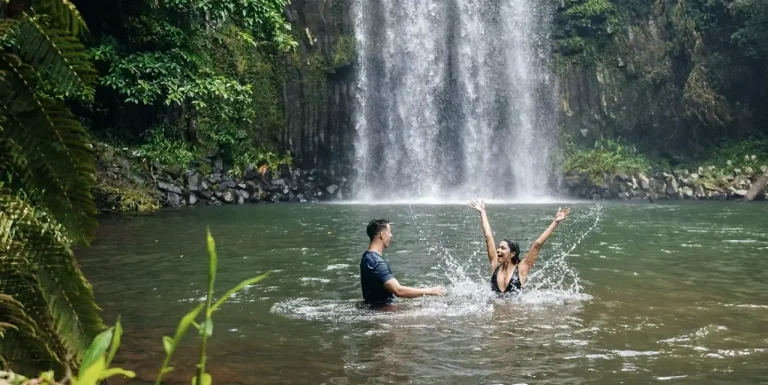
River-based rainforest experiences – kayaking, canoeing, or swimming in rivers – often work better with families than terrestrial walks. The water provides cooling, the pace is controlled, and the perspective is different. Caimans, river dolphins, and water birds are more visible from the water than from forest trails. The main constraint is that young children need proper flotation and supervision, and not all rivers are equally safe for families.
The most realistic rainforest experiences with children involve accepting that you’re not going to see everything or go everywhere. You’re going to spend a few hours in an extraordinary environment, observe what’s visible, and return to comfort. This is not a compromise – it’s the actual experience for most families. The children who remember rainforest trips years later aren’t the ones who covered the most distance or saw the most species. They’re the ones who had moments of genuine engagement: discovering an unusual insect, hearing the forest at dawn, or swimming in a clear river. These moments happen in short, focused sessions with adequate rest and recovery, not in ambitious all-day expeditions.