
After spending years working in tropical mountain regions, I’ve learned that the relationship between rainforest vegetation and slope stability is far more complex than the simple image of roots acting as anchors. What appears to be a straightforward mechanical problem – trees holding soil in place – actually involves several overlapping systems that work together to prevent the catastrophic failures we see when forests are cleared.
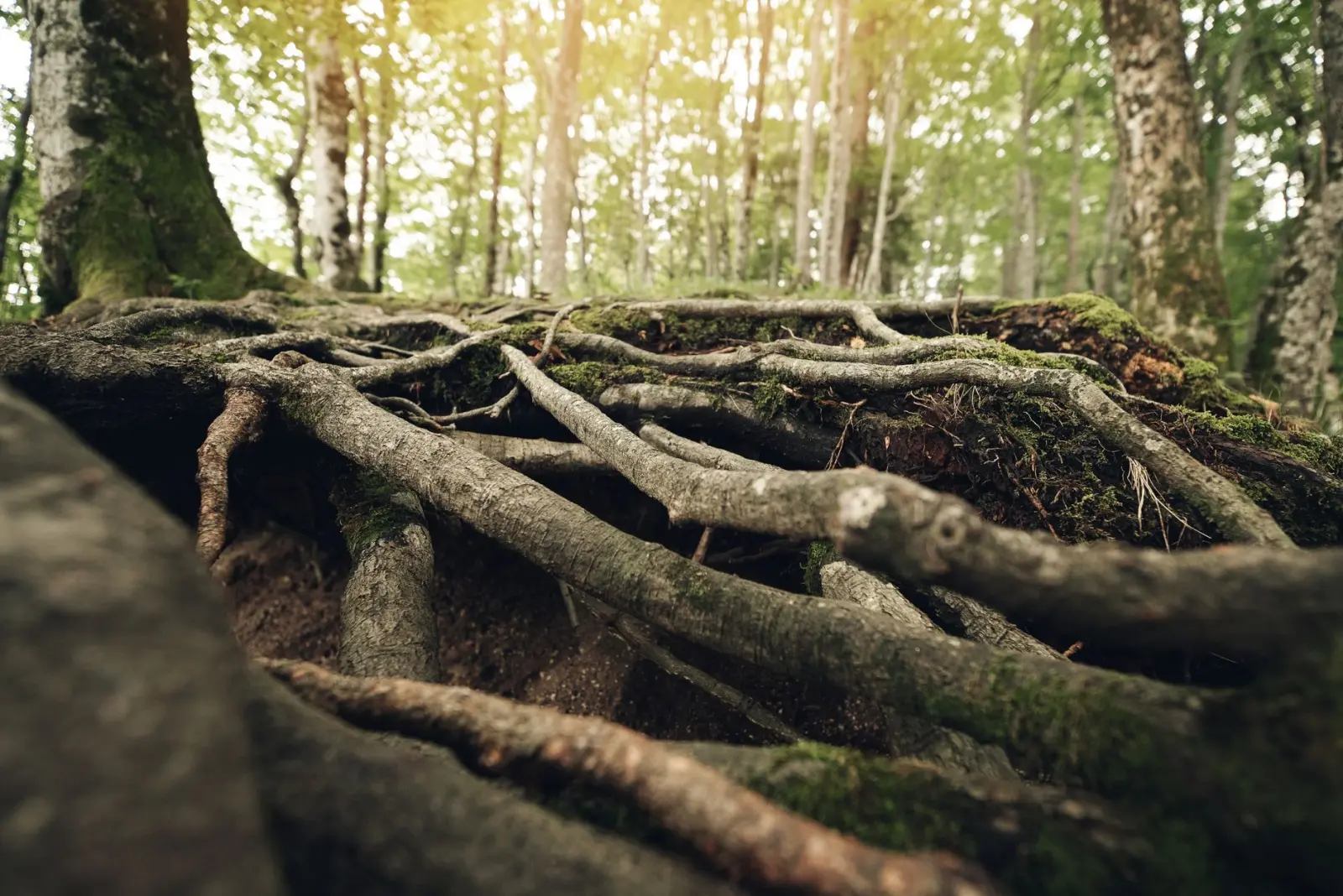
The most obvious mechanism is the direct reinforcement that roots provide. Large tree roots penetrate deep into the regolith and weathered bedrock, creating a three-dimensional network that binds soil particles together. This is not passive. The roots actively increase the shear strength of the soil, meaning the slope resists sliding more effectively. But the numbers matter here. A single large tree might contribute only marginally to overall slope stability. What matters is the density and distribution of the root network across the entire hillside. In healthy rainforest, you have hundreds or thousands of trees per hectare, each with extensive root systems. That cumulative effect is what prevents failure.
The Soil Binding Effect Beyond Simple Anchoring
What I’ve observed repeatedly is that roots do something more subtle than just acting as cables or anchors. They modify the soil itself. Root systems create continuous pathways through the soil matrix, and as roots age and decay, they leave behind voids and channels that alter water movement and soil structure. Living roots also exude compounds that cement soil particles together. This biochemical stabilization is often overlooked, but it’s significant. The soil around an active root system has different cohesion properties than soil without roots, even before considering the mechanical reinforcement.
The decay of fine root networks – the smaller roots that extend throughout the upper soil layers – creates a more porous, stable soil structure. This isn’t about individual roots holding things together. It’s about the collective effect of millions of fine roots creating a web-like matrix that distributes stress across a much larger volume of soil. When you lose the forest, you lose this matrix, and the soil becomes less coherent almost immediately. The mechanical properties change within months, even before the large tree roots decay.
Water Management as the Critical Variable
In my experience, the water-related aspects of root stabilization are often underestimated in discussions that focus mainly on mechanical anchoring. Rainforest root systems actively manage water movement through the soil profile. Trees intercept rainfall through their canopy, reducing the amount of water that reaches the ground. The forest floor – the layer of leaf litter, decomposing organic matter, and fine roots – acts as a sponge that absorbs and slowly releases water. This buffering effect is crucial on steep slopes where rapid water infiltration can trigger failure.
The root systems themselves create preferential pathways for water movement. Water moves down along roots and through the channels they create, rather than saturating the entire soil mass. This keeps pore water pressures lower than they would be if water simply percolated uniformly through the slope. Lower pore water pressure means higher effective stress in the soil, which translates directly to greater resistance to sliding. When forests are removed, this preferential drainage system disappears. Water saturates the soil more completely, pore pressures rise, and the slope becomes unstable.
I’ve seen this play out in real time on cleared slopes. Within the first heavy rainfall after deforestation, slopes that had been stable for decades suddenly fail. The mechanism isn’t that the roots have decayed – that takes longer. It’s that the hydrological regime has changed immediately. The soil is saturated when it wasn’t before, and that’s often enough to trigger failure on steep terrain.
Root Depth and Bedrock Interaction
The depth to which roots penetrate varies enormously depending on tree species, soil depth, and bedrock type. Some tropical trees send roots several meters deep, while others remain relatively shallow. What matters for slope stability is that at least some portion of the root network reaches into more competent material – either deeper, less weathered soil or into the actual bedrock. These deeper roots provide genuine mechanical anchoring to more stable substrate. The shallower roots provide the distributed binding effect I mentioned earlier.
In steep mountain terrain, the interaction between roots and bedrock is particularly important. Weathered bedrock – the zone where solid rock is being broken down by chemical and physical processes – is often weaker than either the soil above it or the unweathered rock below it. Roots that penetrate into this zone can significantly increase its shear strength. I’ve observed that slopes with deeper-rooting tree species tend to be more stable than those dominated by shallow-rooted species, all else being equal. This is one reason why forest composition matters for slope stability, not just forest presence.
The Network Effect and Distributed Stress
What makes rainforest particularly effective at slope stabilization is the sheer density and interconnectedness of the root network. This isn’t a few large trees holding everything in place. It’s thousands of trees of varying sizes, each contributing to a system that distributes stress across the entire slope. When stress concentrates in one location – as it does on a cleared slope or one with sparse vegetation – failure becomes likely. When stress is distributed across thousands of root systems, the slope can tolerate much higher stresses without failing.
The redundancy built into a dense forest root system is important too. If one root breaks or one tree fails, the load is redistributed to neighboring trees. On a slope with sparse vegetation, the failure of a single tree can trigger a cascade of failures. I’ve seen this happen on slopes that were partially logged or selectively cleared. The remaining trees couldn’t handle the redistributed load, and the entire slope eventually failed.
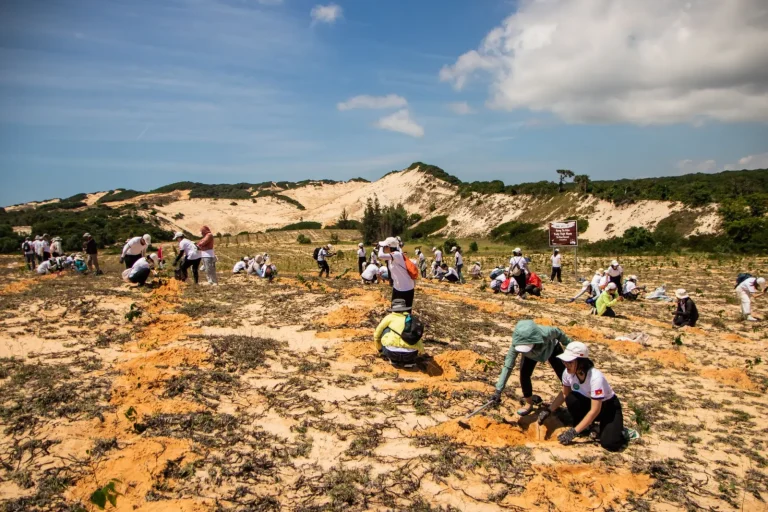
The temporal aspect of this is worth noting. Rainforest root systems don’t provide instant stabilization. The most effective stabilization comes from mature forests where trees have had decades or centuries to develop deep, extensive root systems. Young forests or recently regenerated areas provide some stabilization, but not as much as old-growth forest. This is why reforestation efforts, while valuable, don’t immediately restore slope stability to recently cleared areas. It takes time for the root networks to develop.
Working in these environments has made clear that slope stability in tropical mountains is fundamentally dependent on maintaining forest cover. The mechanisms – mechanical anchoring, soil binding, water management, and stress distribution – all work together as an integrated system. Remove the forest, and you don’t just lose trees. You lose the entire stabilization system that has evolved over centuries. The consequences often appear suddenly, but the underlying instability develops gradually as the root networks decay and the hydrological regime shifts.