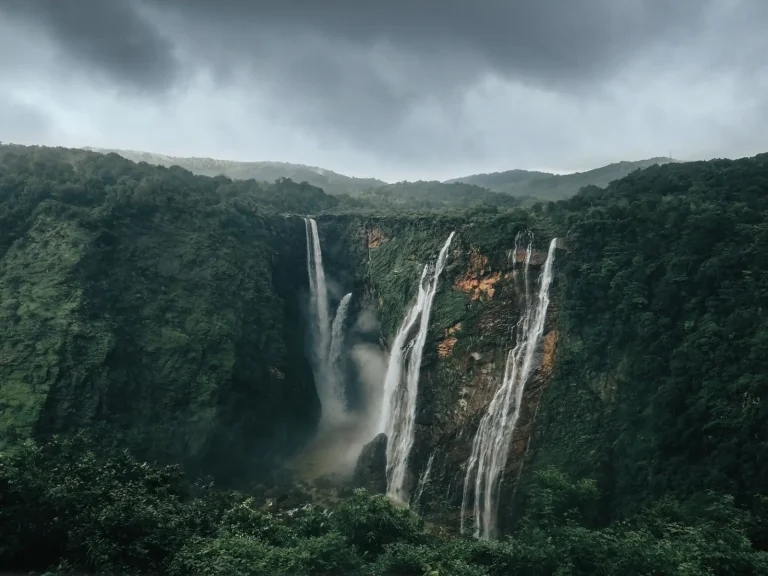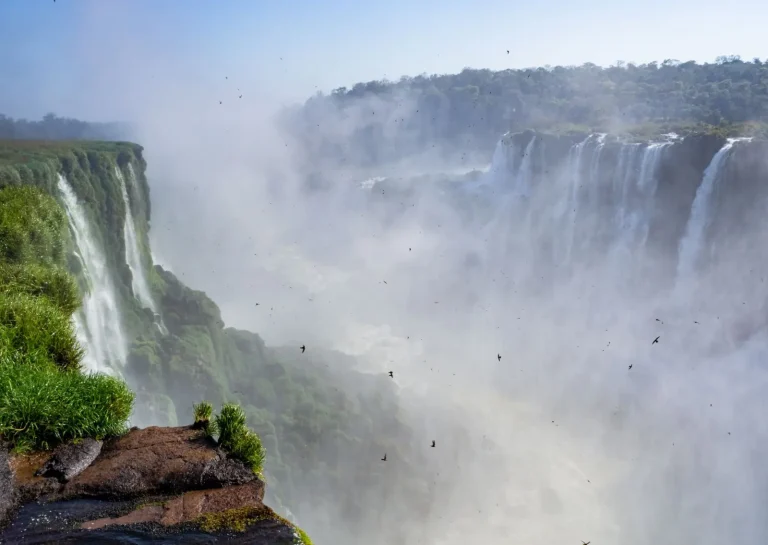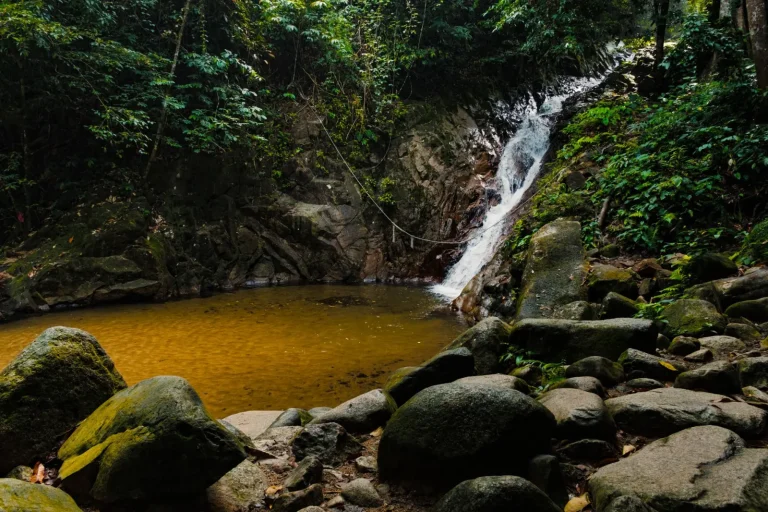

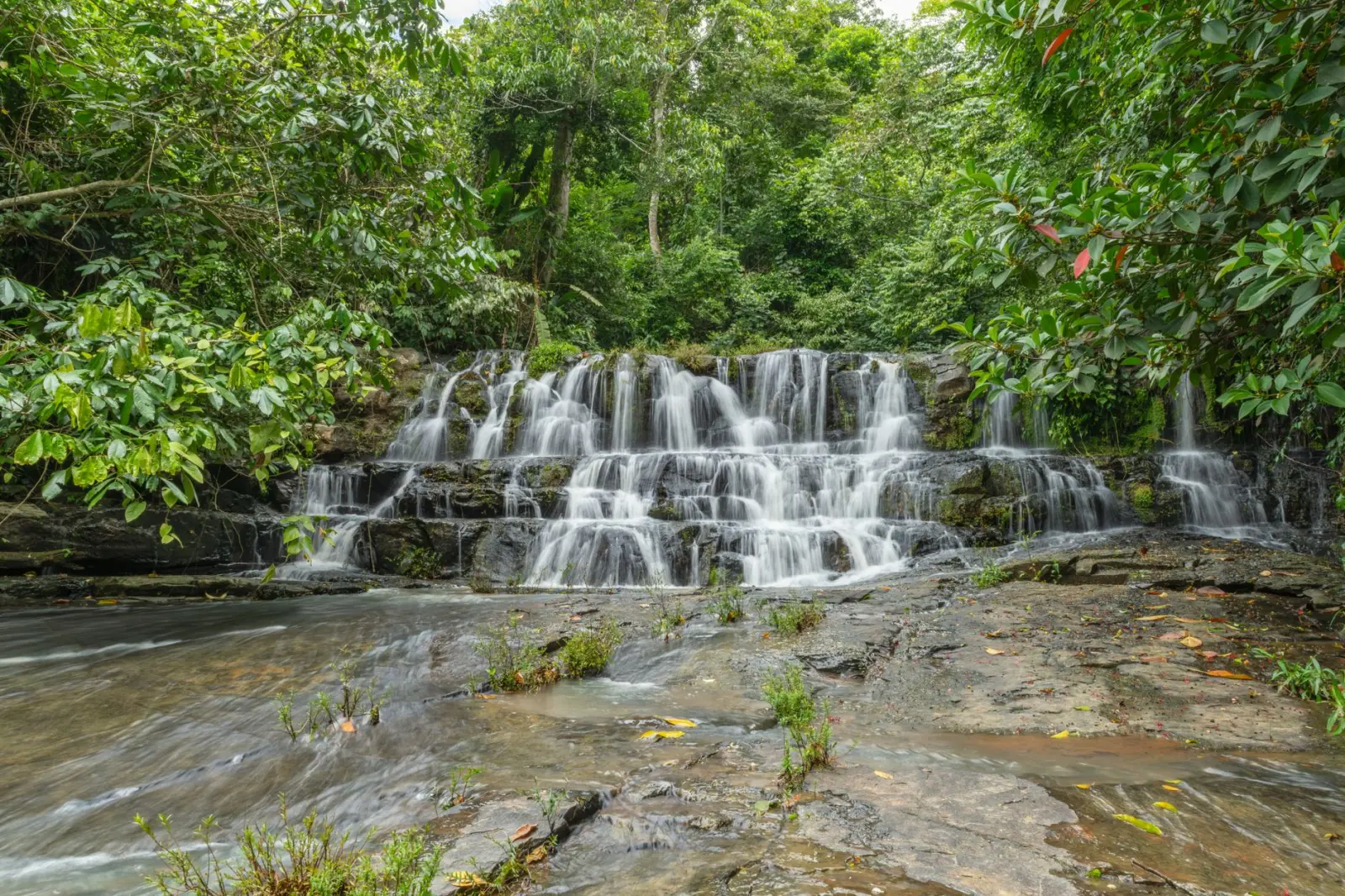
Spend enough time around rainforest waterfalls and you start noticing patterns that don’t show up in textbooks. The area immediately around a falling column of water operates under different rules than the rest of the forest. Temperature, humidity, light penetration, water chemistry, and substrate composition all shift dramatically within a few meters of the cascade. These changes aren’t incidental – they’re the foundation for entire communities of organisms that exist nowhere else in the surrounding rainforest.
The physical force of falling water is the primary architect here. A waterfall doesn’t just move water; it aerates it violently, breaks up sediment patterns, and creates zones of intense mechanical disturbance. The impact zone at the base of a waterfall stays in constant flux. Rocks tumble, substrates shift, and organic matter gets pulverized or swept downstream. This turbulence prevents the accumulation of fine sediments and leaf litter that characterize most rainforest stream beds. What remains is a landscape of exposed boulders, gravel, and bare rock – surfaces that would be quickly colonized by moss and algae in calmer water, but here get scoured regularly.
Microclimate Variations Around the Cascade
The spray zone creates its own weather system. I’ve measured humidity differences of 15 – 20 percentage points between areas just 10 meters apart in steep waterfall zones. The mist rises and spreads, creating a perpetually saturated microclimate that extends upward and outward from the base. This isn’t uniform saturation – it’s a gradient. The rock face directly behind the falling water stays soaked and cool. Moss, liverworts, and specialized ferns thrive here in ways they don’t on the surrounding forest floor. The air temperature in these zones can be 2 – 4 degrees Celsius cooler than the ambient rainforest temperature, a significant difference in the tropics.
Light exposure changes too. The mist diffuses incoming sunlight, creating a softer, more filtered light environment than you’d expect at ground level in a rainforest. This isn’t darkness – it’s a particular quality of illumination that favors certain photosynthetic strategies. Ferns with thin, delicate fronds that would be scorched by direct sunlight do well here. Algae species that prefer lower light intensities establish themselves on wet rock surfaces. The combination of high moisture, cooler temperatures, and diffused light creates conditions more similar to a temperate forest understory than to a tropical rainforest floor.
Water Chemistry and Nutrient Dynamics
Waterfalls oxygenate water to levels much higher than still pools or slow-moving streams. This oxygen enrichment supports different microbial communities and invertebrate species than you find in backwater areas. The turbulence also affects nutrient distribution. Nitrogen and phosphorus cycling operates differently in high-energy water. Particulate organic matter gets broken down more rapidly. Dissolved nutrients remain in suspension rather than settling into sediments. This creates a flowing, dynamic nutrient environment rather than the stratified layers you see in lakes or still pools.
The substrate composition in waterfall zones influences which organisms can establish themselves. Smooth, rounded boulders dominate areas of high flow. These surfaces are difficult for most plants to colonize – there’s little soil accumulation, and the constant scour removes any developing root systems. But certain mosses and liverworts have adapted to these conditions. They grow in low mats, anchoring themselves into tiny crevices and weathered depressions. Algae films coat the rocks, creating a slippery surface that looks barren but is actually highly productive biologically.
Specialized Fauna of Waterfall Zones
The invertebrate communities in waterfall habitats are notably different from those in adjacent stream sections. Insects that thrive in high-velocity water – certain mayfly nymphs, stonefly larvae, and blackfly larvae – concentrate in these zones. They’ve evolved flattened bodies, powerful claws, and behaviors that allow them to maintain position in rushing water. Conversely, many of the soft-bodied invertebrates common in slower water sections are absent or rare here. The mechanical stress of living in a waterfall zone is simply too great for them.
Fish distribution around waterfalls shows clear patterns. Many species cannot navigate the turbulent zones directly beneath a cascade, but they congregate in the calmer pools immediately downstream where the water begins to slow. These transition zones become feeding and resting areas. Some fish species have evolved to exploit the unique conditions of waterfall zones specifically – they’re adapted to navigate fast water and feed on the concentrated invertebrate populations. In some tropical rainforests, certain cichlid species are found almost exclusively in waterfall zones, nowhere else in the river system.
Amphibians show interesting responses to waterfall habitats. Some frog species breed in the splash zones on rocks near waterfalls, taking advantage of the constant moisture and the reduced predation pressure in these harsh, high-energy environments. The tadpoles that develop in small pools and crevices near waterfalls face different selective pressures than those in mainstream water – they deal with variable water levels, high oxygen availability, and intense light fluctuations as mist patterns shift.
Long-Term Habitat Stability and Change
What’s often overlooked is that waterfall habitats, despite their apparent permanence, are actually dynamic and subject to seasonal and longer-term changes. During high-water seasons, the force and spray zone of a waterfall expand significantly. The microclimate shifts. Organisms that thrived during dry season conditions get displaced or buried under sediment. When water levels drop, new rock surfaces emerge, new spray patterns develop, and the habitat reconfigures. Species composition changes accordingly.
The surrounding rainforest forest canopy also influences waterfall zone conditions. Where the canopy is dense and intact, less direct sunlight reaches the waterfall area, and temperatures remain cooler. In areas where canopy cover has been reduced – whether from natural disturbance or human activity – waterfall zones warm up, humidity patterns shift, and the specialized species that depend on the cool, moist microclimate begin to disappear. This sensitivity to canopy conditions means that waterfall habitats can serve as indicators of broader changes in rainforest health.
After years of observing these zones, what stands out is their fundamental difference from the rest of the rainforest ecosystem. They’re not just wetter versions of adjacent habitats – they operate under distinct physical and chemical conditions that support entirely different communities. The waterfall creates its own world, complete with specialized species, unique microclimates, and ecological processes that don’t occur elsewhere in the forest. Understanding this distinctiveness matters for anyone trying to assess rainforest biodiversity or predict how these ecosystems might respond to environmental change.