Rose-crowned fruit-doves are genuinely difficult to see, even when you know they’re there. I’ve spent considerable time in Australian rainforests tracking these birds, and the experience teaches you quickly that their reputation for being elusive is earned. They’re small, they move unpredictably through dense canopy, and they have no interest in making themselves obvious. The rose crown that gives them their name is rarely visible unless the light hits exactly right, and by then the bird has usually moved on.
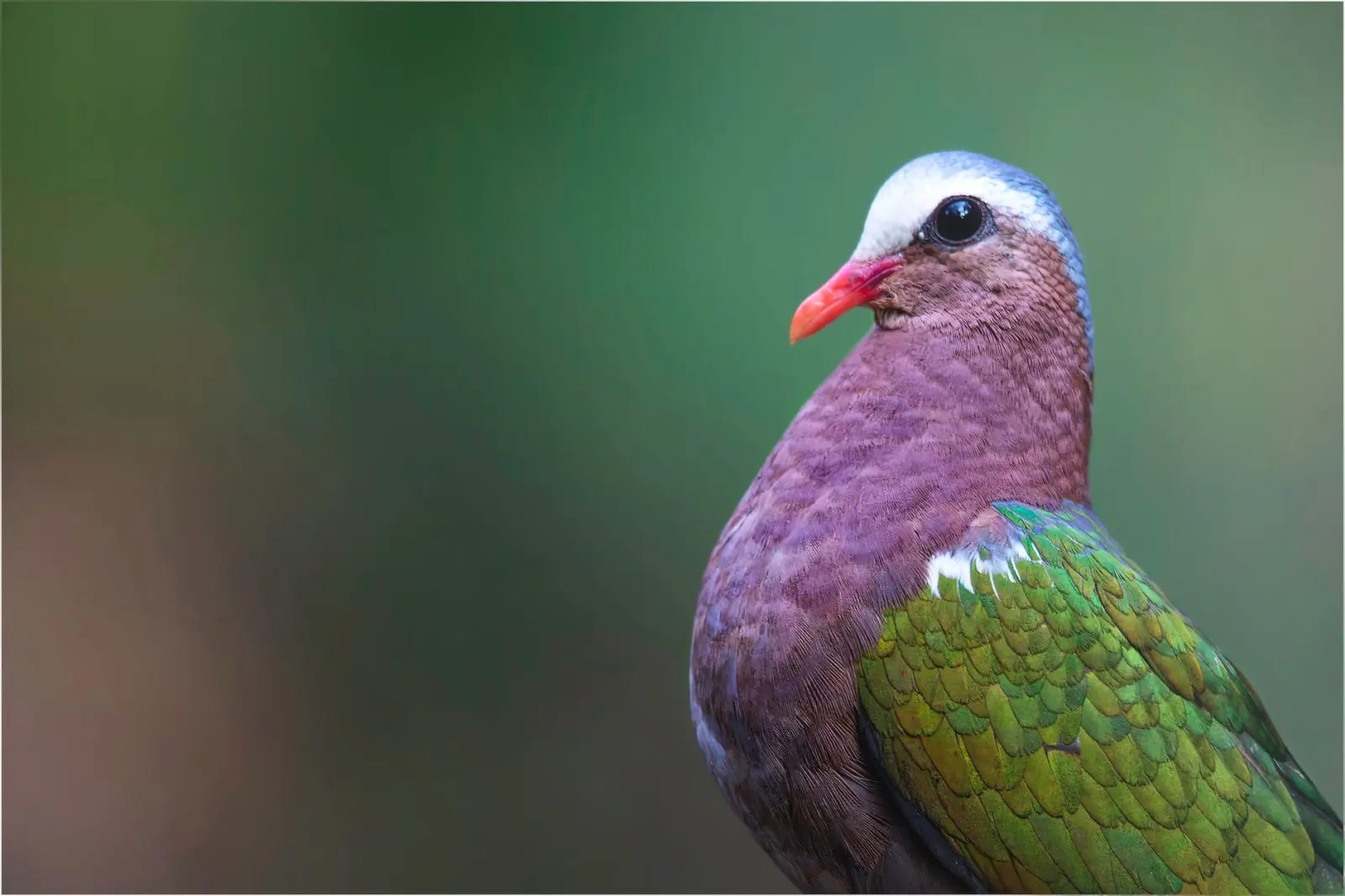
What strikes most people first is how quiet they are. Unlike many rainforest birds that announce themselves constantly, rose-crowned fruit-doves slip through the canopy with minimal sound. You might hear a soft, almost whispered call – a gentle cooing that doesn’t carry far – but more often you’ll catch movement in your peripheral vision before you hear anything. The bird itself is compact, around 20 centimetres long, with soft grey plumage on the head and back, and that distinctive rose-coloured crown that only shows clearly when the light cooperates and the bird’s posture allows it.
Where and When They’re Most Active
These doves favour the fruiting trees scattered through rainforest canopy, and their presence in any given area depends entirely on what’s fruiting at that moment. This is the key to understanding their distribution and behaviour. They’re not territorial in the way many birds are. Instead, they follow food sources, which means they can be abundant one week and absent the next. I’ve learned to check with local guides or other birdwatchers about recent sightings before planning an outing specifically to find them.
Early morning, from around first light until mid-morning, is when you have the best chance. The birds are feeding actively, moving between fruiting trees, and the light is generally softer than midday. By mid-morning, activity often drops sharply. The afternoon can produce sightings, but it’s inconsistent. During the heat of the day, they tend to rest deeper in the canopy where you can’t see them. If you’re out looking for them in the middle of the day, you’re working against the odds.
Rainforest structure matters more than you’d initially think. They prefer the mid to upper canopy, typically between 10 and 25 metres up, though they’ll come lower when feeding heavily. They’re particularly attracted to native fig trees, native peppers, and various other rainforest fruits. The problem is that spotting them in that canopy layer requires patience and positioning. You need to be at roughly the same height as the birds, or looking slightly upward, rather than craning your neck at extreme angles. This is why walking along established rainforest tracks that wind through terrain at different elevations is more productive than standing on flat ground staring upward.
The Practical Reality of Observation
Binoculars are essential, but even with good optics, you’re often working with brief glimpses. The bird will land on a fruiting branch, feed for perhaps 30 seconds to a minute, and then move on. If you’re not already looking in the right direction, you’ll miss it. This is where experience helps. You learn to scan methodically, to watch for the slight movement of branches that indicates a bird landing, and to listen for that soft cooing call even when it’s barely audible above ambient rainforest noise.
Fatigue is a real factor that gets overlooked in birdwatching accounts. Looking upward through binoculars for extended periods creates neck strain and eye fatigue. Your arms tire from holding the binoculars steady. The humidity in Australian rainforests is often high, and the physical effort of moving through dense vegetation while maintaining focus is genuine work. I’ve found that pacing yourself, taking breaks, and not pushing too hard for too long produces better results than marathon sessions. You spot more when you’re fresh and alert than when you’re tired and frustrated.
Weather patterns influence activity significantly. Overcast days with soft, even light are better than bright, harsh sunlight, which creates difficult shadows and makes spotting movement harder. Rain doesn’t stop the birds from feeding, but it does reduce visibility and makes the canopy even denser. Windy days are particularly challenging because the constant movement of branches makes it harder to distinguish bird movement from vegetation movement.
What You’re Actually Seeing
When you do get a clear sighting, the bird’s behaviour is relatively straightforward. They feed by plucking fruit and often swallowing it whole, which means they can consume berries and small fruits quickly. They’re generally solitary or in pairs, though you might see small loose groups at particularly productive fruiting trees. They don’t display or perform acrobatic feeding like some fruit-doves do. They simply land, feed, and move on.
The rose crown itself is subtle in person. It’s not a bright, obvious marking like the crown on a crowned pigeon. Instead, it’s a soft rosy or mauve tint on the crown of the head, most visible when the light is right and the feathers are slightly raised. In poor light or at certain angles, you might not see it at all, which is why field identification can be tricky if you’re not familiar with the bird’s overall shape and behaviour. The rest of the plumage – soft grey, with some greenish tones on the wings – blends remarkably well with rainforest canopy.
Over years of observation, I’ve noticed that rose-crowned fruit-doves are more common than many people realise, but their cryptic nature and canopy preference means they’re simply overlooked. They’re not rare, and they’re not threatened in the way some Australian rainforest species are. They’re just genuinely difficult to see unless you’re in the right place at the right time, looking in the right direction, and the light cooperates. That combination of factors is rarer than you’d think, which is why patient, repeated visits to productive rainforest areas are more reliable than one-off attempts to find them.