
Walking through Tasmania’s southwest wilderness, you encounter trees and plant communities that feel displaced in time. The myrtle beech, the Huon pine, the ancient tree ferns – these aren’t recent arrivals or evolutionary experiments. They’re survivors from an era when Tasmania was connected to Antarctica, New Zealand, and Australia as part of the supercontinent Gondwana. Understanding this deep history isn’t academic curiosity. It fundamentally changes how you read the landscape and why certain forests behave the way they do.
The separation of Gondwana began roughly 80 million years ago, though Tasmania’s isolation from mainland Australia happened much more recently, around 10,000 years ago when sea levels rose. What matters for anyone moving through these forests is that the plant species here evolved under radically different climatic and geographical conditions than they currently experience. The cool temperate rainforests you encounter in places like the Tarkine or the southwest wilderness aren’t optimized for Tasmania’s current climate. They’re holdovers, persisting because the island’s cool, wet conditions happen to suit them – but only just.
The Gondwanan Flora and What It Tells You
Several key plant families in Tasmania have direct lineage to Gondwana. The southern beeches (Nothofagus), which dominate parts of the southwest, are found today only in Tasmania, mainland Australia, New Zealand, and South America. You won’t see them anywhere else on Earth. Their presence in Tasmania is a direct genetic line to when those landmasses were touching. The Huon pine, one of the world’s longest-living trees, similarly has its closest relatives in New Zealand and South America. These aren’t coincidences of dispersal or adaptation. They’re geographical signatures of ancient continental connections.
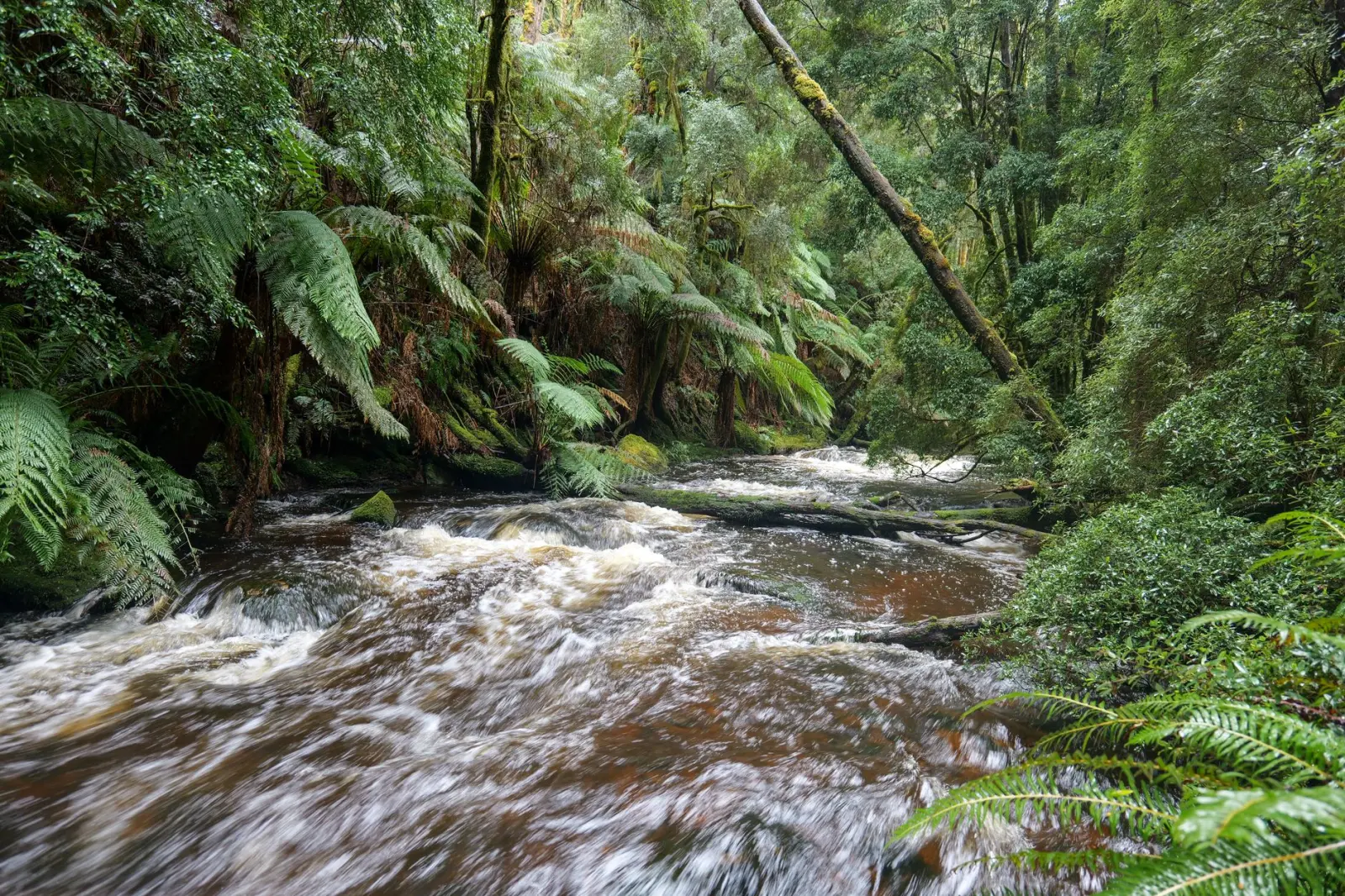
What becomes apparent when you spend time in these forests is that they’re structurally and ecologically different from the eucalyptus forests that dominate mainland Australia. The canopy is lower and denser. The understory is thick with ferns, mosses, and shade-tolerant shrubs. The soil is deep and rich with organic matter. None of this is accidental. These forests evolved in the cooler, wetter conditions of Gondwana and have maintained those characteristics because Tasmania’s climate – particularly in the southwest and west – remains cool and wet. The moment you move to drier parts of the island, the Gondwanan flora thins out and gives way to more typical Australian vegetation.
Practical Implications for Movement Through the Landscape
If you’re trekking through the Overland Track or exploring the Tarkine, the Gondwanan origin of these forests has direct, physical consequences. The density of the vegetation slows movement considerably. The high moisture content means the ground is often soft and uneven. Fallen logs – some of them massive Huon pines or myrtle beeches – create natural obstacles that don’t rot quickly in the cool, wet conditions. The lack of a clear forest floor means navigation by foot is slower than in open eucalyptus woodland. This isn’t a complaint about the landscape. It’s a reality that stems directly from the evolutionary history of the place.
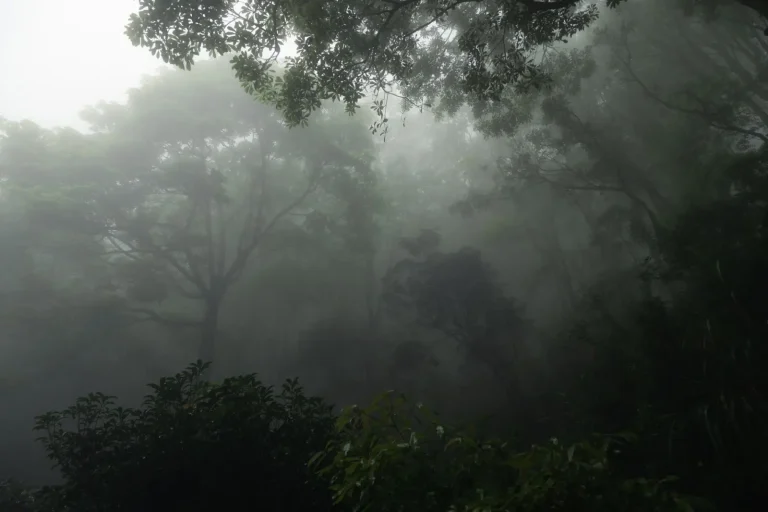
The fern-dominated understory also means that visibility is limited even on clear days. You’re often moving through a green tunnel where the canopy is overhead and the ferns reach waist-height or higher. Weather changes rapidly in these forests because the dense canopy traps moisture and prevents wind from dispersing it. Mist and low cloud can develop within minutes, even on days that started clear. This is normal for Gondwanan rainforest conditions. It’s not a weather anomaly. It’s how these forests function.
Climate Stability and Vulnerability
One of the most significant aspects of Tasmania’s Gondwanan forests is that they evolved in a relatively stable climate over tens of millions of years. Temperatures didn’t fluctuate wildly. Moisture was consistent. The plant species adapted to those conditions with precision – but that same precision makes them vulnerable to rapid change. The myrtle beech and southern beech are sensitive to temperature increases. The Huon pine grows slowly and is extremely sensitive to disturbance. These aren’t robust, adaptable species. They’re specialists that happen to be well-suited to Tasmania’s current conditions.
What this means practically is that these forests are not infinitely resilient. Climate models suggest that Tasmania’s southwest will remain cool and wet for the foreseeable future, which is good news for the Gondwanan flora. But any significant warming or drying would put pressure on species that have no evolutionary experience with such change. The forests would shift, contract, or be replaced by different vegetation. This isn’t speculation. It’s a logical consequence of their evolutionary history and current ecological constraints.
Visiting These Forests With Context
Knowing the Gondwanan origin of Tasmania’s forests changes how you experience them. You’re not just walking through old-growth rainforest. You’re moving through a living geological record. The massive Huon pines you encounter in the southwest might be 3,000 years old or older. They were growing when the Roman Empire was at its height. The myrtle beech forest canopy above you has been relatively unchanged for millions of years. That sense of deep time is palpable when you understand what you’re looking at.
The isolation of these forests also means they’re fragile in a specific way. They depend on the cool, wet conditions of Tasmania’s western and southwestern regions. They’re not found in the drier east or north because those areas don’t provide the right climate. This means that the protected areas – the Southwest National Park, the Tarkine, the areas managed for conservation – are genuinely important. They’re not just scenic reserves. They’re the last refuges for plant species that have nowhere else to go on Earth.
The practical reality of visiting these forests is that they demand respect and patience. The terrain is challenging. The weather is unpredictable. The vegetation is dense. But these characteristics aren’t flaws in the landscape. They’re the direct result of 80 million years of evolution in a specific set of conditions. Understanding that history doesn’t make the forests easier to move through, but it does make them more legible. You’re not just seeing trees. You’re seeing the persistence of an ancient world.