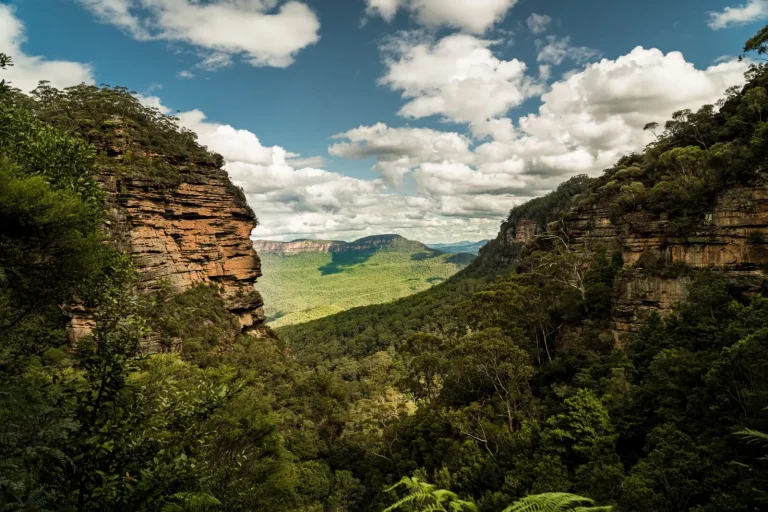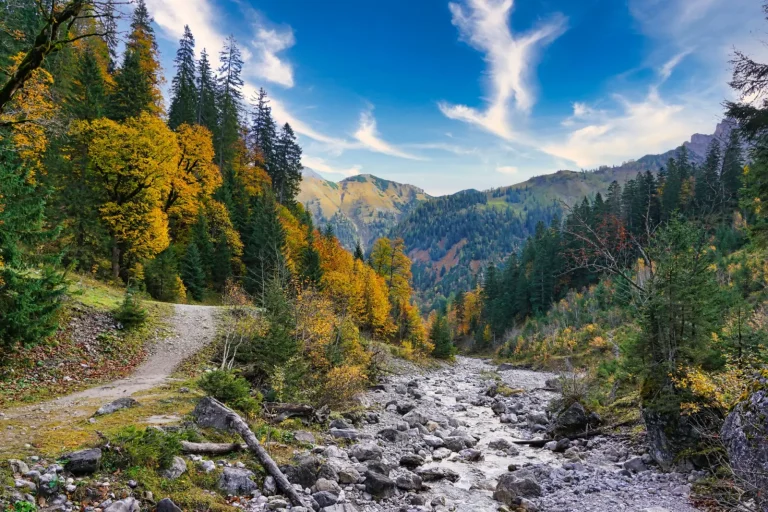

The forest around Gibraltar Range sits in the northern tablelands of New South Wales, and it moves at its own pace. I’ve spent enough time threading through those ridges and gullies to know that the experience bears almost no resemblance to what most people imagine before they arrive. The trees are dense in places, open in others. The paths can be obvious for long stretches, then vanish into scrub so thick you’re essentially navigating by compass and intuition. Weather changes fast. Fatigue accumulates differently than it does on open moorland or coastal walks.
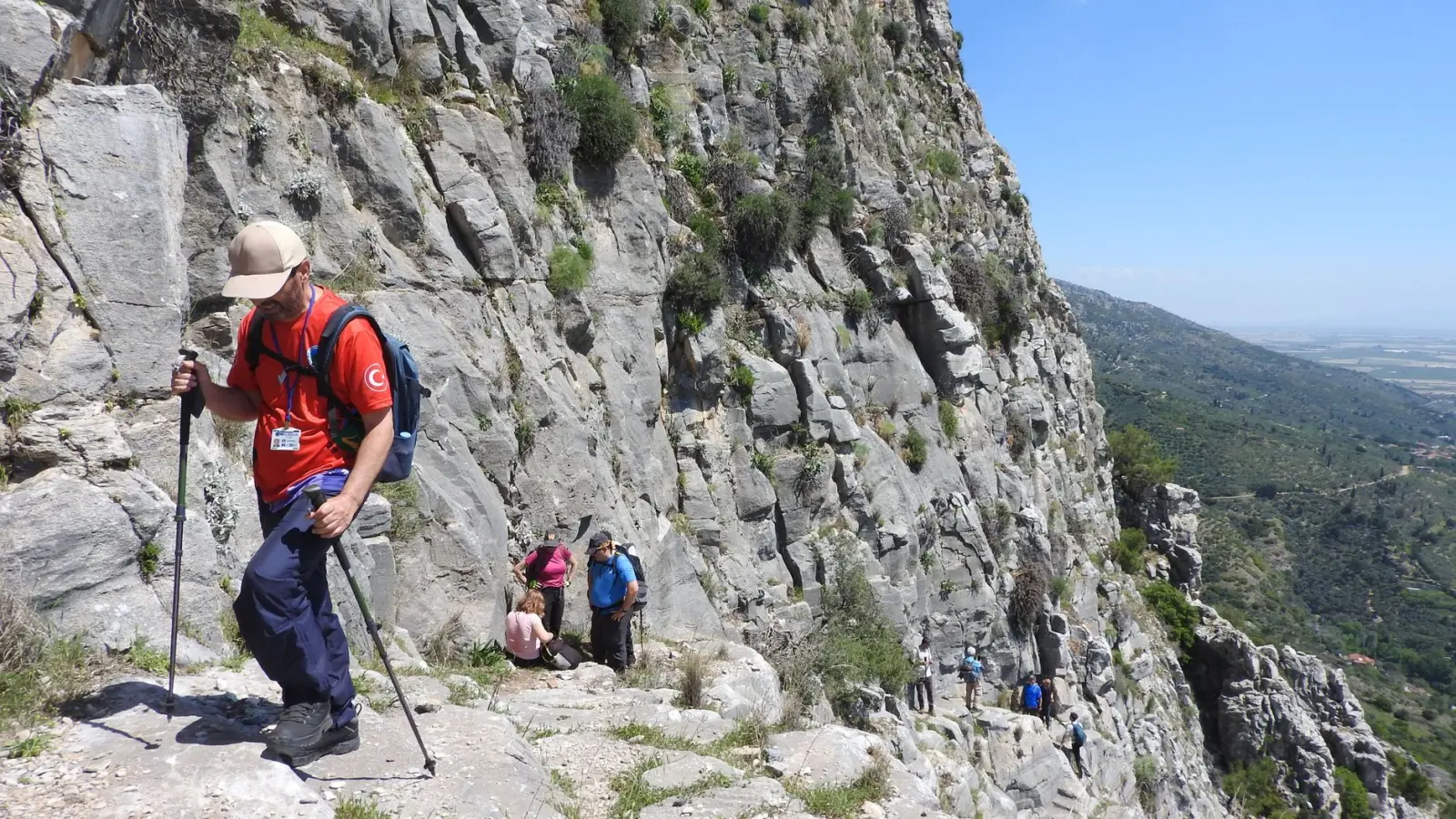
What strikes most people first is the sheer verticality. The range isn’t a gradual slope. It’s a series of steep climbs and descents that test your legs far more than distance alone would suggest. A five-kilometre walk here feels substantially longer than the same distance on flatter ground. The forest floor itself is uneven – root systems, scattered rocks, and sudden drop-offs mean you can’t settle into a rhythm. Your attention has to stay high. That constant vigilance is tiring in a way that pure distance doesn’t capture.
The Forest Structure and What It Means for Movement
The vegetation changes noticeably depending on elevation and aspect. Lower sections tend toward wet sclerophyll forest with tall eucalypts and a thick understory. The canopy here filters light down to a dull green, and the air feels damper even on dry days. Higher elevations open up slightly, with more stunted growth and better visibility, but the ground becomes rockier and more exposed to wind. Ridgelines offer views across the ranges, but they’re also where weather hits hardest.
The undergrowth isn’t uniform. In some areas you’ll push through waist-high bracken and fern. Other sections have sparse ground cover with mostly leaf litter and exposed earth. This variation means your pace fluctuates constantly. You can’t plan a steady walking speed for the whole route. Some stretches move quickly; others slow you to a crawl. Experienced walkers learn to accept this rather than fight it. Trying to maintain consistent speed just exhausts you faster.
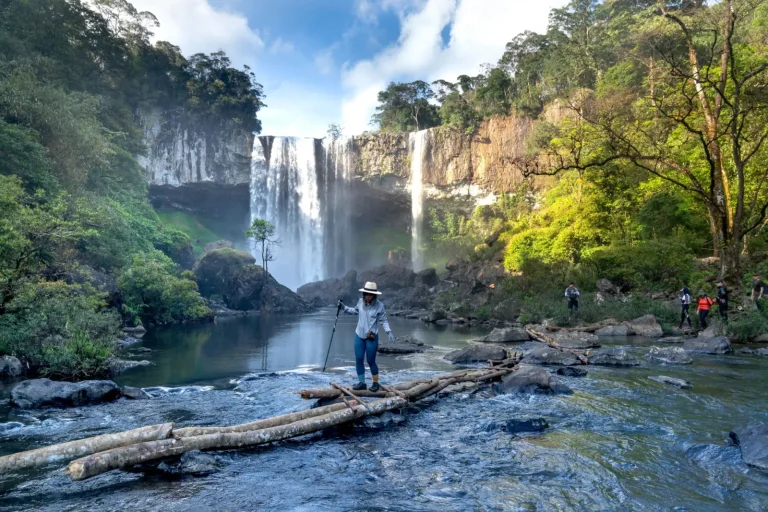
Water is everywhere and nowhere. Creeks run through the gullies, and after rain they can be substantial. Crossing them isn’t difficult, but the banks are often slippery with moss and clay. I’ve seen people go down hard trying to rush a creek crossing. The water itself is cold year-round, even in summer. If you misstep and go in fully clothed, you’re looking at a significant problem – hypothermia is a real risk, even in warmer months, because the air temperature can be quite different from water temperature. Most people underestimate this.
Seasonal Patterns and Their Effect on Conditions
Spring and early summer are the most forgiving seasons. Growth is vigorous, which makes the forest feel alive, but the trails are generally well-defined from recent foot traffic. Temperatures are moderate, and rainfall is less intense than in autumn. The main drawback is that everything is wet from morning dew for the first few hours, which means your boots and legs are soaked before you’ve gone a kilometre.
Autumn brings heavier rainfall and the forest responds with a kind of lushness that can be beautiful but also disorienting. Visibility drops. Trails become harder to follow because water obscures markers and leaf fall covers the path. This is when navigation errors happen most frequently. I’ve had to backtrack more times in autumn than in any other season, simply because the route wasn’t where I expected it to be. The extra climbing you do trying to find the correct line adds real fatigue.
Winter is quieter and the forest opens up somewhat as deciduous plants drop their leaves. Visibility improves, and the cooler temperatures mean you’re not fighting heat and humidity. The trade-off is that the ground becomes treacherous. Frost forms on exposed sections in early morning, and wet rock becomes genuinely slippery. I’ve seen experienced walkers lose their footing on what looked like a straightforward descent. The cold also means you need more layers, and managing clothing becomes part of the mental load of the walk.
Summer heat in the forest is less intense than in open areas because the canopy provides shade, but it’s also more humid. The air feels thick. Sweat doesn’t evaporate efficiently, and dehydration sneaks up on you. The forest floor can trap heat and moisture, creating a greenhouse effect in low-lying areas. Insects are more active, which isn’t dangerous but adds a minor irritation that accumulates over hours.
Navigation and Finding Your Way
The trails around Gibraltar Range are marked, but the marking system assumes you know what you’re looking for. Painted blazes on trees are the standard, but they’re not frequent enough to follow passively. You need to actively scan ahead and to the sides. In dense sections, a blaze might be twenty metres away, and if you miss one, you can easily wander off-track. GPS helps, but the tree canopy can interfere with signal, and relying entirely on electronics is risky if your battery dies or the device fails.
The landscape repeats itself in ways that confuse memory. One ridge looks much like another. Gullies can seem identical. I’ve had moments where I was certain I was lost, only to round a corner and recognize a landmark. The reverse also happens – you think you know where you are and discover you’ve drifted off course without noticing. This is why many experienced walkers walk these forests in the same direction repeatedly. Familiarity reduces the cognitive load of navigation.
Scrambling over boulder fields is common in the upper sections, and it requires a different kind of attention than trail walking. You’re reading the rock surface, testing handholds, and thinking several moves ahead. It’s slower than walking, and it’s harder on the body. Ankles take a beating. Hands get scraped. The physical demand is higher than distance alone suggests.
What Catches People Off Guard
Most visitors underestimate how long the walk will take. The combination of elevation change, uneven ground, and navigation demands means that a route that looks moderate on paper becomes substantially more demanding in practice. People often arrive at the forest with expectations based on coastal walks or open moorland, then find themselves running out of daylight faster than anticipated. Starting early is essential, not optional.
The other consistent surprise is how isolated the forest feels. Even on popular trails, you can go hours without seeing another person. Mobile phone reception is unreliable. If something goes wrong – a twisted ankle, a fall, getting genuinely lost – help isn’t immediately available. This isn’t a reason to avoid the forest, but it’s a reason to walk conservatively, let someone know your planned route, and carry basic first aid and emergency supplies.
The forest around Gibraltar Range rewards patience and attention. It’s not a place to rush through or to treat as a casual stroll. It’s a place that demands respect for its verticality, its density, and its capacity to change conditions quickly. Once you’ve walked it a few times, you develop a feel for its rhythms. You stop fighting the terrain and start moving with it. That’s when the experience shifts from exhausting to genuinely satisfying.