
The rainforest around Kuranda operates on its own schedule. You can plan a morning walk and find yourself still navigating root systems at midday, or start an afternoon loop and realize the light is already shifting through the canopy by the time you’ve covered half the distance. The trails here don’t punish you outright – they’re not steep cliffs or exposed ridges – but they do demand a different kind of attention than most people bring to them.
After spending considerable time moving through these trails, the pattern becomes clear: most visitors underestimate the combination of humidity, uneven footing, and the psychological weight of dense vegetation pressing in on all sides. It’s not exhausting in the way a steep mountain hike is exhausting. It’s more subtle. Your legs feel fine. Your lungs feel fine. But by the time you’ve been walking for ninety minutes, you notice your concentration drifting, your pace slowing, and a vague sense that the trail looks slightly different than it did twenty minutes ago.
The Terrain Under Your Feet
The ground itself is the first thing to understand. Kuranda’s trails are built on rainforest floor – a composition of decomposing leaf matter, exposed root networks, and occasional patches of harder earth where foot traffic has worn through the organic layer. This creates a surface that’s rarely stable in a consistent way. One section might be firm and predictable for fifty meters, then suddenly you’re stepping over a root system that spans the width of the trail, or your boot is sinking slightly into soft, damp ground that feels like it might give way entirely.
The roots themselves are the dominant feature. They don’t just cross the trail; they form the trail in many places. Large trees have sent their root systems across the walking path as a matter of course, and the trail maintenance approach seems to be working around them rather than removing them. This means your eyes need to be on the ground constantly. It’s not dangerous in most cases, but it does mean your walking rhythm never quite settles. You’re constantly adjusting your foot placement, stepping over obstacles, watching for the next root or wet patch.
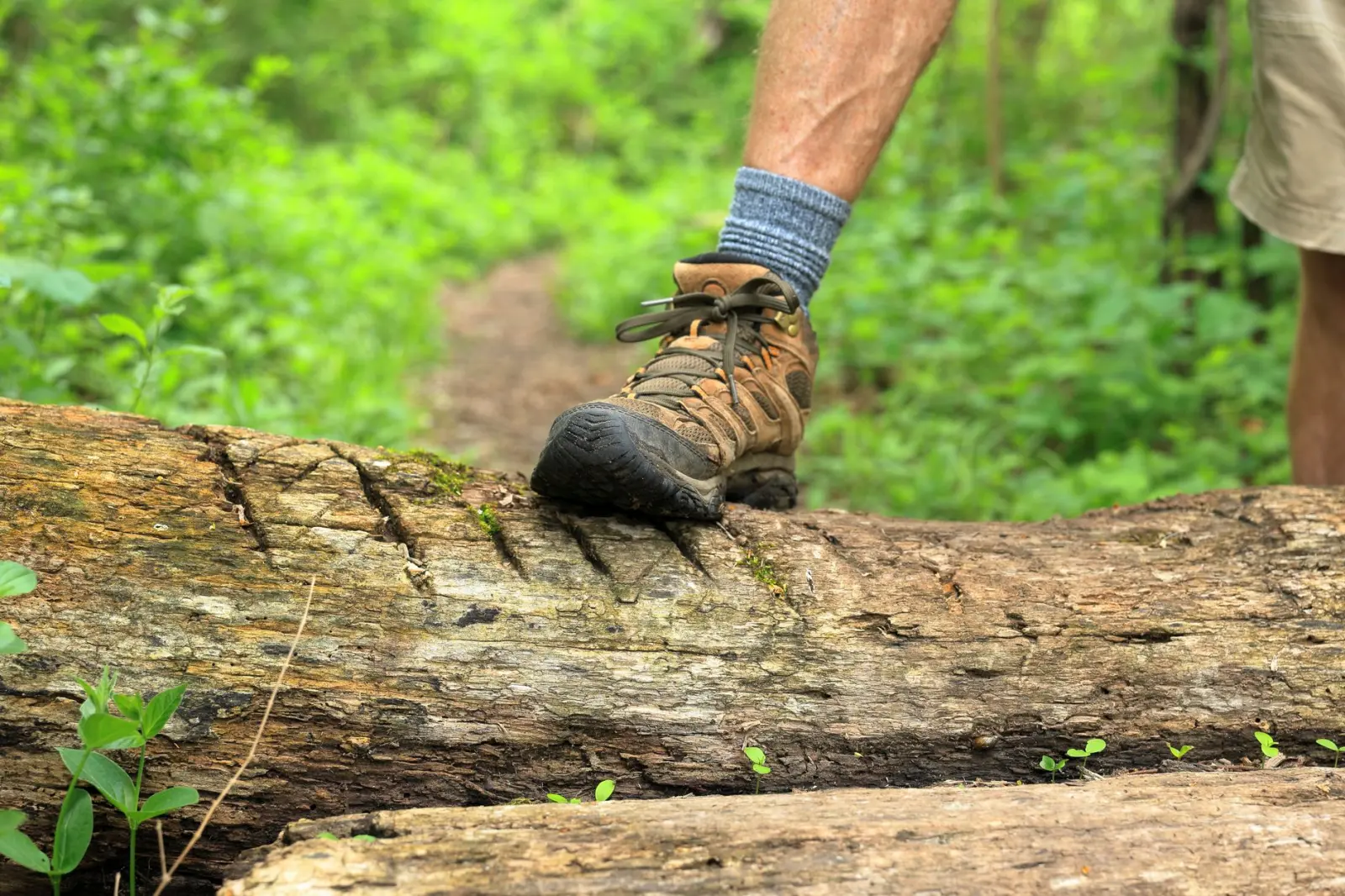
Moisture is persistent. Even on days when it hasn’t rained recently, the ground holds water. Sections of trail that look merely damp in the morning can become genuinely slippery by afternoon as the humidity rises and the organic matter absorbs more moisture from the air. Footwear matters here more than most people realize. Runners with smooth soles will slide on wet roots. Hiking boots with aggressive tread patterns work better, but even then, the grip is never absolute.
Timing and Light
The canopy above is dense enough that light levels change noticeably as you move deeper into the rainforest. A trail that’s reasonably bright at the entrance becomes progressively dimmer as you move away from the clearing. By the time you’re thirty minutes in on most loops, the light has shifted to a perpetual dusk quality. This affects your pace more than you’d expect. Your eyes need time to adjust, and the reduced light makes it harder to spot the next obstacle on the trail.
Starting early matters. A 7 a.m. start gives you decent light for the first hour and a half of walking. A 10 a.m. start means you’re dealing with full rainforest dimness by the time you’re an hour in. This is worth planning around, particularly if you’re doing one of the longer loops. The trails don’t close at dusk, but walking them in near-darkness is genuinely unpleasant and significantly increases the risk of a twisted ankle or a fall.
Humidity builds throughout the day. Early morning walks are noticeably more comfortable than afternoon walks, not because of temperature but because the air is slightly less saturated. By mid-afternoon, the humidity sits at a level where you’re sweating simply from the effort of breathing, regardless of your actual exertion level.
Distance and Fatigue
The marked trails around Kuranda range from short loops of about two kilometers to longer circuits of five or six kilometers. The distance itself isn’t the issue. The issue is that the terrain and conditions mean you cover that distance more slowly than you would on a standard hiking trail. A five-kilometer loop that might take ninety minutes on a well-maintained mountain path can easily take two hours or more in the rainforest, particularly if you’re being careful about foot placement and stopping occasionally to look at the vegetation.
Fatigue accumulates in ways that aren’t immediately obvious. Your legs aren’t tired from climbing elevation. Your lungs aren’t stressed from altitude. But your core is working constantly to maintain balance on uneven ground, your attention is focused and sustained, and the humidity is sapping your energy in a way that doesn’t feel like exertion until you’re already depleted. This is why people often describe rainforest walking as more tiring than the distance would suggest.
The psychological element shouldn’t be dismissed. Walking through dense vegetation where your sightlines are limited to fifteen or twenty meters in any direction creates a particular kind of mental fatigue. You’re processing visual information constantly – is that a tree or a person, is that movement an animal or just vegetation moving in the breeze. Most of this processing happens below conscious awareness, but it’s still work.
What You Actually See
The rainforest around Kuranda is genuinely biodiverse, but seeing that diversity requires patience and luck in equal measure. You’ll see birds if you stop and listen – the soundscape is constant and complex. You’ll see insects, though many are small and easy to miss. Larger animals like cassowaries are present in the area, but encounters are rare and usually brief. Most people walk the trails without seeing anything more dramatic than a large lizard or a colorful bird in the distance.
The vegetation itself is the main attraction, and it’s substantial. Massive trees with buttress roots, vines hanging from the canopy, understory plants in various stages of growth. If you’re interested in tropical ecology, there’s plenty to observe. If you’re expecting dramatic wildlife encounters, you’ll likely be disappointed. The rainforest is more about the overall atmosphere and the sense of being in a genuinely different ecosystem than about specific moments of wildlife drama.
Walking at a slower pace and stopping occasionally to look closely at details makes the experience richer. The trails are designed for movement, but the rainforest itself rewards attention. Spend five minutes looking at a single tree and you’ll notice details – fungi, insects, different layers of growth – that you’d miss if you were focused on covering distance.
Practical Realities
Water is essential. The humidity means you’re losing fluids through perspiration even if you don’t feel like you’re sweating heavily. Carrying at least two liters is standard practice. The trails don’t have water sources along the way, so you need to carry what you’ll need for the entire walk.
Insect repellent is worth considering, though the effectiveness is limited. Mosquitoes are present, particularly near any water sources along the trail. The repellent helps but doesn’t eliminate the problem. Long sleeves and pants reduce bites but increase the heat burden. It’s a trade-off without a perfect solution.
The trails are well-marked with signage at major intersections, but it’s easy to second-guess yourself when you’re deep in the rainforest. A map or GPS is useful backup, though the canopy can affect GPS accuracy. Most people navigate fine by following the marked trail, but being aware that you could theoretically get turned around is worth keeping in mind.
After multiple walks through these trails, the experience becomes less about conquering a hiking challenge and more about understanding how to move through a rainforest environment. The pace is slower. The attention required is different. The fatigue is real but not dramatic. It’s a specific kind of physical and mental engagement that takes a few hours to fully appreciate.