
Nightcap National Park sits in the ranges behind Byron Bay, and the forests there operate on a different rhythm than most Australian bushland. After spending considerable time moving through these trails, you start to notice patterns that don’t appear in guidebooks. The subtropical rainforest doesn’t feel like the dry eucalypt country most Australians know. It’s wetter, denser, and the way you move through it requires adjusting your expectations about pace, visibility, and what constitutes a manageable day.
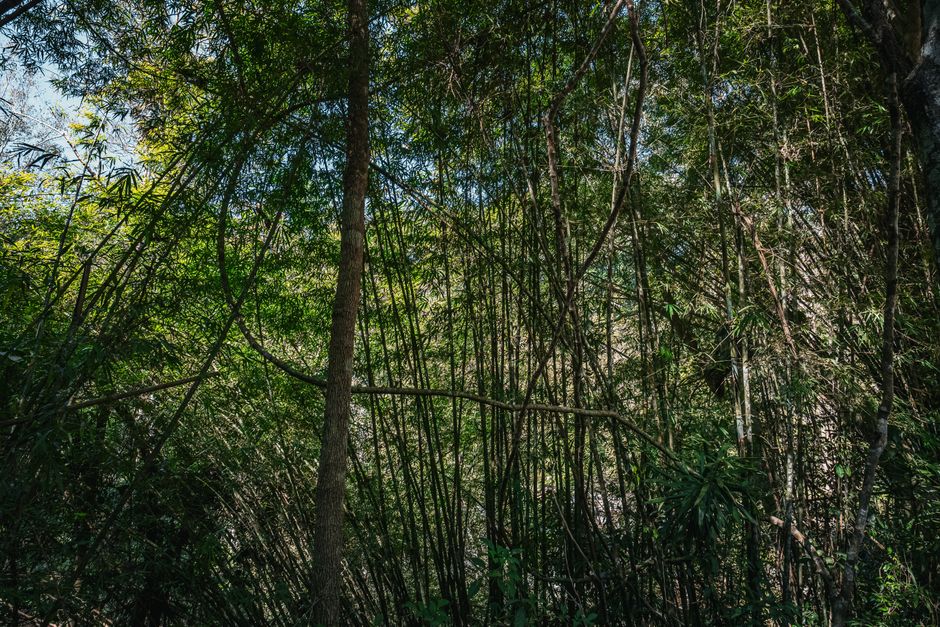
The canopy here is genuinely thick. Light reaches the forest floor in scattered patches, and on overcast days – which are frequent – the understory sits in a kind of perpetual half-light. This affects everything from navigation to footing. Roots don’t announce themselves the way they do in open forest. They’re covered in moss, and the moss itself is often damp even when there hasn’t been rain for days. The ground holds moisture in a way that creates a spongy, uneven walking surface. You can’t rely on visual cues alone to find solid footing. Your legs do most of the work, constantly adjusting to hidden terrain.
The Main Trails and What They Actually Demand
The Minyon Falls circuit is probably the most walked route in the park, and for good reason. It’s accessible and the destination justifies the effort. But “accessible” doesn’t mean easy, and this is where many walkers misjudge the distance. The trail to the falls sits around 8 kilometers return, which sounds moderate. The reality is that the rainforest terrain compresses time. You cover less ground per hour than you would on open tracks. The descent into the Minyon Falls basin is steep enough that your legs feel it on the way down, and the return climb is where fatigue becomes a real factor. People often underestimate how much energy the climb demands, particularly if they’ve started late in the day or if the ground is wet.
The Protestors Falls walk is shorter but steeper in sections. It’s perhaps 6 kilometers return, but the gradient is relentless in places. The appeal here is that you see different forest composition – more palms, different understory plants – and the waterfall itself is more intimate than Minyon. The trail narrows considerably in the final approach, and in wet conditions, the rock becomes genuinely slippery. I’ve seen confident walkers lose their footing here. It’s not technical climbing, but it demands respect and slower movement.
The Nightcap Circuit is the longer option, roughly 9 kilometers, and it’s the one that reveals how the forest changes across elevation and aspect. The track climbs through different forest types, and you move from damp gully forest into more open subtropical rainforest as you gain height. The views from the summit area are worth the effort, but the trail is less maintained than the waterfall walks. Fallen trees appear regularly, and the path can be unclear in sections. This isn’t a walk to do in poor visibility or if you’re uncertain about navigation. A GPS or detailed map makes a difference here.
Seasonal Patterns and Ground Conditions
The forest responds dramatically to rainfall, and this is where timing matters. After heavy rain, the gullies become flowing streams, and the ground transitions from spongy to genuinely boggy. The trails don’t drain well. Water sits on the path, and what looks like solid ground often isn’t. I’ve watched the same trail become impassable in sections after sustained rain, not because of danger but because the footing becomes unreliable. Your boots sink, mud accumulates, and forward momentum slows to a crawl.
Dry periods bring their own complications. The moss dries out, and the ground becomes harder, but the roots become more prominent and more treacherous. A dried root is harder than wet moss, and it catches your boot differently. The risk of a twisted ankle increases during dry spells, counterintuitively. Summer brings heat and humidity. The forest feels airless in places. Sweat doesn’t evaporate effectively, and the physical demand increases simply because your body is working harder to regulate temperature.
Autumn and early winter offer the most stable conditions. The ground is usually damp but not waterlogged. Temperature is moderate. Humidity is lower than summer but the air still carries moisture. This is when the forest feels most walkable, though “walkable” is relative. Even in ideal conditions, moving through subtropical rainforest is slower and more physically demanding than walking open trails.
What Happens to Your Body Over Distance
The constant micro-adjustments your legs make on uneven terrain accumulate. After 8 kilometers in the rainforest, your legs feel it differently than after 8 kilometers on a well-maintained track. The calf muscles work continuously, stabilizing on uncertain ground. The ankles flex constantly. Your knees absorb impact that’s distributed differently than on flat or consistently graded surfaces. This matters for how you plan your day and how you assess your fitness level.
Fatigue also affects decision-making. I’ve noticed that people tend to move faster on the descent than conditions warrant, particularly if they’re tired or running late. The forest floor doesn’t forgive speed. A slip that would be minor on open ground can result in a fall into vegetation or onto rocks. The stakes feel higher in rainforest because you’re often alone or in small groups, and help isn’t immediate.
Hydration is essential but often overlooked. The humidity makes you sweat, but you don’t always feel how much fluid you’re losing. The forest doesn’t feel hot the way open country does, but the physical demand is real. Running out of water in subtropical rainforest isn’t a minor inconvenience. The next reliable water source might be the creek at the bottom of a gully, and accessing it means leaving the trail.
Navigation and Visibility
The dense canopy means that sun position is unreliable for orientation. Landmarks are harder to spot because the view is limited. The trails are generally marked with blazes or cairns, but in sections where the trail is less used or where vegetation has grown across the path, these markers can be hard to spot. I’ve watched experienced walkers pause and double-check their direction in places where the trail splits or where a fallen tree obscures the obvious path forward.
GPS works, but it’s not foolproof. The canopy can affect signal, and relying entirely on a device means you’re not reading the terrain itself. The best approach is combining map knowledge with trail markers and ground observation. Understanding the general direction of travel and recognizing when something feels wrong – when the gradient changes unexpectedly or the forest composition shifts – helps catch navigation errors before they become problems.
Visibility also affects pacing. You can’t see far ahead, so you can’t spot obstacles or assess the next section of trail. This means you’re constantly reacting rather than planning. It’s mentally tiring in a way that’s different from walking open country where you can see the destination or the next major landmark.
Moving through Nightcap’s forests requires accepting that you’ll move slowly, that the ground will be unpredictable, and that the physical demand will exceed what distance alone suggests. The forest rewards attention and patience. Rush it, and you’ll spend energy fighting the terrain. Respect its pace, and the walk becomes manageable, even enjoyable. The rainforest isn’t hostile, but it’s indifferent to your plans. Working within those constraints is what makes the experience worthwhile.