
The wet season in rainforest regions carries a reputation for being hostile to walkers. Rain, mud, swollen rivers, and reduced visibility create an impression that serious hiking should wait for the dry months. But this assumption misses something important: some of the best rainforest walks happen precisely when the rains are heaviest. The conditions that discourage casual tourists create a different kind of experience – one that reveals how rainforests actually function, and one that, with realistic preparation, can be safer and more rewarding than the crowded dry-season alternatives.
The wet season doesn’t mean constant rain. It means rain falls in concentrated bursts, often in the afternoon or evening, with clear mornings that can stretch for hours. This rhythm matters. A walk starting at dawn in a wet-season rainforest typically offers 4 to 6 hours of workable conditions before weather deteriorates. The ground is softer, yes, but it’s also more stable in some ways – mud grips better than dust, and the risk of slipping on exposed rock diminishes when surfaces are wet. What changes is pace. You move slower. You plan differently. You accept that a 10-kilometer trail in the dry season becomes a 6 or 7-kilometer morning walk in the wet season, and that’s not a failure of planning – it’s the reality of the environment.
Water crossings and river behavior
The single most significant shift during wet season is water flow. Streams that are ankle-deep in the dry season become waist-deep or impassable within hours of heavy rain. This isn’t a minor inconvenience. It’s the primary reason walks get cut short or rerouted. The timing of your walk relative to recent rainfall becomes critical. If rain fell the previous evening, water levels will still be elevated in the morning. If it rained two days ago, levels may have dropped enough to make crossings manageable. Local guides don’t consult weather forecasts in the way tourists imagine. They feel the ground, listen to water sound, and know from experience how quickly particular streams rise in their region.
Walking in wet conditions means accepting that some crossings will be deliberate and slow. You learn to read water movement – faster flow means deeper water upstream, and you scout for wider, shallower sections rather than fighting the current at the obvious crossing point. Waterproof bags aren’t optional; they’re foundational. Camera equipment, documents, and dry clothing go into sealed containers. Many experienced walkers keep their pack itself waterproof rather than relying on internal organization. The weight penalty is minimal, and the margin of safety is substantial.
Visibility and navigation
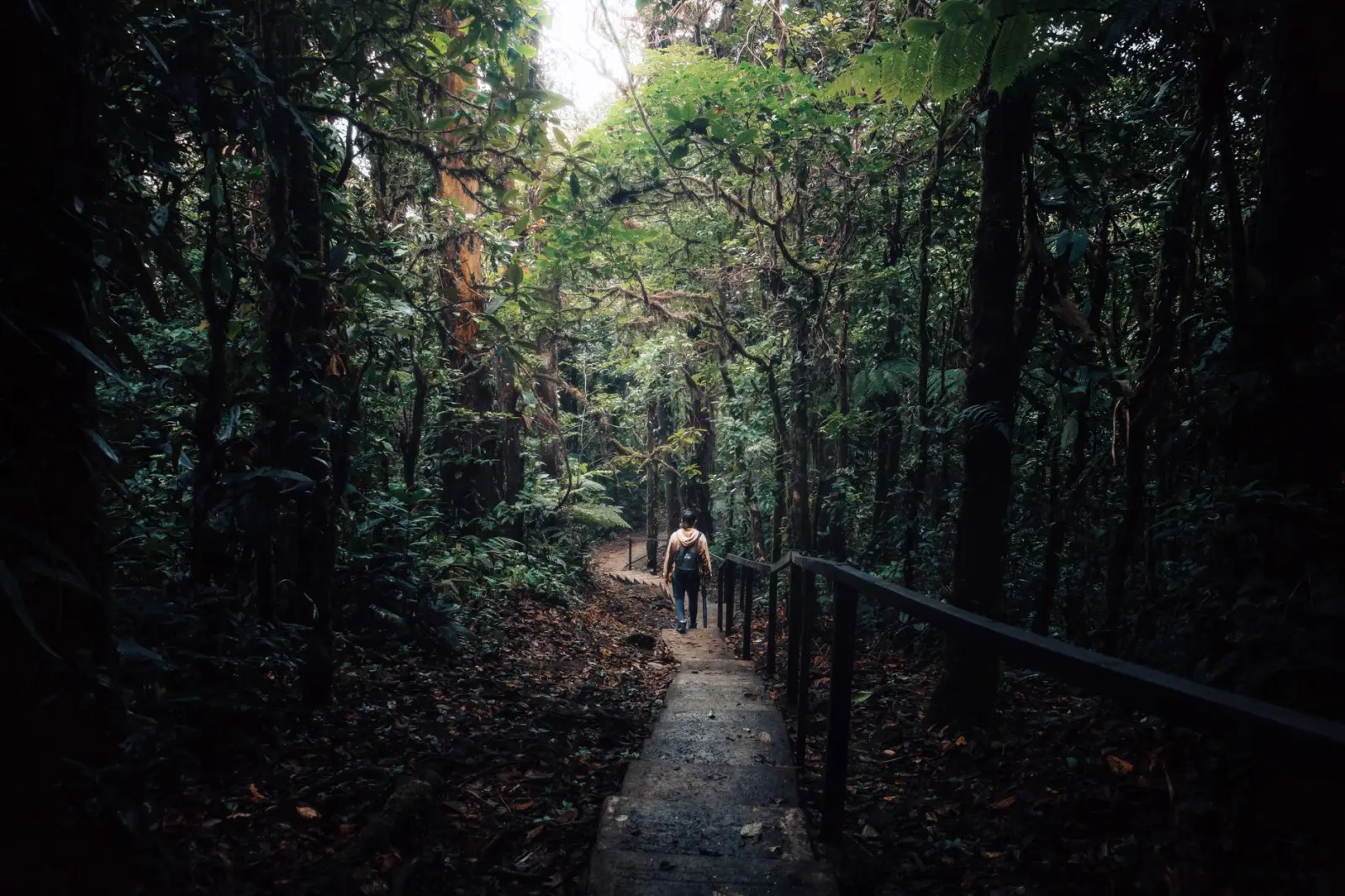
Cloud cover in wet-season rainforests can drop visibility to 20 or 30 meters. Trails that are obvious in clear conditions become ambiguous when mist rolls through. This is where marked routes matter. Walks that rely on intuitive navigation or vague landmark descriptions become genuinely hazardous in low visibility. The best wet-season rainforest walks are on established trails with clear markers – painted blazes, cut vegetation, or cairns that remain visible even when you can’t see more than a few meters ahead. Some regions use rope lines through particularly exposed or confusing sections. These aren’t signs of poor trail maintenance; they’re practical responses to conditions.
Headlamps or strong flashlights become necessary equipment even on daytime walks. Not because you’ll be walking in darkness, but because weather can change rapidly, and cloud cover thickens unexpectedly. A walk that started in decent light can become genuinely dim by mid-morning. Carrying a light source isn’t paranoia – it’s the difference between navigating confidently and moving cautiously through near-darkness while trying to locate a trail.
Specific regions and their wet-season character
Central American rainforests, particularly in Costa Rica and Panama, see afternoon downpours that are intense but brief. Morning walks here are often feasible even in peak wet season. The Osa Peninsula trails, despite heavy rainfall, remain walkable because the terrain is well-established and the local guide network is experienced. Walks in the Monteverde Cloud Forest Reserve happen in perpetual mist, but the trails are engineered for exactly these conditions – boardwalks and clear markers make navigation possible even when you can barely see the forest canopy above.
Southeast Asian rainforests present different challenges. The wet season in places like Thailand or Malaysian Borneo brings sustained rainfall over days, not just afternoon bursts. Water levels remain elevated longer. Trails become slicker, and the window for safe walking narrows. The best wet-season walks here tend to be shorter, lower-elevation routes where water crossings are minimal and the forest floor is more stable. Higher-elevation trails that are straightforward in the dry season become genuinely risky when saturated.
Amazonian regions vary dramatically by location. Areas near major rivers experience seasonal flooding that makes certain trails impassable for weeks. Other sections, particularly on higher ground, remain walkable throughout the wet season. The key difference is understanding local hydrology. A guide who knows whether a particular trail floods or simply gets muddy is invaluable. This isn’t information you can extract from a guidebook or online forum. It comes from people who walk these trails regularly.
Physical demands and pacing
Wet-season rainforest walking is more physically demanding than dry-season walks of the same distance. Mud saps energy. Careful footing requires concentration. Crossing water takes time and focus. A 5-kilometer walk might take 3 hours in the dry season and 4.5 hours in the wet season, not because you’re moving slowly, but because the terrain demands it. Fatigue accumulates differently. Your legs don’t necessarily hurt more, but the constant low-level engagement of stabilizer muscles creates a different kind of tiredness.
Starting early matters more in wet season. A 6 a.m. start gives you until noon before afternoon weather typically deteriorates. An 8 a.m. start compresses your window significantly. If you’re working with a guide, confirm their expectations about turnaround time. Some guides build in buffer time; others push to complete a route regardless of conditions. You need to know which approach you’re working with before you start walking.
Wildlife and ecological richness
The wet season brings increased biological activity. Amphibians are everywhere – frogs calling, breeding, moving through the forest. Insects are more visible. Bird activity shifts, with some species more vocal and active during wet months. If you’re interested in wildlife observation, wet-season walks often offer more encounters, though in different forms than dry-season walks. You won’t see large mammals more frequently, but you’ll see more small creatures, more insect activity, and more evidence of ecological processes. The forest feels more alive, more actively functioning.
Leeches become relevant in some regions during wet season. They’re not dangerous, but they’re persistent. Salt, insect repellent, or simply removing them after the walk prevents issues. Knowing whether leeches are present in your specific region matters. Some rainforests have them; others don’t. It’s a detail worth confirming before you start walking, not something to discover mid-trail.
The wet season rainforest walk is fundamentally different from its dry-season counterpart. It requires acceptance of slower movement, careful water management, and realistic expectations about distance and duration. But it also offers solitude, ecological richness, and a direct encounter with how rainforests actually function during their most active period. The walks that work best are those planned with these conditions in mind – shorter routes, established trails, early starts, and guides who understand wet-season logistics rather than guides trained primarily for dry-season tourism. When these elements align, wet-season rainforest walking becomes not a compromise, but a distinctly rewarding way to move through one of Earth’s most complex ecosystems.