After years of moving through rainforests across Central America, Southeast Asia, and northern Australia, I’ve learned that cool weather transforms these walks from endurance tests into something genuinely manageable. The difference isn’t just comfort – it changes what you can actually see, how long you can stay out, and what your body can handle. Most people assume rainforests are always hot and wet. They are wet, certainly, but temperature variation matters far more than guidebooks suggest.
The appeal of walking rainforests during cooler months comes down to physics and physiology. When air temperature drops even 5 to 8 degrees Celsius, your body’s cooling mechanisms work with you instead of against you. You sweat less, recover faster between exertions, and maintain mental clarity longer. In the Amazon lowlands or Southeast Asian jungles, this might mean the difference between a 2-hour walk and a sustainable 4 to 5-hour day. The canopy still blocks direct sun – that’s constant – but ambient temperature determines how hard your cardiovascular system has to work just to maintain core temperature.
When Cool Weather Actually Arrives
Timing matters more than most travelers realize. Cool rainforest seasons don’t arrive uniformly. In Central America, the window runs roughly December through February, though this varies by elevation and proximity to mountains. The Monteverde Cloud Forest in Costa Rica, sitting at 1,400 meters, sees noticeably cooler conditions from December onward. Lower-elevation rainforests in the same region warm up again by March. In Southeast Asia, the dry season (November to February) brings cooler air, but “cool” is relative – you’re looking at 25 to 28 degrees Celsius rather than 32 to 35. That still matters.
The Amazon basin has a less pronounced cool season. The “drier” months (July to September) bring slightly lower humidity and marginally cooler nights, but daytime temperatures remain consistently high. If you’re planning an Amazon walk specifically for cooler conditions, you’ll be disappointed. The real advantage there is reduced rainfall, which means more stable trail conditions and less mud. Northern Australia’s dry season (May to October) is genuinely cool by tropical standards – you might encounter 20 to 25 degrees Celsius in the early morning, which is a legitimate shift from the 30-plus-degree wet season.
What Changes on the Ground
Visibility improves noticeably. Cooler air often coincides with lower humidity in seasonal rainforests, which means less haze and clearer sightlines through the canopy layers. You can actually see wildlife movement at distance rather than stumbling upon it at arm’s length. Bird calls carry differently. The acoustic environment shifts because fewer insects are active in cooler conditions, so you hear more vertebrate movement and less constant insect noise. This sounds minor until you’re trying to spot a macaw or track a howler monkey – clarity changes what you can observe.
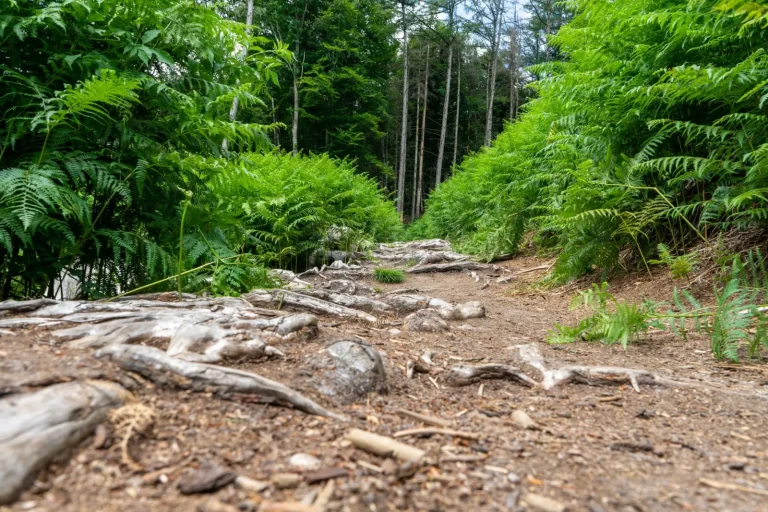
Trail conditions tend toward stability. Cooler seasons often align with drier periods, which means less standing water, fewer mud sections, and reduced slipperiness on root systems. This isn’t universal – some rainforests receive rain year-round – but in monsoon-influenced regions, the cool season brings genuine drainage improvement. Trails dry faster after rain. Mud that would be ankle-deep in warm, wet months becomes manageable. Your pace naturally increases because you’re not constantly managing footing.
Insect pressure changes, though not always in your favor. Mosquitoes and biting flies are generally less active in cooler conditions, which is the obvious win. Leeches, however, remain active in many Southeast Asian rainforests even during cool months if humidity stays high. Ants and stinging insects tend toward reduced activity. The net effect is usually positive – fewer bites, fewer stings, less constant defensive attention required. You can focus on walking rather than swatting.
Physical Reality of Cool-Season Rainforest Walking
Your body still works harder than it would on a temperate forest trail. The canopy blocks wind, so there’s no evaporative cooling. Humidity remains high even in cool seasons – it’s a rainforest, after all. The ground is uneven, often steep, and requires constant attention. What changes is the margin. In warm, humid conditions, a 3-kilometer walk with 400 meters of elevation gain might leave you genuinely exhausted. In cool conditions, the same walk feels moderately challenging rather than punishing. That margin determines whether you can do a second walk the same day or need to rest.
Acclimatization works differently. If you arrive from a temperate climate and immediately walk a rainforest in cool season, you still need a day or two to adjust. Your body recognizes the humidity and the constant physical demand, even if temperature is lower. But the adjustment period is shorter, and the adaptation is less severe. You’re not fighting heat stress on top of everything else. First-day fatigue is real but manageable. By day three, you can sustain longer walks without the cumulative exhaustion that builds in warm-season rainforest travel.
Practical Timing Within Cool Seasons
Early morning walks matter more in cool seasons than in warm ones, but for different reasons. In warm rainforests, you start early to beat heat. In cool rainforests, early starts mean you encounter the coolest air and often the best wildlife activity. Many animals are most active in early morning regardless of season, but in cool weather you can actually sustain a pace that keeps you moving through peak activity hours. A 6 a.m. start in a cool-season rainforest might keep you walking through 10 or 11 a.m. in genuinely pleasant conditions. By midday, temperature rises and humidity becomes more noticeable, but you’ve already covered substantial ground.
Afternoon walks in cool seasons are feasible in ways they rarely are during warm months. You can reasonably walk from 2 p.m. to 5 p.m. without the complete physical shutdown that afternoon heat induces. This flexibility matters for multi-day trips where you’re moving between locations. You’re not locked into a rigid early-morning-only schedule. Some days you might walk late morning and afternoon, taking a midday break for lunch and rest, then resuming. This rhythm is simply not sustainable in warm-season rainforests.
What Doesn’t Change
Preparation requirements remain constant. You still need proper footwear with real grip – cool weather doesn’t make slippery roots less slippery. You still need to manage water intake carefully. Cooler temperatures can mask dehydration because you’re not sweating as visibly, but you’re still losing fluids. The reduced sweat production is actually a disadvantage in this regard – your body’s warning system is less obvious. You still need sun protection on exposed skin where the canopy breaks. You still need to watch for hazards like snakes, spiders, and unstable terrain. Cool weather doesn’t eliminate any of these factors.
Navigation difficulty remains unchanged. Rainforest trails can be poorly marked in any season. Cool weather improves visibility slightly, but it doesn’t solve the fundamental challenge of following a trail through dense vegetation. You still need a guide for unfamiliar terrain, and you still need to move slowly enough to stay oriented. The improved conditions just mean you can sustain that careful pace longer before fatigue sets in.
The real advantage of cool-season rainforest walking is sustainable engagement. You can spend more time in the forest, observe more carefully, and recover more quickly. The forest itself doesn’t change fundamentally, but your capacity to interact with it increases. After multiple seasons of rainforest work, I’ve found that the difference between walking in cool versus warm conditions determines not just comfort, but the actual quality of the experience. Cool seasons aren’t mandatory for rainforest exploration, but they’re the seasons where the forest becomes genuinely accessible rather than merely endurable.