

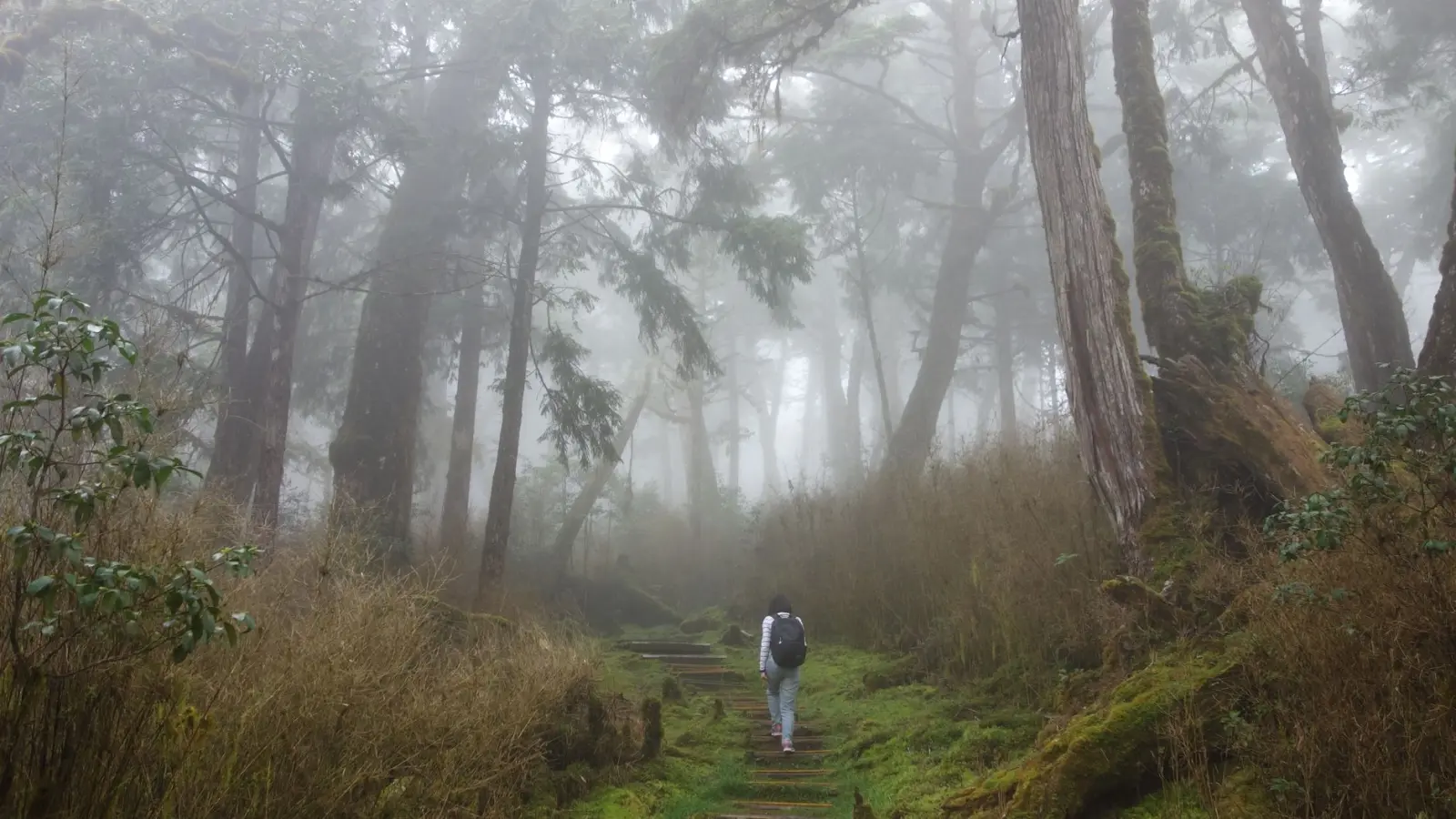
Tamborine Mountain’s forest trails sit in a peculiar pocket of subtropical Queensland where the weather shifts without warning and the terrain demands more attention than the promotional materials suggest. I’ve walked these paths across different seasons and times of day, and what strikes me most is how quickly conditions change and how many people arrive unprepared for what the forest actually delivers.
The mountain sits about 600 metres above the Gold Coast plains, which means the temperature and humidity behave differently than the surrounding lowlands. On a day when the coast swelters at 28 degrees, the forest might sit at 22 or 23 degrees. That sounds pleasant until you’re moving through dense vegetation and the humidity wraps around you. The canopy is thick enough that direct sun rarely reaches the walking surface, but that same density traps moisture. Your clothes will feel damp within the first twenty minutes, regardless of whether it has rained recently.
The Trails Themselves
Most people gravitate toward the main circuit walks – Cedar Creek Falls, Witches Falls, and the various loops that connect them. These paths are well-maintained and clearly marked, but “well-maintained” on Tamborine means something specific. The ground is often uneven. Tree roots cross the path constantly. In wetter months, sections become muddy despite the drainage work. I’ve seen visitors in casual sneakers struggle more than they expected, particularly on the descent where footing becomes critical.
The Cedar Creek Falls walk is probably the most popular, and for good reason – it’s accessible and the waterfall justifies the effort. But the trail is steep enough that you’ll feel it in your thighs on the way down, and the rock sections near the falls can be slippery even when they don’t look wet. I’ve watched people misjudge the final descent and catch themselves awkwardly on handholds. The falls themselves are modest by waterfall standards, but the walk to reach them is more substantial than casual visitors typically anticipate.
Witches Falls offers a different character. The approach is gentler, but the path winds through sections where the forest closes in tightly. The undergrowth is dense, and the light becomes dim. Some people find this atmospheric; others find it claustrophobic. The falls here are smaller still, almost a trickle in dry periods, but the walk feels more immersive in the actual forest experience rather than a destination-focused hike.
Timing and Logistics
Most visitors underestimate how long a walk takes. A 4-kilometre circuit walk that might take 45 minutes on flat ground takes closer to 90 minutes here, sometimes more. The terrain slows you down. Stopping to navigate tricky sections, taking photos, or simply pausing to catch your breath all add time. I’ve seen people arrive at the carpark with two hours of daylight remaining and realise halfway through that they won’t finish before dusk. The forest darkens quickly once the sun gets low, and the uneven ground becomes genuinely hazardous in poor light.
Getting to Tamborine from the Gold Coast requires about 45 minutes to an hour of driving, depending on which coast suburb you’re starting from. The mountain roads wind upward, and if you’re not familiar with them, the drive itself can feel longer. Parking at the main trailheads fills up on weekends and public holidays. I’ve arrived at 10 AM on a Saturday and found the carpark nearly full. The alternative is arriving early, which means leaving your accommodation before dawn, or visiting on a weekday when the trails are noticeably quieter.
Weather and Seasonal Variation
The mountain catches weather systems that don’t always reach the coast. I’ve driven up on what looked like a clear day only to find low cloud sitting over the upper sections. Visibility drops, the paths become slicker, and the forest feels entirely different. In summer months, afternoon thunderstorms are common. They build quickly and can pass just as fast, but being caught on an exposed section during a downpour is unpleasant and potentially unsafe.
Winter on Tamborine is mild by most standards – temperatures rarely drop below 10 degrees – but the trails can be wet for days after rain. The soil drains poorly in places, and the shade means moisture lingers. Spring brings wildflowers and fresh growth, which is visually appealing but also means insects are more active. Mosquitoes can be significant in warmer months, particularly near the creek areas. I’ve learned to apply insect repellent before starting, not after arriving.
Autumn is probably the most reliable season for walking. Temperatures are comfortable, humidity is lower, and rainfall is less predictable but generally less intense than summer. The forest is still lush, though some of the flowering plants have finished. It’s the season when the trails feel most manageable without being unpleasantly hot or saturated with moisture.
What You Actually Need
Proper footwear matters more than most people realise. The uneven ground and exposed roots demand ankle support and grip. Flat-soled shoes or thongs are genuinely unsafe. I’ve seen people turn back after slipping or twisting their ankle on the first kilometre. Walking shoes with a decent tread and some cushioning make a tangible difference.
Water is essential. The walks are not long enough to require litres of water, but 500 millilitres is a minimum, and 750 millilitres is better. There’s no water available on the trails themselves. People often underestimate how dehydrating the combination of humidity and exertion becomes. I’ve watched visitors who didn’t bring water become noticeably fatigued and uncomfortable by the midpoint of their walk.
A light rain jacket is practical even if rain isn’t forecast. The canopy offers some protection, but not complete protection. More importantly, the jacket provides wind protection if you’re walking at the cooler times of year. Layers work better than a single heavy garment because the temperature changes as you climb and descend, and your body temperature fluctuates with effort.
Sun protection is relevant despite the canopy. The gaps in the forest let through enough UV that you’ll burn if you’re fair-skinned and spend a couple of hours walking. Sunscreen applied before starting is more effective than trying to apply it during the walk. A hat is useful, though it can become uncomfortable if the weather warms up.
The Forest Experience Itself
What tends to get lost in the practical details is that the forest here is genuinely different from the surrounding landscape. The subtropical rainforest has a density and complexity that changes how you move through space. The canopy is high, but the understory is thick. There’s a sense of enclosure even though you’re not in a confined space. The sound changes too – traffic and urban noise disappear, replaced by bird calls, rustling leaves, and the sound of water.
This immersion is part of why people come, but it’s also why the experience demands attention. You can’t walk on autopilot. The terrain requires focus. The humidity requires adjustment. The unfamiliar sounds and sights can be disorienting if you’re not expecting them. For some people, this is exactly what they’re seeking. For others, it’s more intense than they anticipated.
The wildlife is generally non-threatening, but it’s present. You’ll see birds, occasionally wallabies, and various insects. Snakes exist in the forest but are rarely encountered on the main trails. Still, the possibility changes how alert you remain. I’ve found that most visitors relax once they’ve walked for 20 minutes without incident, but that initial awareness keeps you observant of your surroundings in a way that urban walking doesn’t require.
Walking Tamborine’s forests is straightforward enough that most reasonably fit people can complete the main trails without difficulty. But it’s not a casual stroll. It demands appropriate footwear, realistic timing, weather awareness, and a willingness to move slowly when the terrain demands it. The reward is genuine – a few hours in a landscape that feels genuinely separate from the developed coast below – but the experience is best approached with clear expectations about what the mountain will actually require.



