
Spend enough time working in or studying tropical rainforests, and you stop thinking of them as backdrops. They become something closer to living infrastructure – systems so functionally complex that losing them reshapes what’s possible on a continental scale. This isn’t metaphorical. Old-growth rainforest does specific, measurable work that younger forest, plantations, and cleared land simply cannot replicate, no matter how much time passes.
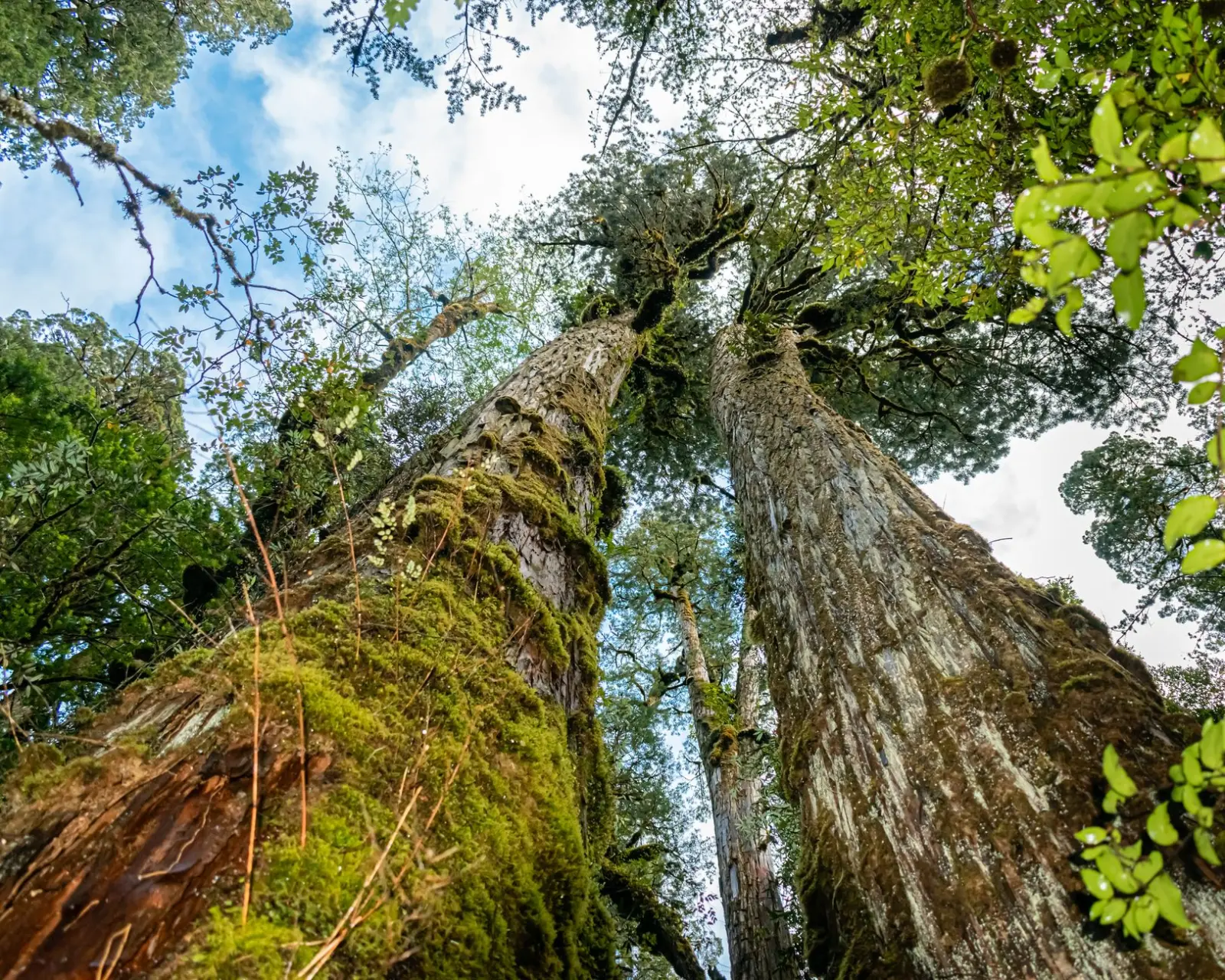
The confusion often starts with terminology. When people say “rainforest,” they sometimes mean any tropical forest with substantial rainfall. When scientists say “old-growth rainforest,” they mean something narrower and more demanding: forest that has developed over centuries without major disturbance, where the canopy structure, soil composition, and species relationships have reached a state of relative stability. That distinction matters because a 40-year-old regenerating forest, while valuable, operates under entirely different constraints than a 400-year-old one.
The most immediate function is hydrological. Old-growth rainforest doesn’t just receive water – it processes it in ways that regulate regional climate patterns. The root systems penetrate deep into weathered soil, accessing water tables that younger forest cannot reach. Trees release this water through transpiration, and the volume is staggering. A mature rainforest can cycle several thousand millimeters of water through the atmosphere annually, creating moisture that feeds into regional weather systems. When that forest is cleared, the water cycle doesn’t simply shrink proportionally. It collapses. Soil dries, water retention drops, and downstream regions experience not just less rain but more erratic rainfall. This isn’t a local effect. Atmospheric moisture from the Amazon, for instance, influences precipitation patterns thousands of kilometers away.
Carbon Storage and Soil Dynamics
The carbon storage narrative is often oversimplified. Yes, old-growth forest stores carbon in biomass, but that’s not the primary mechanism by which it matters for climate. A mature rainforest isn’t accumulating carbon at the rate a young, rapidly growing forest is. What it does instead is maintain a stable carbon balance while preserving the conditions that prevent catastrophic carbon release.
The real carbon work happens in the soil. Old-growth rainforest develops soil profiles that can be meters deep, with complex organic matter in various stages of decomposition. This isn’t inert storage. It’s an active system where billions of microorganisms regulate how quickly carbon is released back into the atmosphere. Disturb that system – through logging, clearing, or even selective harvesting – and the decomposition rate accelerates dramatically. Soil that was stable for centuries begins releasing carbon rapidly. In some cases, cleared rainforest soil becomes a net carbon source rather than a sink within months of disturbance. The carbon that was sequestered over centuries leaves the system in years.
Biodiversity as Functional Redundancy
When people talk about rainforest biodiversity, the focus tends to land on species counts – how many insects per hectare, how many bird species in a given area. That’s real, but it misses the operational point. The reason old-growth rainforests maintain such high species diversity is that they’ve had time to develop multiple solutions to the same ecological problem. Multiple species fill similar niches. Multiple plant species produce similar compounds. Multiple pollinator species service the same flowers.
This redundancy is not waste. It’s resilience. If one species fails – due to disease, pest outbreak, or local disturbance – others can compensate. The system continues functioning. In younger forest or monoculture plantation, you often have one or two species doing the work that old-growth forest distributes across dozens. When those species encounter stress, the system fails more completely. I’ve watched this repeatedly in secondary forest recovering from clearing: the forest grows back, but it’s structurally simpler, functionally narrower, and more vulnerable to disturbance. It takes centuries to rebuild the redundancy that made the original forest stable.
Nutrient Cycling in Nutrient-Poor Soils
Tropical soils are often chemically poor – heavily weathered, leached of minerals by intense rainfall over geological time. Yet rainforests grow lushly on these soils. The reason is that old-growth forest develops its own nutrient economy, independent of soil chemistry. Mycorrhizal networks connect trees underground, allowing nutrient transfer between individuals. Epiphytes – plants growing on tree branches – capture nutrients from rainfall and dust, then contribute them back to the system through leaf fall and decay. Decomposition is so efficient that nutrients cycle almost entirely within the living system rather than leaching away.
Clear the forest and this economy collapses immediately. Nutrients that were cycling between trees and soil begin leaching away. What was a self-sustaining system becomes dependent on external inputs. Agricultural systems built on cleared rainforest land typically require fertilizer inputs within a few years because the soil cannot sustain productivity alone. The forest wasn’t just growing on the soil – it was creating the conditions that made the soil productive.
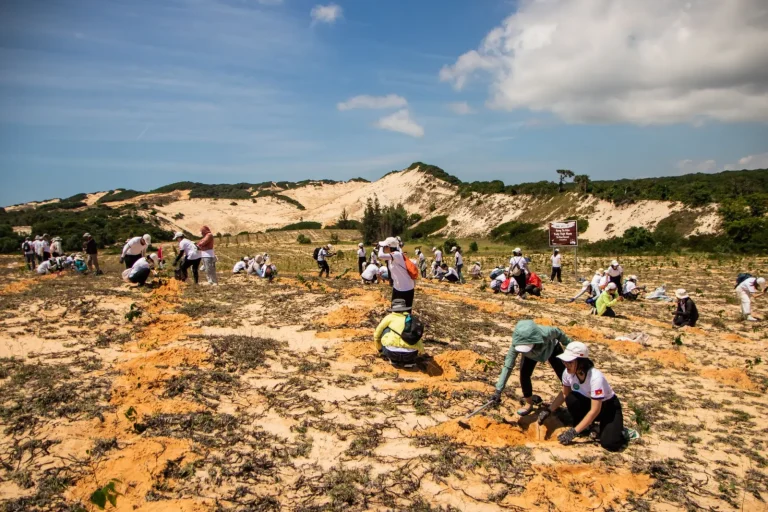
The practical consequence of this is often overlooked in conservation discussions. Restoring rainforest on degraded land is possible, but it’s slow and requires intervention. Natural regeneration can take decades or centuries to rebuild the nutrient cycling capacity that old-growth forest maintained. This is why old-growth forest, once lost, represents a functional loss that cannot be quickly compensated by planting new trees elsewhere.
What makes old-growth rainforest difficult to replace is that its value isn’t concentrated in any single function. It’s distributed across dozens of interconnected processes – water cycling, carbon stabilization, nutrient management, species interaction, soil development. Remove the forest and you don’t lose one service. You lose the capacity to perform all of them simultaneously. That’s the core of why these systems matter at scales that extend far beyond their geographic footprint.