The northern edge of Australia’s tropical rainforest doesn’t announce itself clearly. There’s no obvious boundary line where the dense, closed canopy suddenly gives way to open woodland. Instead, you move through a gradual thinning over many kilometres, and the shift happens so incrementally that you might miss the moment when you’ve actually left the rainforest behind. I’ve walked this transition dozens of times, and it’s always struck me how the change feels more like a fade than a border.
This edge sits roughly around the Daintree region in Far North Queensland, though the precise northern limit varies depending on which definition of “rainforest” you’re using. If you’re talking about the closed-canopy tropical rainforest that requires consistent moisture and shelter from fire, the northern boundary is constrained by rainfall patterns and fire history. The rainforest here depends on receiving enough wet-season precipitation to sustain itself, and that threshold shifts year to year based on monsoon behaviour and local topography.
What makes this edge ecologically significant is that it’s not stable. The rainforest is always under pressure from fire, and fire is always trying to push further north during dry seasons. The savanna woodland that surrounds the rainforest is fire-adapted and fire-dependent. Without fire, it would gradually shift toward rainforest. With regular fire, it holds its ground. This dynamic tension between two competing vegetation types creates a landscape that’s genuinely unstable in ecological terms, even though it might look static to a visitor spending a week there.
Seasonal Extremes and Access
The practical reality of visiting this edge changes dramatically between seasons. During the wet season, from November through March, the region experiences intense rainfall and humidity. Roads become difficult. Some areas flood. The vegetation is lush and dense, and the rainforest feels impenetrable. Insects are prolific. This is also the season when you’re most likely to encounter crocodiles in water bodies, and snakes are active. If you’re planning to move through this region on foot or by vehicle, the wet season demands serious preparation and local knowledge.
The dry season, May through October, opens access considerably. Roads dry out. Visibility improves. But this is also when fire becomes a real hazard. Controlled burns happen regularly in the surrounding savanna, and uncontrolled fires can move quickly. The landscape becomes drier and more brittle. The rainforest itself is less affected by fire because of its moisture content, but the transition zone – where the canopy is thinner and the understory drier – becomes vulnerable. I’ve seen fires reach the rainforest edge and burn into it when conditions align poorly.
What the Transition Actually Looks Like
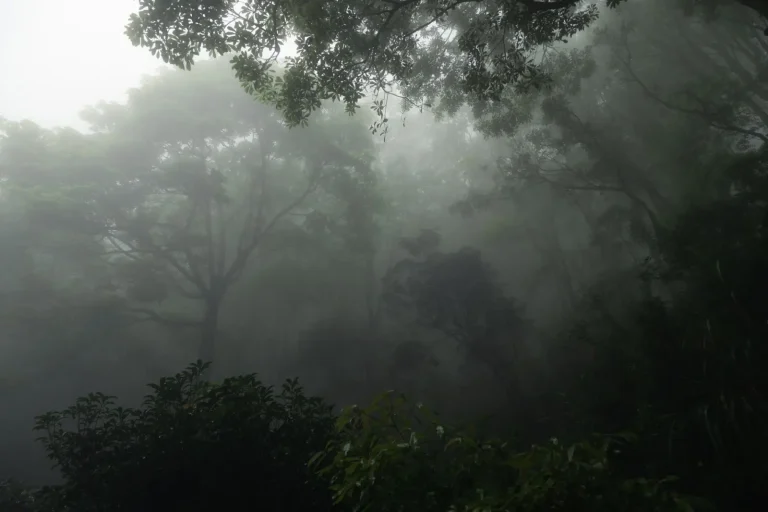
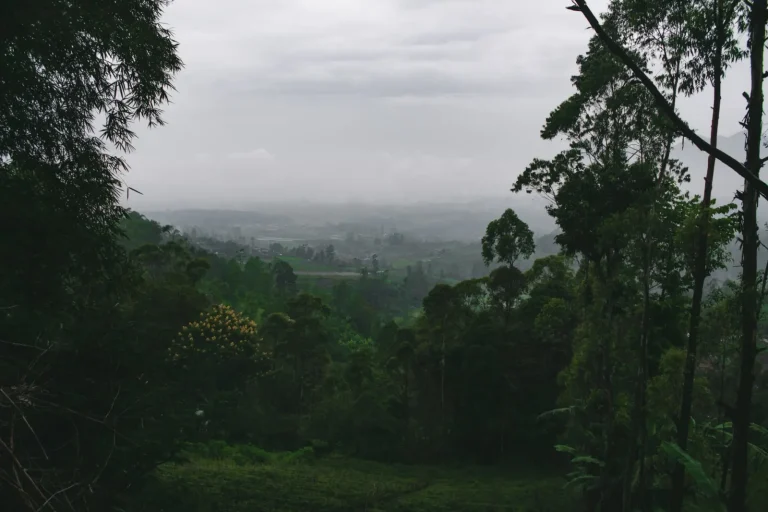
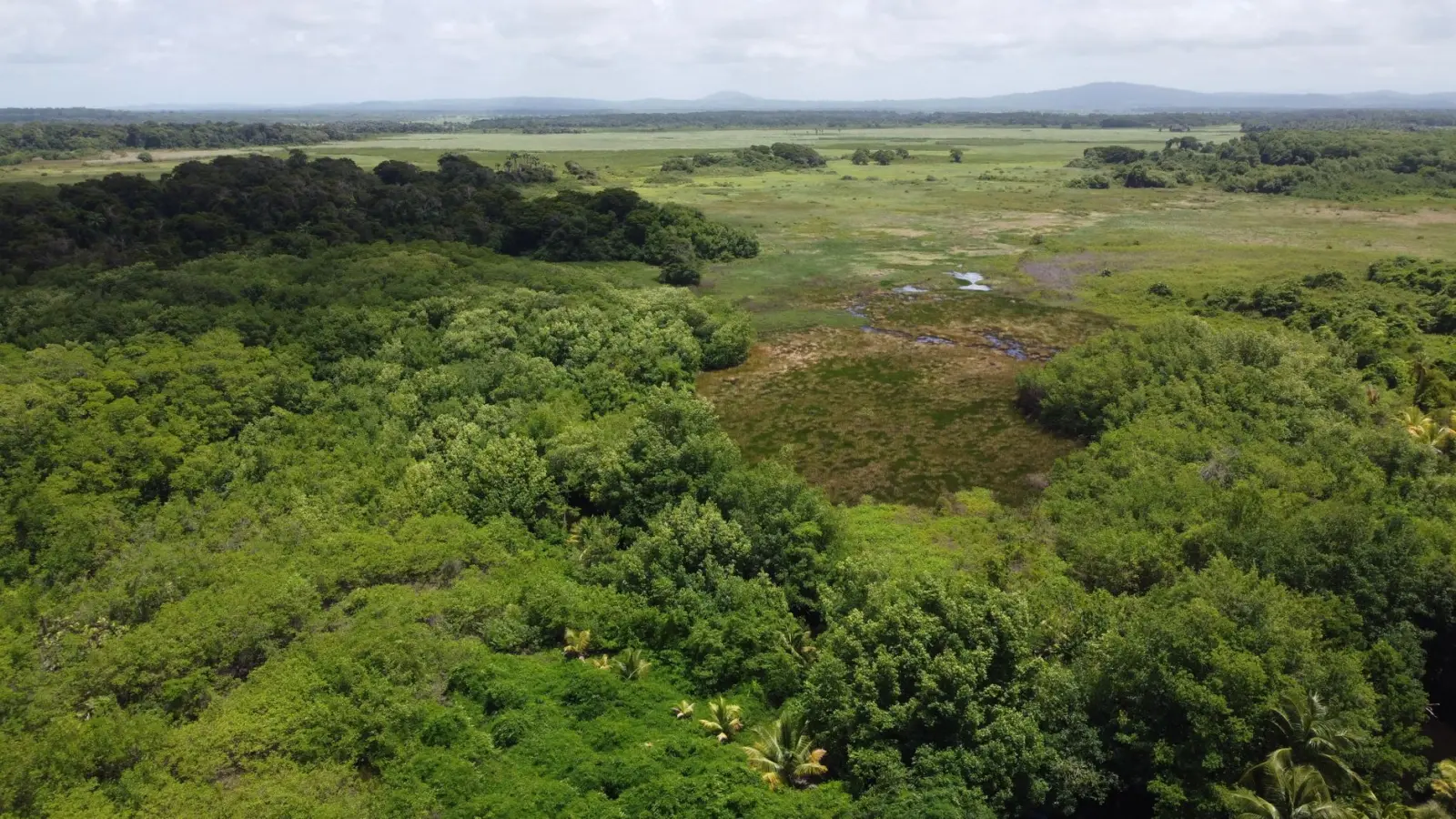
Walking from the open savanna into the rainforest edge, you notice several things happening at once. The ground becomes softer underfoot as leaf litter accumulates and the soil moisture increases. The canopy begins to close overhead, and the light changes noticeably. Temperature drops slightly, and humidity rises sharply. But this doesn’t happen in a single step. Instead, you move through a zone of scattered trees, then denser scattered trees, then patches of closed canopy interspersed with open areas, and eventually into consistent rainforest.
The vegetation composition shifts too. Early in the transition, you see fire-tolerant species like stringybark eucalypts and paperbarks. As you move further in, these give way to rainforest species that can’t tolerate fire at all – fig trees, palms, vines, and dense understory plants. The bird calls change. The insect life changes. The whole sensory experience of being in the landscape transforms gradually.
One thing that often surprises people is how narrow this transition zone actually is in some places. You might walk for only two or three kilometres and move from open savanna to closed rainforest. In other locations, the transition stretches over ten kilometres or more. This variation depends on topography, soil type, and recent fire history. Areas that have burned recently will have a wider transition zone because the rainforest hasn’t yet recolonised the burned area. Areas protected from fire for many years might have a sharper boundary.
Practical Constraints for Movement
If you’re actually trying to move through this region – whether by vehicle, on foot, or by boat – the edge presents specific logistical challenges. Vehicle access is limited to established roads and tracks, and many of these follow older routes that predate modern understanding of the ecosystem. GPS can be unreliable under dense canopy. Mobile phone coverage is spotty. Water sources exist but aren’t always obvious or safe to use.
The rainforest edge is also where you’re most likely to encounter wildlife that’s active and unpredictable. Crocodiles inhabit waterways throughout the region. Snakes are common, particularly during warmer months. Cassowaries, large flightless birds, inhabit the rainforest and occasionally move into the transition zone. Encounters are rare, but they happen, and knowing how to respond matters more than knowing they exist.
Fatigue is a real factor that people underestimate. The combination of heat, humidity, uneven terrain, and dense vegetation means that movement is slower and more tiring than it appears on a map. A ten-kilometre walk that looks straightforward on paper might take six or seven hours in reality, particularly if you’re moving through dense vegetation or if the ground is soft or waterlogged.
Fire and Future Shifts
The northern edge of the rainforest is increasingly shaped by fire management decisions. Indigenous land management practices, which have been used in this region for thousands of years, involve strategic early dry-season burns that reduce fuel loads and prevent catastrophic late-season fires. When these practices are interrupted or absent, fire behaviour changes, and the rainforest edge becomes more vulnerable to damage.
Climate patterns also influence where this edge sits. Shifts in monsoon behaviour, changes in dry-season length, and variations in rainfall intensity all affect whether the rainforest can maintain its northern extent or whether it will contract. Over recent decades, the edge has shifted somewhat, though the changes are subtle and site-specific rather than uniform across the region.
The northern edge of Australia’s tropical rainforest is ultimately a place defined by tension and transition. It’s not a destination in the conventional sense, but rather a zone where two fundamentally different ecosystems compete for space. Understanding what you’re actually looking at when you’re there – recognising the gradual nature of the shift, the seasonal constraints on access, and the fire dynamics that shape the landscape – changes how you move through it and what you can realistically expect to experience.