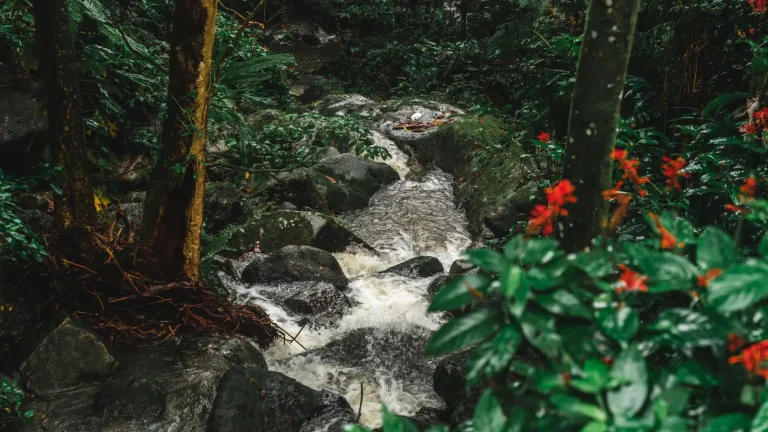

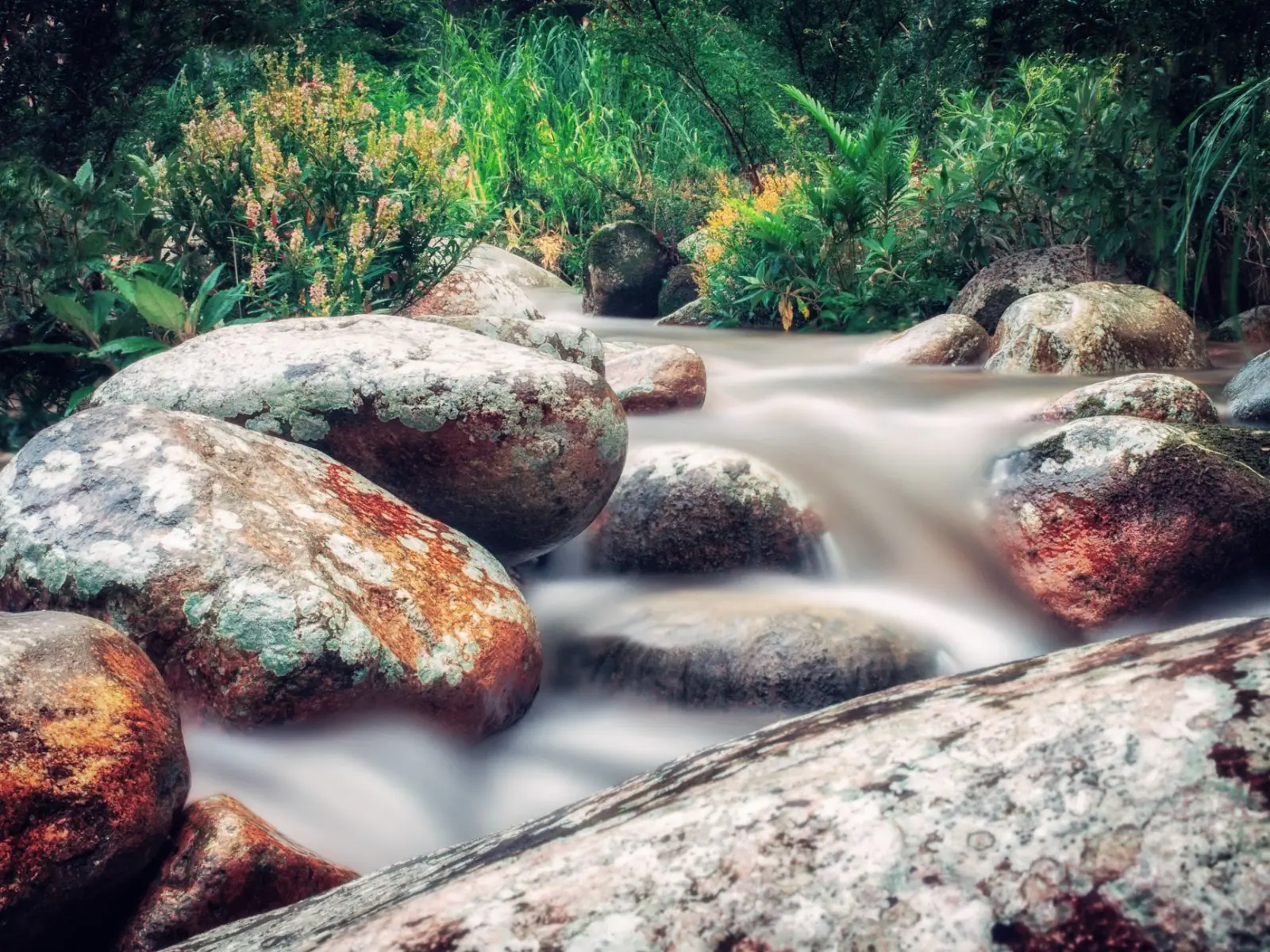
Spend enough time near rainforest streams and you notice something that seems counterintuitive. The water stays cold. Not just cool – genuinely cold, often in the 50s to low 60s Fahrenheit even when the air temperature above the canopy is pushing 90 degrees. The first time you wade into one of these streams after hiking through humid jungle heat, the shock is real. Your feet go numb within seconds. But there’s nothing magical happening. It’s a straightforward outcome of how rainforest hydrology actually works.
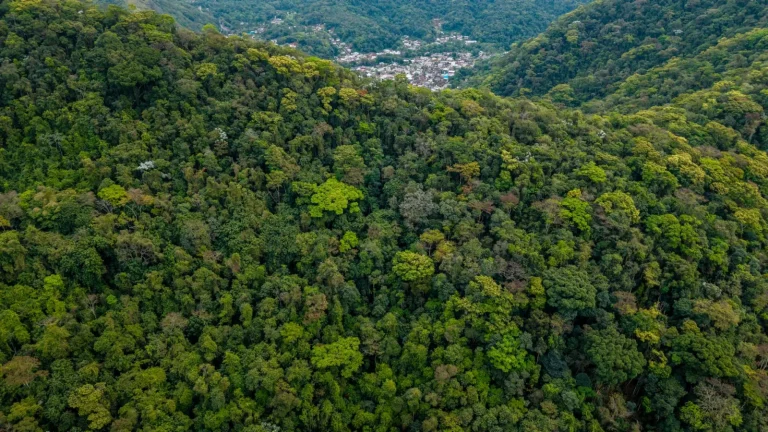
The canopy is the obvious first factor, and it’s worth understanding properly because people often oversimplify it. Yes, the dense overhead cover blocks direct sunlight. That matters. But the real cooling effect isn’t just about shade – it’s about the total energy budget of the stream. In an open stream, solar radiation hits the water surface directly and heats it. In a rainforest stream, that radiation is intercepted by leaves and branches before it reaches the water. What does penetrate is already filtered and diffused. More importantly, the canopy also reduces wind speed at the water surface, which cuts evaporative cooling losses. This combination – reduced solar input plus reduced evaporative loss – creates a stable, cold environment.
Groundwater is the real temperature anchor
But shade alone doesn’t explain why these streams stay so cold. The deeper reason is groundwater contribution. Rainforest streams don’t exist in isolation. They’re fed by a constant influx of water that has percolated through soil and rock layers, sometimes for weeks or months. That water comes from deep enough that it’s insulated from surface temperature fluctuations. In tropical regions, groundwater temperature tends to be around 55 to 60 degrees Fahrenheit – essentially constant year-round. The deeper the source, the more stable the temperature.
In a healthy rainforest, the water table is typically high and the soil is saturated. Rainfall is frequent and abundant, so there’s continuous recharge. This means streams receive a steady baseflow of cold groundwater even during dry periods. The proportion of groundwater to surface runoff varies depending on recent rainfall, but groundwater is always present and always cold. When you’re wading in a stream that feels shockingly cold, you’re mostly feeling groundwater that’s been underground for weeks.
The soil itself plays a role here that’s easy to miss. Rainforest soil is thick, dark, and full of organic matter. It acts as an insulator and a sponge. Water moving through it is protected from temperature swings. The organic layer – all that decaying leaf matter and root systems – slows water movement, giving it more time to equilibrate with the surrounding soil temperature. This is why streams in deforested areas warm up so quickly. Once the canopy is gone and the soil is exposed and compacted, water moves faster and has less contact time with the insulating soil layer.
Vegetation and evaporative cooling
Dense riparian vegetation also contributes in a way that’s less obvious than canopy shade. Plants along the stream bank release water vapor through transpiration. This process draws energy from the surrounding air and water, creating a localized cooling effect. In a rainforest, the vegetation is so thick and continuous that this transpirational cooling happens at scale. The stream is surrounded by a microclimate that’s cooler and more humid than the air just above the canopy.
There’s also the matter of stream morphology. Rainforest streams tend to be narrow and deep relative to their width. This geometry means less surface area is exposed to whatever sunlight does penetrate. A wide, shallow stream in an open area heats up faster because more of the water column is exposed to direct radiation. A narrow, deep stream in dense forest keeps most of its water in shade and away from direct heating.
What happens when the forest changes
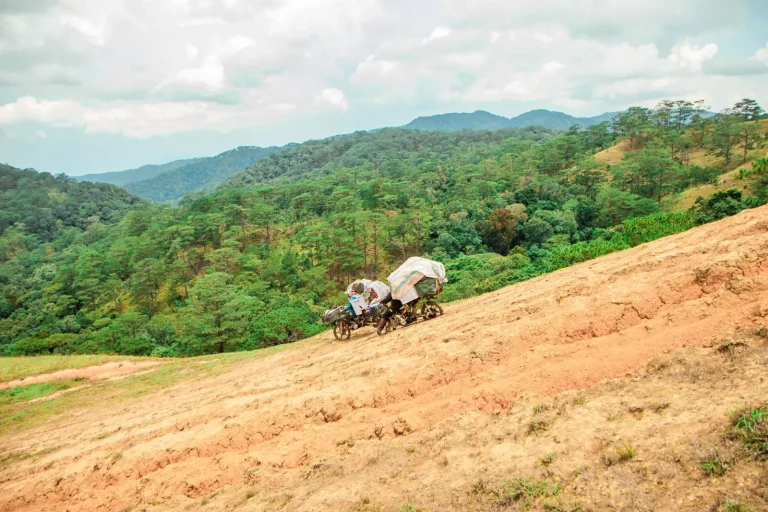
I’ve observed this contrast directly in regions where selective logging or clearing has happened. Even partial canopy removal causes measurable warming. Streams that were reliably cold become tepid within a few weeks of canopy loss. The groundwater contribution doesn’t change immediately, but the loss of shade and the disruption of soil structure means more rapid heating of surface water and faster evaporative losses. Fish populations that depend on cold water – certain species of trout and char in tropical highlands – disappear. The ecosystem responds quickly because the temperature change is real and significant.
Seasonal variation exists, but it’s muted compared to temperate streams. During the wettest months, more rainfall means more groundwater recharge and potentially slightly colder water. During drier periods, the baseflow shrinks and water spends more time exposed, so temperatures can rise a few degrees. But the range is typically only 5 to 10 degrees across the year, compared to 40 or 50 degrees in temperate regions. The tropical rainforest stream stays in a narrow, cold band year-round.
The cold water you feel in a rainforest stream is the result of multiple overlapping systems working together. Canopy cover, groundwater flow, soil insulation, riparian vegetation, and stream geometry all contribute. Remove any one of them and the system degrades. The water warms. The ecosystem shifts. This is why rainforest streams are sensitive indicators of forest health. The temperature of the water tells you something real about what’s happening to the forest above it.