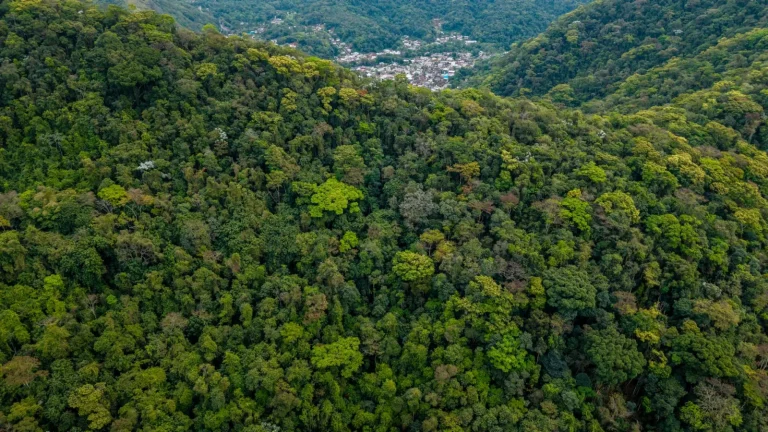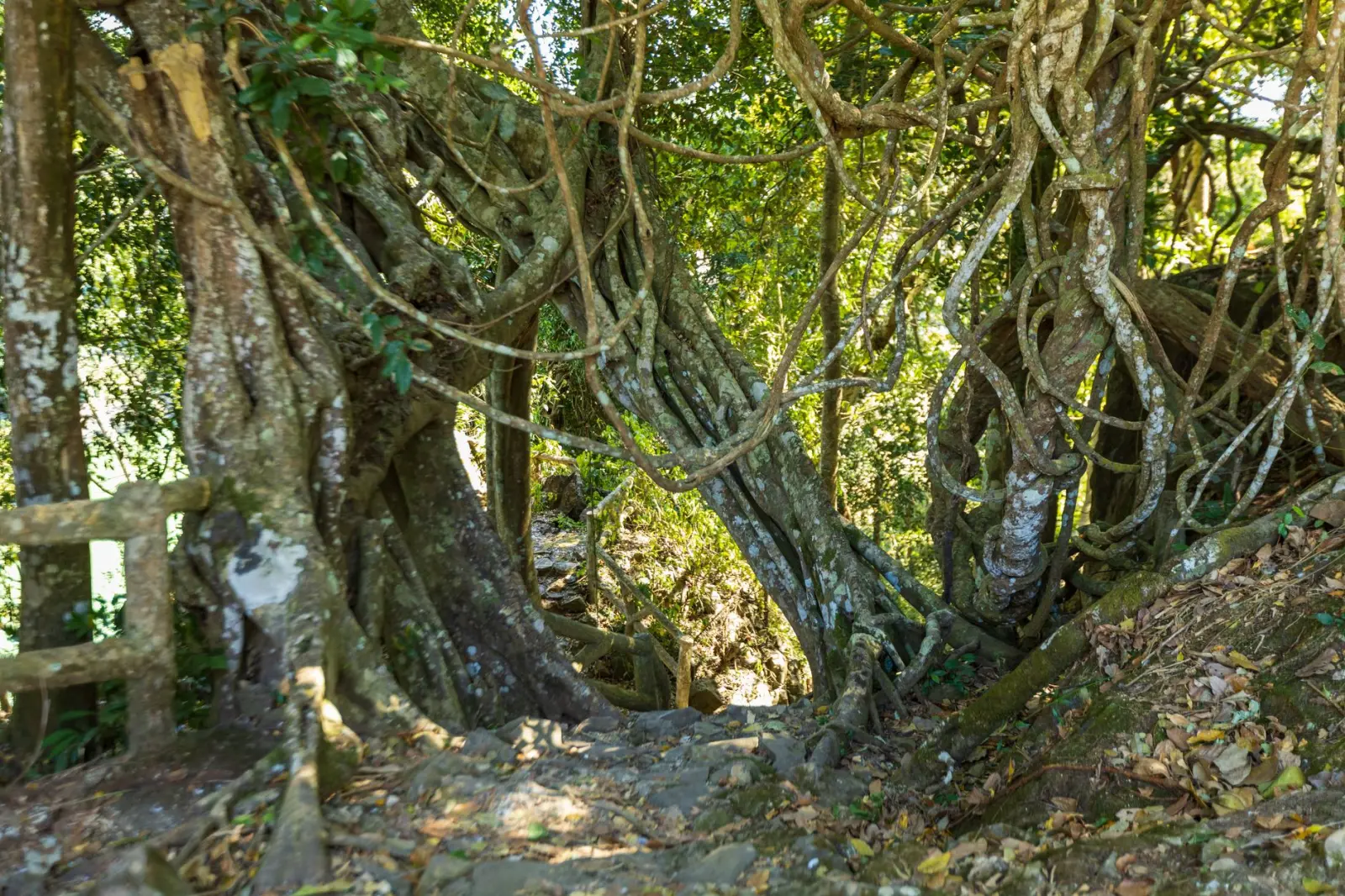
Spending time moving through subtropical rainforest – whether hiking, surveying, or simply trying to navigate between two points – makes one thing immediately obvious: vines are everywhere. They hang from canopy to floor, wrap around trunks, drape across gaps, and create a three-dimensional maze that’s absent from temperate forests. It’s not random abundance. The conditions that define subtropical rainforests actively favor vine proliferation in ways that other ecosystems don’t.
The first thing to understand is that vines aren’t a sign of forest health or degradation – they’re a response to specific structural and climatic conditions that subtropical rainforests provide consistently. Unlike deciduous forests where seasonal leaf loss opens the canopy periodically, subtropical rainforests maintain year-round foliage density. This creates a problem for smaller plants on the forest floor: there’s never enough direct light to grow tall independently. Vines solve this problem by using existing trees as scaffolding. Instead of investing energy in building their own trunk structure, they climb. It’s energetically efficient and it works.
Humidity is the second major factor. Subtropical rainforests maintain high moisture levels throughout the year – not always from rainfall, but from persistent cloud cover, mist, and the forest’s own water recycling system. Vines, particularly those with thin stems and broad leaves, lose water rapidly through transpiration. In drier forests, this would be fatal. In subtropical rainforests, the air itself is saturated enough that vines can afford thin, efficient foliage without drying out. Many vines also have aerial roots that absorb moisture directly from humid air, bypassing the need for soil water entirely. This is a luxury that only works in consistently wet conditions.
The Light-Seeking Strategy
What makes vines particularly dominant in subtropical rainforests – more so than in tropical lowland rainforests, interestingly – is the specific light regime. Subtropical rainforests often sit at elevation or in regions with seasonal cloud cover. This means the canopy isn’t uniformly dense, and gaps appear regularly from fallen trees, storm damage, or natural canopy turnover. Vines are the first plants to exploit these gaps. They grow rapidly upward toward light without the metabolic cost of building woody support tissue. A vine can reach the canopy in a single growing season. A tree seedling would take decades.
The competitive advantage compounds over time. Once a vine reaches the canopy, it spreads laterally across branches, flowering and fruiting in full light while its stem remains thin and economical. Trees below continue to be shaded. New vines germinate in this shade and climb the same trees. Over years, this creates the characteristic tangled appearance where multiple vine species occupy the same vertical space, each at slightly different heights and angles.
Structural Conditions That Favor Vines
The physical structure of subtropical rainforest trees also matters. Many subtropical rainforest trees have relatively smooth bark and spreading branch architecture – ideal climbing surfaces. Temperate forest trees often have rougher bark, narrower crowns, or more vertical branching, which makes climbing harder. Additionally, subtropical rainforests frequently contain a mix of tree sizes and ages. This creates numerous intermediate structures – fallen logs, dead snags, smaller trees – that vines can use as stepping stones to reach taller canopy trees. A vine doesn’t need to climb a 40-meter tree in one go; it can climb a 10-meter understory tree, then move horizontally to a taller neighbor.
Soil conditions in subtropical rainforests also play a subtle role. These forests often develop on slopes or in areas with good drainage, which prevents waterlogging but also means nutrients leach away. Vines, with their efficient light-harvesting strategy, can thrive in these nutrient-poor conditions better than trees, which need substantial reserves to build and maintain large woody structures. Some vines even form relationships with nitrogen-fixing bacteria or fungi, giving them an additional nutrient advantage in poor soils.
Reproduction and Persistence
Once established, vines persist because they reproduce reliably in subtropical rainforests. Many produce flowers and fruits that attract dispersal agents – birds, bats, primates – that are abundant in these forests. Seeds germinate readily in the humid, shaded understory. Unlike seeds of canopy trees, which often need specific conditions or long dormancy periods, vine seeds tend to germinate quickly and grow immediately. This rapid life cycle means vine populations can respond quickly to environmental changes, maintaining high density even as individual vines die or are damaged.
The architecture of vines also makes them resilient. A broken vine doesn’t kill the plant – it simply stops growing at that point while other stems continue upward. Trees, by contrast, suffer serious damage from breakage. This means vines can tolerate the frequent disturbances – storms, landslides, human activity – that occur in subtropical regions more readily than trees can.
What’s often overlooked when observing subtropical rainforest vines is that their abundance isn’t uniform. Vine density varies with elevation, rainfall, soil type, and forest age. Young forests recovering from disturbance tend to have fewer vines initially; they accumulate over decades as the canopy closes and conditions stabilize. Forests on extremely steep slopes may have fewer vines simply because the structural complexity is different. And in subtropical rainforests that receive less than 2,000 millimeters of annual rainfall, vine density drops noticeably – the humidity advantage diminishes.
The practical reality of moving through vine-dense subtropical rainforest is that you’re seeing an ecosystem in equilibrium. The vines aren’t choking the forest or indicating distress; they’re the forest’s solution to its own structural and climatic constraints. Understanding why they’re there – the light, the humidity, the efficient growth strategy – makes the tangle less mysterious and more recognizable as a logical adaptation to a specific set of conditions.