Main Range National Park sits on the border between Queensland and New South Wales, and the rainforest there operates under its own rhythm. After spending considerable time moving through those wet gullies and ridge systems, you learn that the animals aren’t hiding – they’re simply living according to patterns most visitors never stay long enough to recognize. The wildlife here isn’t dramatic or concentrated. It’s distributed, seasonal, and often more audible than visible.
The park’s elevation range creates distinct zones, and this matters more than people realize. Lower gullies near Stinson Creek stay humid and cool year-round, while the ridge tops at 1,000 meters experience genuine temperature swings. Different animals favor different altitudes, and the species you see in January differs from what appears in June. This isn’t random variation – it reflects breeding cycles, food availability, and the simple fact that rainforest creatures respond to subtle shifts in moisture and temperature that seem minor to human perception but drive their entire activity calendar.
What You’re Actually Likely to Encounter
Lyrebirds dominate the soundscape. You’ll hear them far more often than you’ll see them, and this frustrates most people. They’re in the dense scrub, usually in the deeper gullies where leaf litter is thick and undisturbed. Early morning – before 8 a.m. – is when they’re most vocal, and they tend to follow established routes through the undergrowth. Patience in one spot often works better than walking and searching. They’ll mimic other birds, sometimes perfectly, which can be confusing if you’re trying to identify what you’re hearing.
Whiptail wallabies appear regularly on the walking tracks, particularly near Stinson Creek and around the camping areas. They’re small, quick, and surprisingly bold once they’re accustomed to human presence. Early morning and late afternoon are their active periods. You’ll see them grazing on grass verges, and they rarely move far from dense scrub – it’s their escape route. The tracks themselves are worn partly because of these animals; they use the same paths humans do.
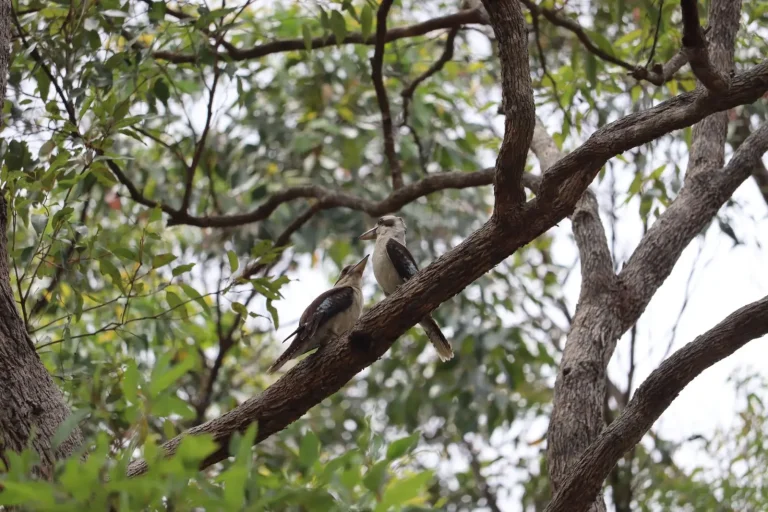
Kookaburras and other large birds are constant. Their calls are unmistakable and frequent, especially around dawn. They’re not shy and don’t require any particular timing or luck to observe. The same applies to various honeyeaters and lorikeets. These birds are visible throughout the day, though activity peaks in early morning and during flowering seasons when nectar sources are abundant.
The Animals You Won’t See Easily
Platypuses live in the creeks, but spotting one requires specific conditions: clear water, low human disturbance, and usually very early morning or dusk. You need to move slowly along the water’s edge and wait. Most people walk past creek sections without ever pausing long enough. The platypus is there, but it’s detecting you before you detect it, and it retreats. This isn’t about bad luck; it’s about the animal’s sensory advantage and its natural caution.
Brush turkeys are present but cryptic. You’ll find their massive mound nests – sometimes several meters across – scattered through the rainforest floor. The birds themselves are less frequently seen, though their tracks and feeding signs are everywhere. They’re most active during their breeding season, which varies but generally spans several months. Outside this period, they’re less conspicuous.
Snakes are common but rarely encountered. The rainforest has several venomous species, including red-bellied black snakes and carpet pythons. They’re present year-round, but activity increases in warmer months. Most people walk through without incident because snakes avoid confrontation. They hear you coming and move away. The risk of encounter is genuinely low if you stay on established tracks and avoid reaching into dense vegetation or log piles.
Seasonal Patterns That Actually Matter
Spring (September to November) brings increased activity across most species. Breeding cycles begin, food sources become more abundant, and animals move more visibly through the forest. This is when you’re most likely to see multiple species in a single visit. The trade-off is that the weather is unpredictable – rain, wind, and temperature fluctuations can suppress activity on any given day.
Summer (December to February) is hot and humid. Some animals become less active during the hottest parts of the day, concentrating their movement to early morning and dusk. Insects explode in abundance, which attracts insectivorous birds and other predators. Humidity remains high, which keeps the forest active, but human comfort decreases significantly. Leeches become a genuine consideration during this period.
Autumn (March to May) is often overlooked but offers consistent conditions. Temperature is moderate, humidity is still high, and many animals are actively feeding in preparation for winter. This is a reliable time to visit without the extremes of summer or the unpredictability of spring.
Winter (June to August) is cooler, particularly at higher elevations. Some animals reduce activity, but others become more visible because vegetation is less dense and animals concentrate around reliable food sources. This is also the driest season, which can affect creek-dependent species like platypuses.
What Affects Visibility on Any Given Day
Rain changes everything. A heavy downpour drives most animals into shelter. Light rain often increases activity, particularly among ground-feeding species and those that rely on insects becoming more active. Humidity after rain can trigger feeding frenzies among birds and small mammals. This is worth planning around – a morning after overnight rain often produces better observations than the rain itself.
Wind suppresses activity noticeably. Animals rely on sound and smell to navigate and detect threats. Strong wind disrupts both, making them more cautious and less mobile. Calm mornings are consistently more productive than windy days.
Time spent in one location matters more than distance covered. The longer you sit quietly in one spot, the more animals will reveal themselves. This contradicts the instinct to “explore” and “cover ground,” but it’s consistently true. Thirty minutes in one gully produces more observations than an hour of walking.
The tracks themselves influence what you see. High-traffic areas have habituated animals that tolerate human presence better. Quieter, less-walked sections have animals that are more wary but may be present in higher densities because they’re undisturbed.
After multiple visits across different seasons, the pattern becomes clear: Main Range’s wildlife isn’t sparse or elusive by design. It’s present and active according to its own schedule. The animals you encounter depend largely on when you visit, how long you stay in one place, and whether you’re moving quietly enough to observe before being observed. The rainforest is working exactly as it should. The variable is always the visitor.