Tooloom Falls sits in a pocket of subtropical rainforest in the Border Ranges of northern New South Wales, and the forest around it operates on its own logic. Most people arrive expecting a quick waterfall visit, then move on. But the forest itself – the walking, the vegetation, the way the terrain actually behaves – is where the real experience lives. After spending considerable time moving through this area, I’ve noticed patterns that don’t make it into standard visitor information.
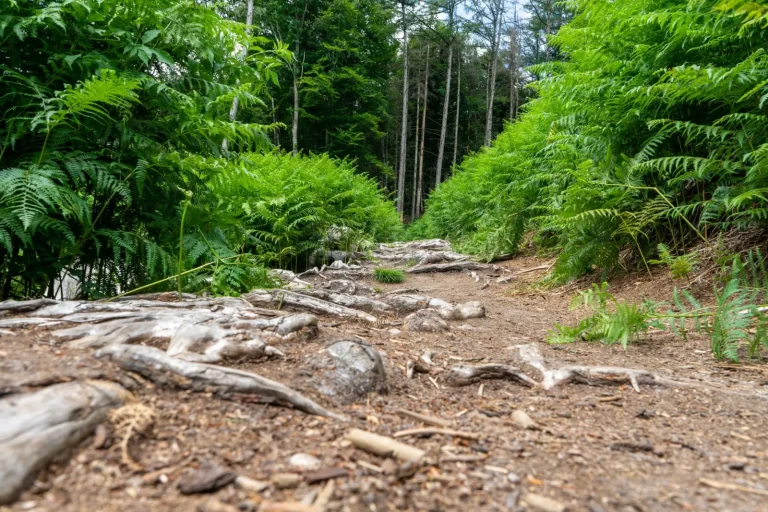
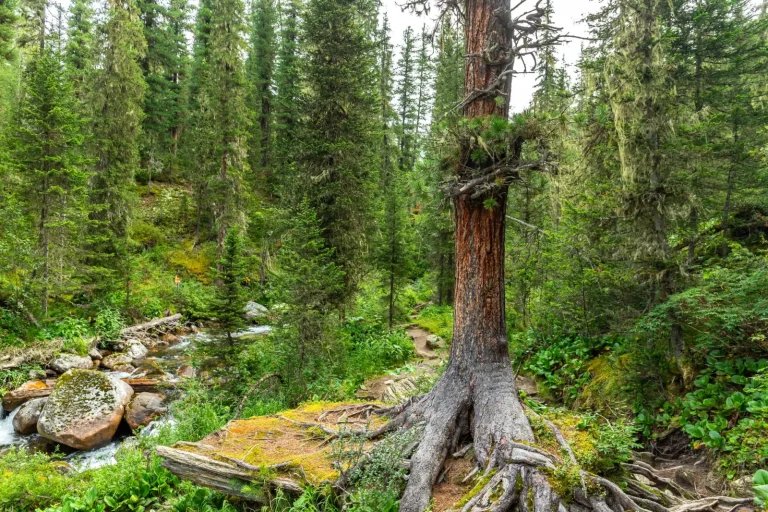
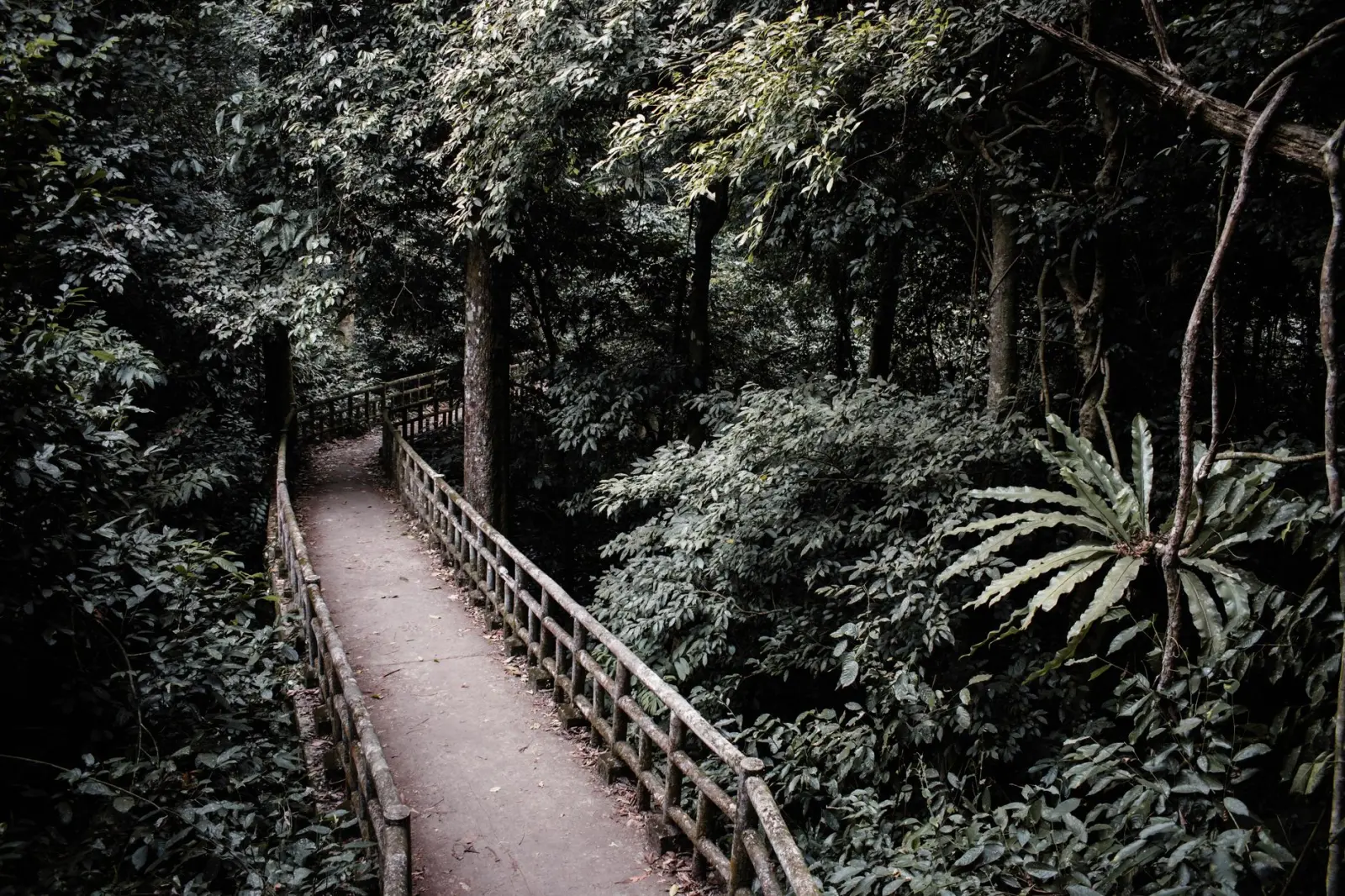
The forest around Tooloom is dense in a way that feels different from other Australian bushland. It’s not the open eucalypt woodland you find elsewhere in NSW. The canopy sits low and thick, and the understory is packed with vines, palms, and layered vegetation that creates a genuine sense of enclosure. This density changes how you move through it. You’re not walking along a cleared trail in most directions – you’re navigating through space where vegetation has a presence. The ground itself varies wildly. Some sections are compacted earth that’s relatively stable. Others are root systems so dense they form a natural staircase. Wet patches appear without warning, and the soil can shift from firm to spongy within a few meters.
Seasonal Water and Trail Conditions
The falls themselves are fed by rainfall in the ranges, which means water levels fluctuate significantly across the year. During the wetter months – roughly October through March – the creek runs strong, and the falls have genuine volume. The forest floor in these periods becomes genuinely wet. Not just damp. Wet enough that certain sections become slippery, and your foothold becomes something you have to actively think about. The established walking tracks handle this reasonably well because they’ve been walked into shape over years, but any deviation from the main path becomes noticeably more treacherous.
In drier periods, the creek reduces to a trickle, and the forest floor dries out considerably. The trade-off is that visibility improves – you can see further through the understory, and the ground is more forgiving underfoot. However, this is also when the forest becomes more visibly overgrown. Vines hang lower, and the vegetation seems to press in more aggressively. This isn’t actually true, of course. The plants aren’t more aggressive. But the drier conditions mean less water on the foliage, so it doesn’t glisten or drip, and the overall impression is of a denser, more closed-in space.
Navigation and Orientation
The forest canopy is thick enough that GPS signals can be unreliable. I’ve watched people pull out their phones expecting a clear map position and find nothing. The creek itself becomes your primary navigation reference. As long as you can hear or see water, you have a sense of direction. Lose that, and the forest becomes genuinely disorienting. The terrain rolls enough that what felt like a clear path can suddenly become unclear. Trees look similar. The understory vegetation creates visual repetition. Without water as a reference, people can walk in circles more easily than they expect.
Most people stick to the main walking track that leads to the falls viewing area. This track is well-established and relatively straightforward. But if you want to explore further into the forest – to move upstream, to investigate side creeks, to see what the forest actually contains – you need to accept that navigation becomes less certain. The forest doesn’t have clear waymarking beyond the main track. Blazes fade. Cairns get dismantled or become ambiguous. You’re reading the terrain itself: the way the ground slopes, where water has carved channels, which direction the vegetation seems to lean.
Fatigue and Time
The density of the forest affects how quickly you can move through it. A distance that might take twenty minutes on open ground can easily take forty or fifty minutes in this vegetation. Your legs work harder because the ground is uneven. Your arms are occupied managing vines and branches. Your attention is divided between footing and navigation. This accumulates. People often underestimate how tired they’ll feel after an hour of this kind of walking, especially if they’re not accustomed to subtropical forest. The humidity adds another layer. Even in cooler months, the forest holds moisture, and the air feels thicker. You breathe harder. Your core temperature doesn’t drop as easily.
I’ve seen people arrive with plans to spend three hours exploring and realize after ninety minutes that they need to turn back. This isn’t failure or poor planning necessarily. It’s the forest operating at its own pace. The walk to the main falls viewing area is manageable for most people with reasonable fitness. Exploring beyond that requires a different calculation about time and energy.
Practical Ground-Level Realities
Footwear matters more here than in many other Australian walking areas. Smooth-soled shoes or trail runners work fine on the established track. But if you’re moving off-track, you want something with genuine grip. The root systems can be slippery even when they look dry. Moss grows on rocks and logs, and it’s genuinely slick. I’ve seen people slip on moss-covered logs more often than on mud.
Water crossings are another reality. The creek has several points where you need to cross to access different areas of the forest. During high water, these become genuine obstacles. Rocks that are easy to hop across when the water is low become submerged. The current, though not violent, has enough force to make you think about your footing. Waterproof bags or dry bags are practical if you’re carrying anything you need to keep dry. Water gets into everything in this environment – not just from crossings, but from moisture in the air and vegetation.
Insects are present, particularly during warmer months. Leeches appear after rain. They’re not dangerous, but they’re persistent and annoying. Mosquitoes are more of a nuisance than a serious issue, but they’re present, especially near the creek. Ticks exist in the forest, though they’re not as prevalent as in some other Australian bushland areas. The forest is alive with small creatures, and you’re moving through their space. It’s worth acknowledging rather than pretending it’s a sterile walking environment.
The forest around Tooloom Falls rewards patience and realistic expectations. It’s not a place to rush through. It’s not a place to expect perfect conditions or clear paths everywhere. But it’s also not hostile or dangerous if you move through it with attention and respect for its actual conditions. The subtropical rainforest has its own rhythm, and matching that rhythm – accepting the pace it sets, reading the terrain as it presents itself, understanding that visibility and navigation work differently here – is what makes the experience worthwhile.