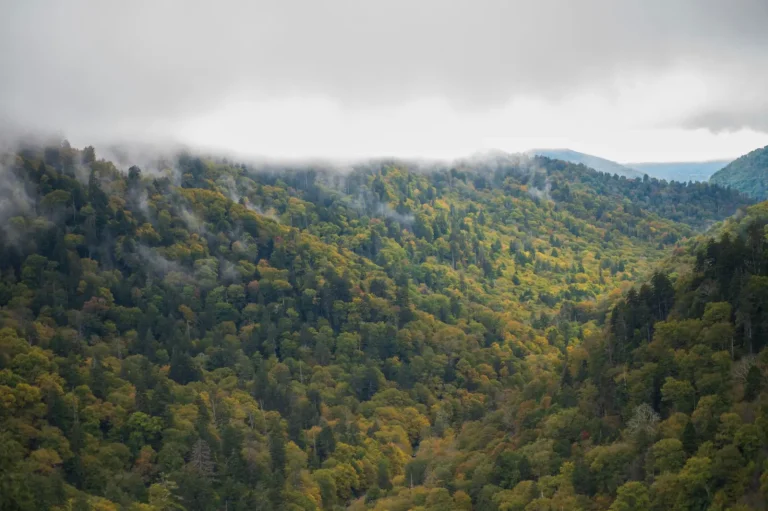
Koalas at the edges of Australian rainforests operate in a different world than their counterparts deeper in the canopy. After years of moving through these transition zones – early mornings, late afternoons, and the unpredictable weather windows that define rainforest margins – you notice patterns that don’t appear in the standard wildlife guides. The forest edge is not simply a thinned version of the interior. It’s a distinct ecological space with its own pressures, visibility conditions, and animal behavior.
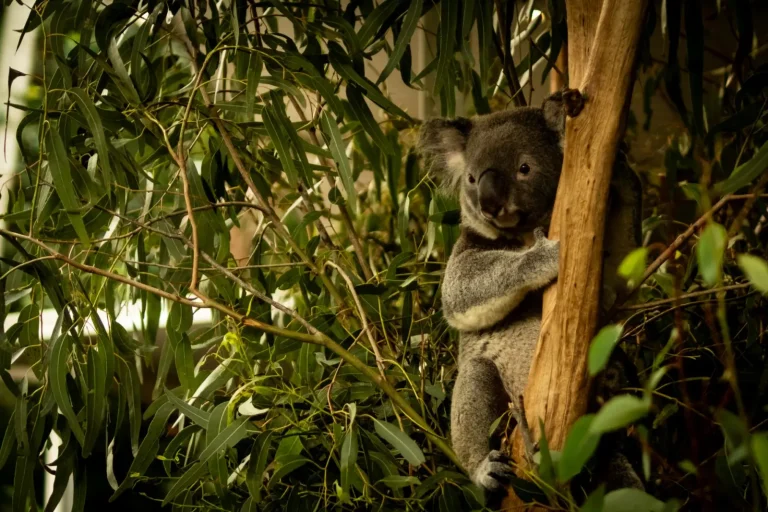
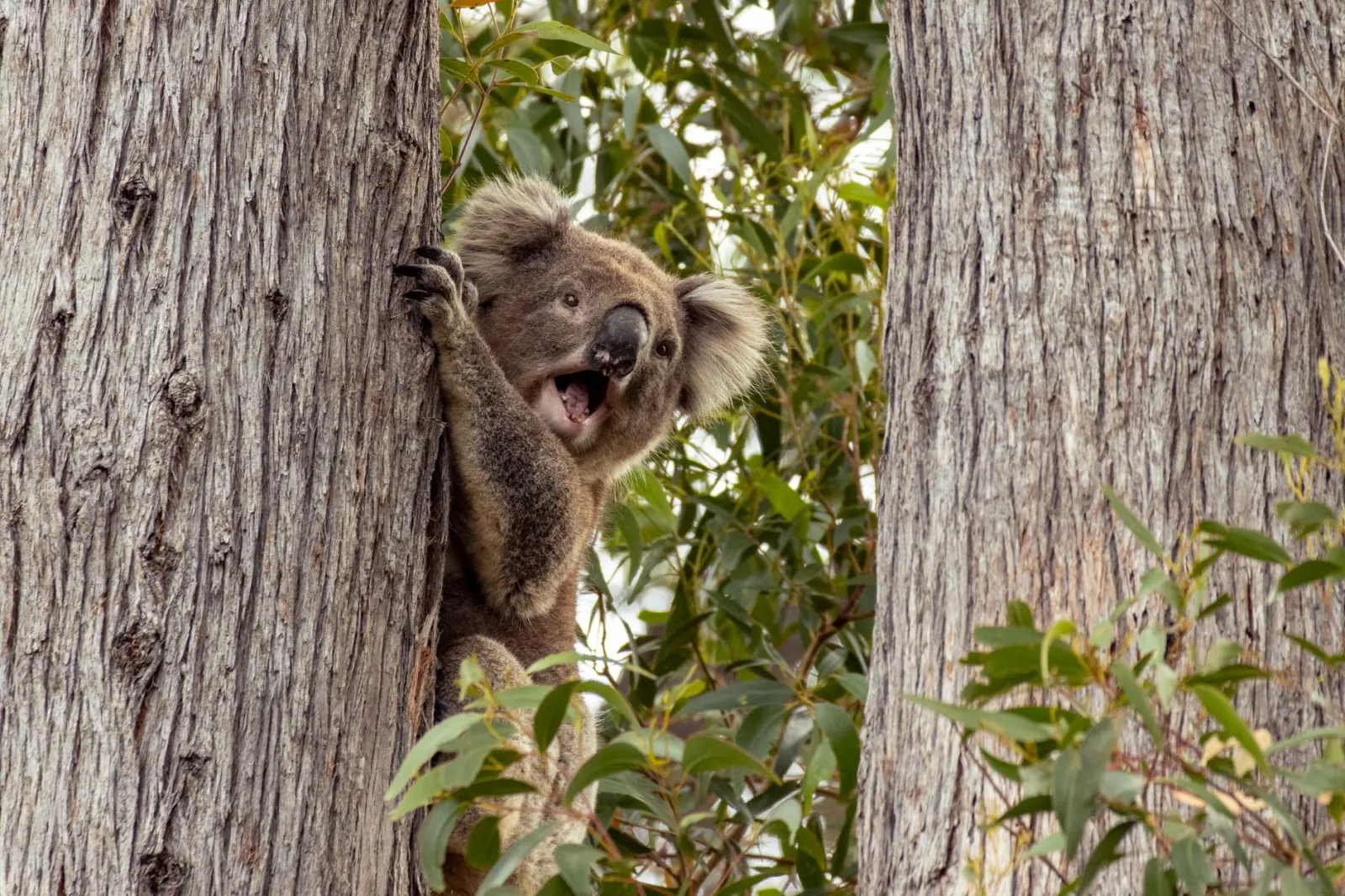
The most immediate thing you notice is how exposed koalas become at the forest margin. Where the rainforest meets cleared land, eucalyptus trees stand more isolated, their canopies more spread and accessible to view. This visibility works both ways. The koalas are easier to spot, but they’re also more vulnerable to weather, predators, and human activity. On a humid afternoon, you might see one high in a sprawling eucalyptus near a fence line, clearly visible against the sky. An hour later, that same tree might be empty, the animal having moved deeper into denser cover or simply repositioned to a less exposed branch.
Why Koalas Use Forest Edges at All
The presence of koalas at rainforest margins isn’t random. It reflects food availability and habitat pressure. Eucalyptus trees – the primary food source – grow more abundantly at the edge than deep within rainforest. The transition zone often has a mix of eucalyptus and other species, creating a resource-rich band that attracts koalas, particularly in drier seasons when inland eucalyptus becomes stressed. You’ll observe this most clearly during late winter and spring, when animals move toward these edges to access fresher foliage.
Habitat pressure from inland areas also drives edge populations. As koala numbers increase in established territories, younger or subordinate animals are pushed toward marginal zones. These aren’t always thriving individuals; some are managing limited resources or recovering from territorial disputes. The forest edge becomes a refuge, not always a preference. This distinction matters when you’re trying to understand what you’re seeing. A lone koala at the margin might not be there because conditions are ideal – it might be there because it has nowhere else to go.
Timing and Visibility Patterns
Spotting koalas at forest edges depends heavily on time of day and season. Early morning, roughly between 5:30 and 7:30 AM, tends to be most productive. The animals are often still in feeding positions or moving between overnight rest sites and daytime branches. Light is still soft and diffuse, reducing glare on the canopy. By mid-morning, koalas typically settle into a stationary position high in the tree, and they become harder to distinguish from branch and shadow.
Late afternoon offers a second window, though less reliable. Animals may shift position as temperatures drop and humidity rises, but they’re not as actively mobile as in early morning. Overcast days change the equation entirely. Without harsh shadows, the canopy becomes more uniform visually, and koalas can be easier to spot – but they’re also less likely to be moving, so you might encounter fewer animals overall. Rain, particularly light rain, sometimes triggers activity, but heavy downpour sends them into dense cover where visibility drops to near zero.
Seasonal variation is significant. During the austral summer (December to February), koalas at forest edges often retreat into denser, cooler rainforest interior or remain high and motionless in the canopy during the heat of the day. Winter brings them out more frequently, and the cooler temperatures mean they’re active across a longer window of daylight. Spring is often the peak season for edge sightings because food quality improves and animals are more mobile during breeding season.
The Reality of Habitat Disturbance
Forest edges near human settlement or agricultural land show different koala behavior than truly remote margins. Animals in these zones are often more nocturnal, moving primarily after dusk and before dawn to minimize encounters with people, vehicles, or dogs. This behavioral shift means daytime sightings become rarer, even if the population is stable. You might see fresh scat or claw marks on trees, clear evidence of koala presence, yet encounter no actual animals during daylight hours.
Fragmentation also affects edge populations. Where rainforest is broken into smaller patches separated by cleared land, koalas at the margins face genuine isolation. They’re reluctant to cross open ground, so individuals become trapped in small territories. This creates visible stress – repeated browsing on the same trees, animals in poor condition, territorial aggression. The edge in these cases isn’t a productive transition zone; it’s a dead end.
Introduced species complicate edge ecology. Feral pigs, wild dogs, and aggressive introduced birds alter the landscape and koala behavior. Pigs tear up the understory, changing the structure of the forest edge. Dogs present a direct predation risk, particularly to young or weakened koalas. These pressures aren’t always obvious when you’re standing in the habitat, but they shape what you encounter and how animals respond to your presence.
What Marks a Healthy Edge Population
After repeated visits to the same forest margins, you develop a sense for what indicates a stable koala presence versus a struggling one. Healthy edge populations show diverse age structure – you’ll see young animals, adults in good condition, and older individuals. Trees show moderate browsing rather than intensive stripping. Scat is fresh and regularly distributed across multiple trees, not concentrated on a few heavily used individuals.
Behavioral patterns also signal health. Animals that move between trees, feed actively during observation windows, and show normal vigilance are managing well. Conversely, koalas that remain motionless for extended periods, show signs of illness or injury, or appear extremely thin are often responding to stress – malnutrition, disease, or social pressure. A single observation can’t tell you much, but patterns across multiple visits reveal the underlying condition of the population.
The interaction between koalas and the rainforest edge is ultimately one of adaptation to constraint. These animals are not there because the edge is ideal habitat; they’re there because it offers resources and refuge within a landscape that’s increasingly fragmented and pressured. Understanding what you see at the forest margin requires recognizing that presence doesn’t equal preference, and visibility doesn’t equal abundance. The edge koalas are managing in a specific ecological and social context that shapes their behavior in ways that matter for both their survival and your ability to observe them.