
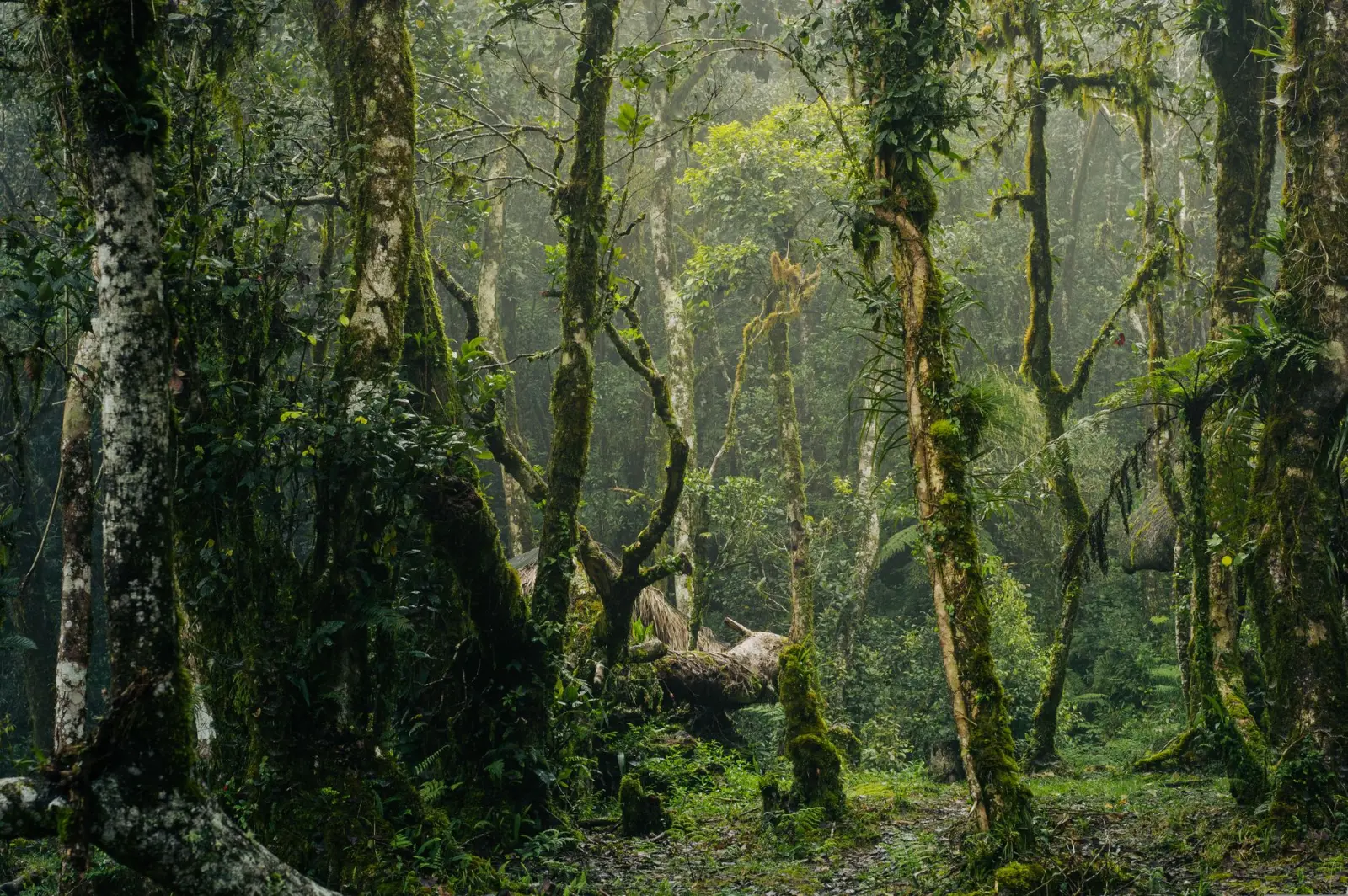
Washpool National Park sits in the New England region of northern New South Wales, straddling the border with Queensland. The forest here is genuinely old. Not old in the way a 200-year-old European forest might be old, but old in the sense that the vegetation structure, the canopy layering, and the species composition reflect patterns that have persisted for thousands of years. I’ve walked through it many times over the past decade, and the first thing that strikes you is how little of the landscape is actually visible at ground level. The canopy closes in quickly, and the forest floor exists in a state of perpetual dimness.
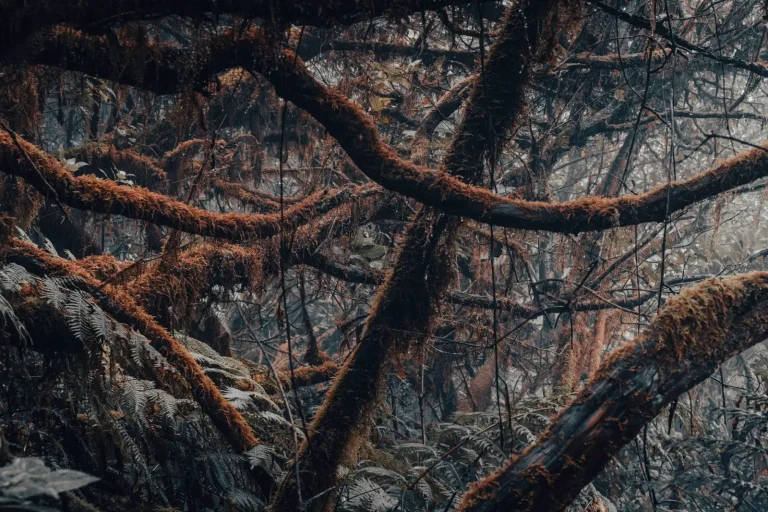
The rainforest ecosystem at Washpool is subtropical, not tropical. This distinction matters more than most people realize. The climate here is cooler and wetter than the tropical rainforests further north, and the plant community reflects that. You’ll find Antarctic beech trees, which are relics from when Australia’s climate was very different. Alongside them grow coachwood, yellow carabeen, and various figs. The understory is dense with ferns, lawyer vines, and seedlings competing for the sparse light. Walking through it feels enclosed in a way that open forest or even drier rainforest doesn’t.
What the terrain actually presents
The walking tracks at Washpool are well-maintained in the sense that they’re marked and regularly cleared, but “well-maintained” doesn’t mean easy or flat. The forest sits on steep terrain carved by water over millennia. Most of the notable walks involve significant elevation change. The Stony Creek Falls track, one of the most popular routes, descends roughly 200 meters into a valley and then climbs back out. That climb back is the part that catches people off-guard. After an hour or more of walking downhill, your legs are already fatigued, and then you face a sustained ascent on a rocky, root-strewn path.
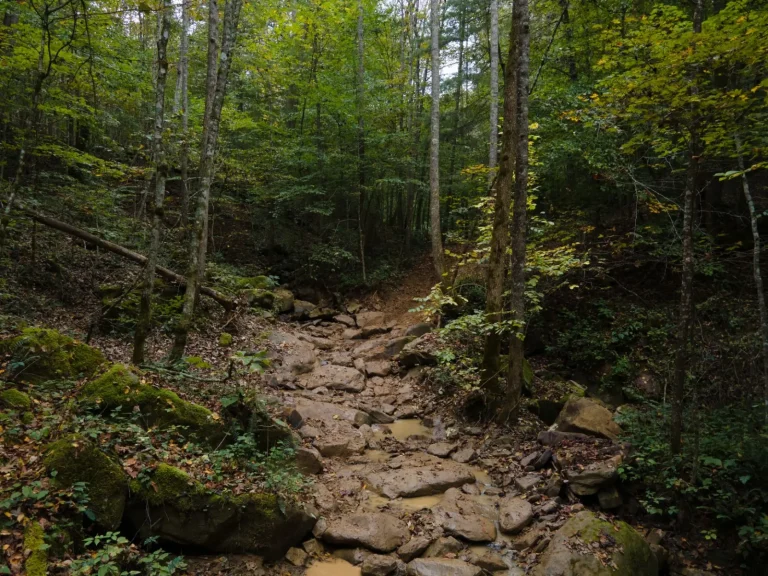
The ground itself is uneven in ways that aren’t immediately obvious from a distance. Massive fallen trees lie across the forest floor, some of them decades old and partially decomposed. Roots from living trees spread across the walking surface. Rocks are frequent, and many of them are slippery even when they look dry, because moisture and algae accumulate in the shade. I’ve seen people turn ankles on sections that looked straightforward. The forest’s dampness means that mud appears even during dry periods, particularly in depressions and near water crossings.
Water crossings are a regular feature of walking here. Stony Creek and its tributaries cut through the park, and the tracks cross them multiple times. In dry conditions, these are ankle-deep at most. After heavy rain, they can become impassable or genuinely dangerous. I’ve turned back from walks because a creek that’s normally a minor obstacle had become a brown, fast-moving flow. The forest canopy means that rain can fall upstream without you immediately knowing it, so water levels can rise faster than you’d expect.
Timing and seasons
The subtropical climate here produces distinct seasonal patterns that affect the experience significantly. Summer, from December through February, brings heat and humidity. The temperature under the canopy is moderated somewhat, but the humidity doesn’t drop. Walking in these months means moving slowly and sweating heavily, even on tracks that don’t seem particularly strenuous. The insect activity is also highest in summer. Mosquitoes, leeches, and various biting flies are present year-round, but summer is when they’re most aggressive.
Autumn and spring offer more comfortable walking conditions. The humidity drops, temperatures are moderate, and the insect pressure eases. These are the obvious times to visit, and the park is busier as a result. Winter is cooler and generally drier, though rain is still common. The forest doesn’t look dramatically different across seasons, which is one of the characteristics of rainforest. There’s no autumn color change, no obvious spring flush. The canopy remains closed and green.
Rainfall is the single most important variable. The region receives significant annual rainfall, and the forest is adapted to wet conditions. Tracks can become muddy and slippery very quickly after rain. Visibility doesn’t change much because the canopy is already dense, but footing becomes precarious. I’ve found that even 24 hours after rain, some sections remain treacherous. The ground holds moisture because the canopy prevents evaporation.
Physical demands and pacing
Most people underestimate how much energy walking in rainforest requires. The terrain is uneven, the air is dense, and the visual environment is monotonous in a way that affects concentration and fatigue. You’re constantly watching your footing, constantly adjusting your balance. This is different from walking on a smooth trail through open forest, where you can establish a rhythm and let your mind wander. At Washpool, you need to stay present and engaged for the entire duration of the walk.
The forest also feels psychologically demanding to some people. The canopy closes overhead, the light is low, and the sense of enclosure is real. If you’re someone who feels claustrophobic in enclosed spaces, the rainforest environment can trigger that response. I’ve seen people who are fit and experienced hikers become genuinely uncomfortable in this setting simply because of the visual and spatial environment.
Most of the main walks at Washpool take between two and four hours depending on your pace and fitness level. That’s not a huge time commitment, but it’s enough that you need to start early and plan for the fact that you’ll be tired at the end. The return journey is always harder than the outbound journey because you’re already fatigued. I typically allow more time for the return than I did for the descent, and I’m usually right to do so.
What to actually bring and prepare for
Proper footwear is non-negotiable. Smooth-soled shoes or trail runners without good grip will leave you slipping on wet sections. Waterproof hiking boots are ideal, though they can feel heavy and hot in summer. The trade-off is worth it. Gaiters are useful if you’re walking during or shortly after rain, because mud and water will find their way into your boots regardless.
Sun protection is less critical here than in open environments because the canopy provides shade, but exposed skin on the walk in and out of the park still needs protection. Insect repellent is essential, particularly if you’re walking in warmer months. The leeches present in rainforest are not dangerous in any serious sense, but they’re unpleasant. Salt or insect repellent will deter them.
Water is important. The forest is humid, but that doesn’t mean you don’t need to drink. Carrying at least two liters is standard practice for a half-day walk. The creek water is generally safe to drink if you’re filtering it, but carrying your own supply is simpler and more reliable.
Washpool’s ancient rainforest is worth experiencing, but it rewards preparation and realistic expectations. It’s not a casual stroll, and it’s not a place where you can coast through on fitness alone. The forest demands attention and respect, and in return, it offers a glimpse of what the landscape looked like before European settlement and a sense of ecological complexity that’s increasingly rare.