
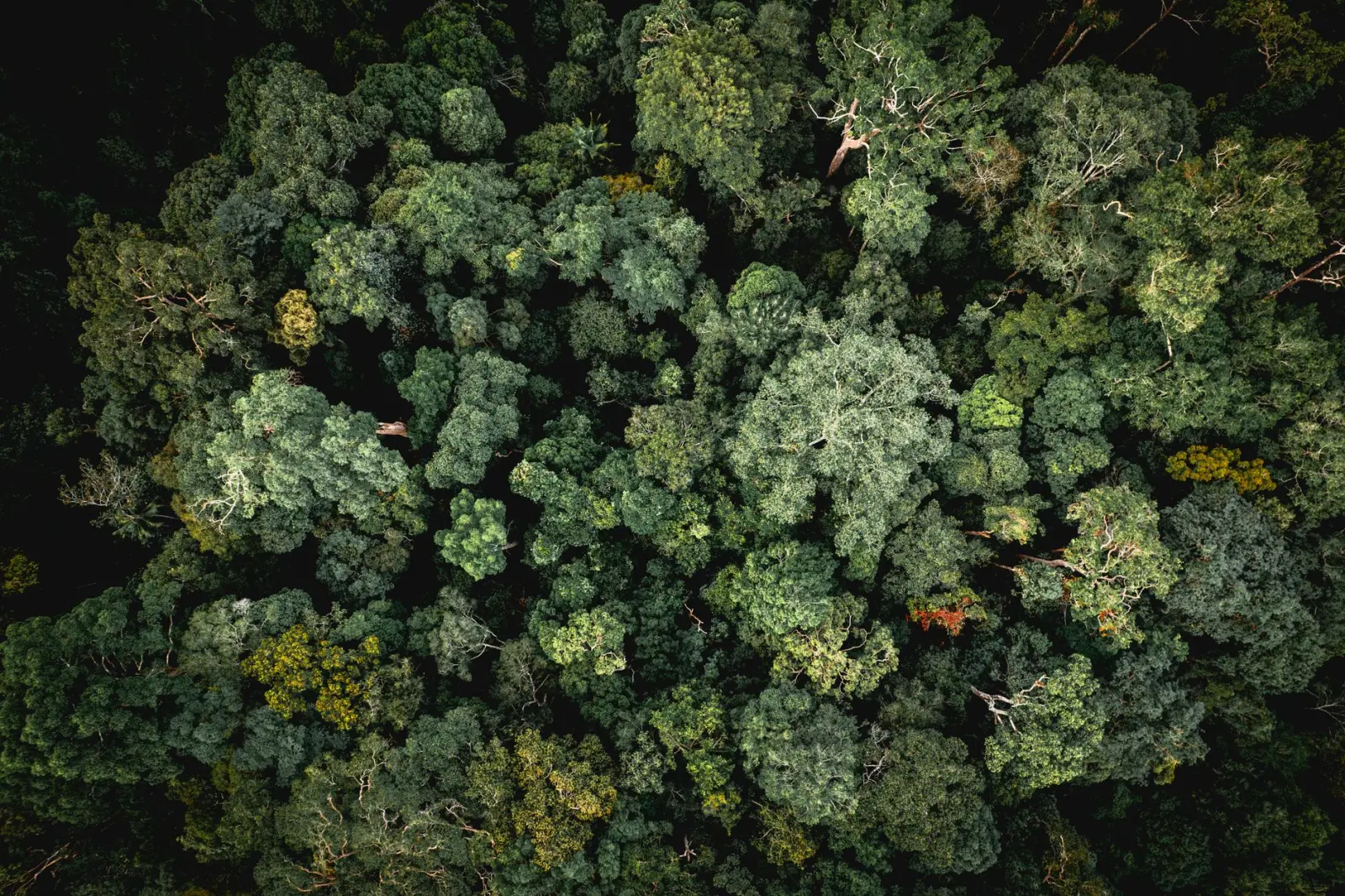
Australian rainforests are among the most efficient carbon storage systems on the continent, though the mechanisms at work are less visible than one might expect. Having spent considerable time observing and working within these ecosystems, I’ve noticed that the carbon-holding capacity of rainforests operates across multiple layers simultaneously – above ground in biomass, within soils, and in the complex chemistry of decomposition. The sheer density of vegetation in tropical and subtropical rainforests means there’s simply more plant material per square meter than in other forest types, and that material accumulates carbon at rates that outpace release.
The most obvious carbon storage happens in the trees themselves. A mature rainforest canopy in northeastern Australia can contain hundreds of tonnes of carbon per hectare locked into wood, bark, and leaves. What becomes apparent when you walk through these forests is the structural complexity – multiple canopy layers, dense understorey vegetation, and countless vines and epiphytes all contribute to total biomass. Unlike plantation forests or even eucalypt woodlands, rainforests don’t thin out naturally as they age. The shade-tolerant species that dominate the understorey continue growing and accumulating mass for decades or centuries. This is why old-growth rainforests store far more carbon than younger regrowth areas, even when both are the same age in human timescales.
Soil Carbon and the Decomposition Paradox
What often gets overlooked is that rainforest soils themselves represent a massive carbon reservoir. In tropical and subtropical rainforests, particularly in areas with high rainfall and consistent temperatures, soils can hold as much carbon as the trees above them – sometimes more. The reason relates to how decomposition works in these environments. While it’s counterintuitive, the wet, warm conditions that seem like they should accelerate decay actually create conditions where organic matter accumulates.
The key lies in waterlogging and oxygen availability. In rainforest soils, especially on slopes and in areas with poor drainage, water saturation creates anaerobic conditions. When soil lacks oxygen, decomposition slows dramatically. Microorganisms that break down organic matter need oxygen to function efficiently, and in waterlogged soils, they work at a fraction of their normal rate. This means leaf litter, fallen wood, and root material persist in the soil much longer than they would in drier ecosystems. I’ve observed this directly – digging into rainforest soil reveals layers of partially decomposed organic matter that can be decades or even centuries old, creating a dark, carbon-rich humus layer that can extend a meter or more into the earth.
The high rainfall in Australian rainforests also means that any carbon that does decompose and become soluble gets leached downward into deeper soil layers, where it can remain sequestered for extended periods. This process, called carbon translocation, effectively moves carbon deeper into the soil profile where conditions are even more anaerobic and stable.
Nutrient Cycling and Carbon Retention
Rainforests operate on a nutrient recycling system that differs markedly from other forest types. The dense canopy intercepts rainfall, and much of that water drips slowly to the forest floor rather than running off rapidly. This slow infiltration allows the soil to absorb and retain more moisture, which supports the anaerobic conditions I mentioned. Additionally, the constant input of leaf litter, branch fall, and dead wood creates a steady supply of organic material that feeds into the carbon storage system.
The mycorrhizal fungi that associate with rainforest trees play a role here too. These fungal networks extend through the soil and help trees access nutrients from decomposing organic matter. In doing so, they also help stabilize that organic matter in forms that resist further decomposition. The fungi essentially create a buffer that slows the conversion of solid organic carbon into CO2 that could escape to the atmosphere.
Age and Carbon Accumulation Rates
One pattern I’ve noticed repeatedly is that carbon storage capacity increases with forest age, but not linearly. A rainforest that’s 50 years old stores significantly more carbon than one that’s 20 years old, but a 200-year-old forest doesn’t necessarily store twice as much as a 100-year-old one. This is because as forests mature, growth rates slow. The trees are larger and older, and while they continue to accumulate biomass, they do so more slowly than younger trees. However, the soil carbon component continues to build over centuries, which means very old rainforests have disproportionately high total carbon storage.
Disturbance events complicate this picture. When rainforest is logged, cleared, or damaged by cyclones, the immediate effect is obvious – biomass is removed or killed. But the longer-term effect on soil carbon is what matters for climate outcomes. If soil is compacted or exposed to drying and oxidation, the anaerobic conditions that preserve soil carbon are disrupted. Decomposition accelerates, and carbon that was locked away for centuries can be released within years. This is why rainforest recovery after disturbance is slow – it takes decades just to rebuild the soil carbon levels that existed before the disruption.
Regional Variation in Storage Capacity
Not all Australian rainforests store carbon at the same rate. Rainfall, temperature, soil type, and elevation all influence how much carbon accumulates. The wet tropical rainforests of Far North Queensland, with annual rainfall exceeding 2000 millimeters, store more carbon per hectare than the subtropical rainforests of northern New South Wales, which receive less rain and experience more seasonal variation. The cooler mountain rainforests of Tasmania and the southern highlands store carbon more slowly than tropical rainforests, partly because plant growth rates are lower in cooler climates.
Soil type matters significantly as well. Rainforests on volcanic soils, which are common in northeastern Australia, tend to have higher nutrient availability and can support denser vegetation. Rainforests on sandy or lateritic soils, which are nutrient-poor, may store less biomass but can still accumulate substantial soil carbon. The depth and stability of the soil profile determines how much carbon can be retained long-term.
Understanding how Australian rainforests store carbon reveals why their protection has consequences beyond simple biodiversity conservation. The carbon locked into these systems represents atmospheric CO2 that has been removed from circulation and sequestered in forms that resist release. When rainforest is converted to other land uses, that storage capacity is lost, and the carbon itself often becomes mobile again. The slow, steady accumulation of carbon in mature rainforest soils represents a climate service that, once disrupted, takes centuries to rebuild.