
Mount Lewis’s forested sections occupy a strange middle ground in hiking experience. They’re not technically difficult, yet they consistently catch people off guard. I’ve walked these trails dozens of times across different seasons, and the pattern is always the same: visitors arrive expecting a straightforward forest walk and leave with a clearer sense of what “forested mountain terrain” actually means. The forest here isn’t a gentle backdrop. It’s a working ecosystem with its own logic, and understanding that logic changes everything about how the walk unfolds.
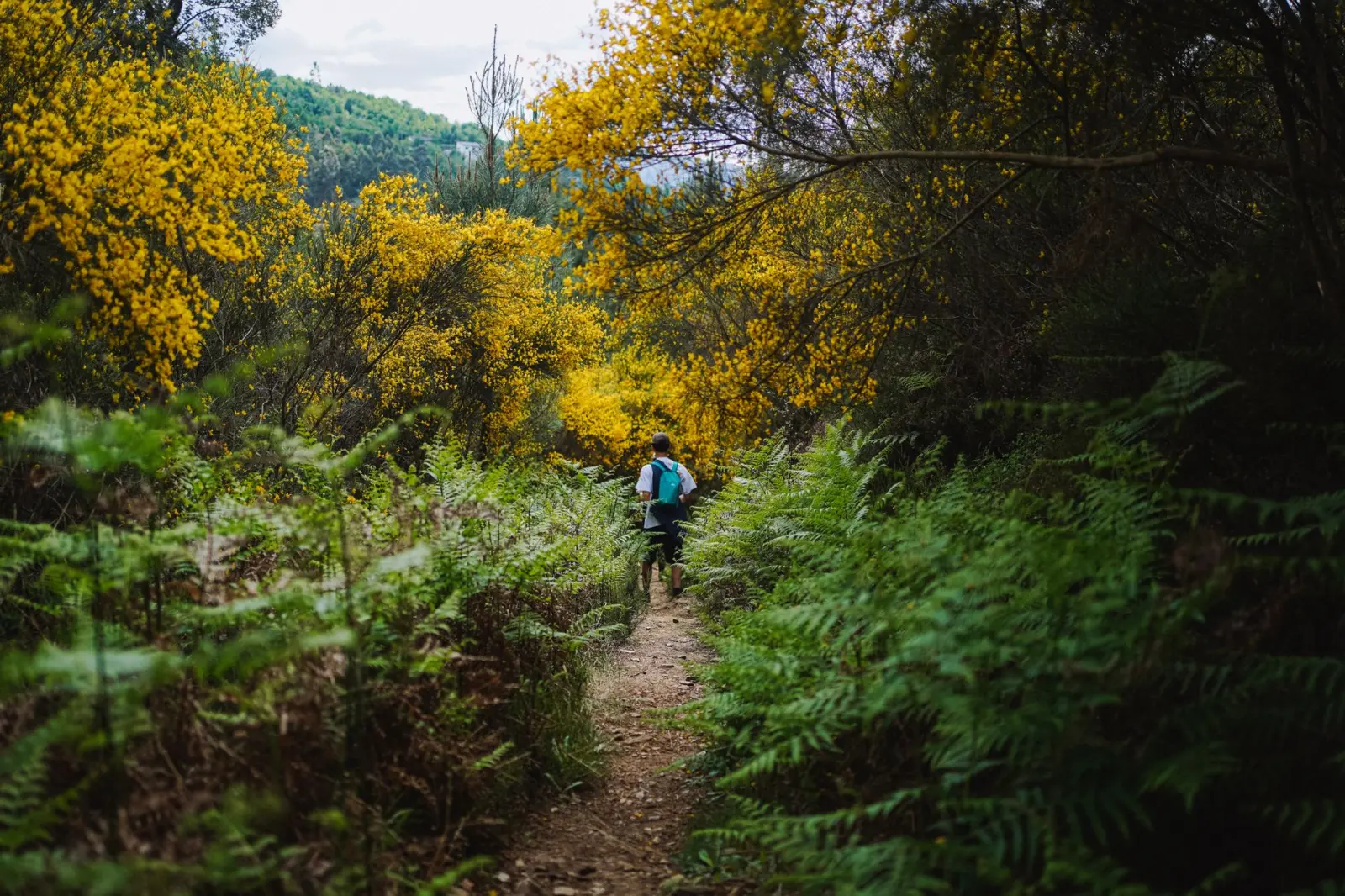
The canopy density shifts dramatically depending on which approach you take and what time of year you’re moving through. Early summer brings thick undergrowth and vegetation that narrows the perceived trail width, even when the actual path is clear. By late autumn, the forest floor opens up considerably, and sight lines extend further. This matters more than it seems because visibility affects pace, confidence, and how quickly fatigue sets in. A walk that feels manageable in October can feel claustrophobic in July, even though the elevation gain hasn’t changed.
What strikes most people first is the moisture. The forest holds water differently than open ridgeline. Even on days when the summit area is dry, the lower forested sections retain dampness in the soil and vegetation. Roots become slick not from recent rain but from persistent ground moisture. Boots that grip well on dry rock or grass lose traction on these wet root systems. I’ve seen confident hikers slip on what looked like solid ground simply because they weren’t accounting for the forest’s ambient humidity. Proper footwear matters here in a way it might not on higher, more exposed sections.
Navigation and Trail Markers
The trail itself is generally well-marked, but the forest creates optical illusions that standard markers can’t entirely solve. When you’re surrounded by trees at similar heights and spacing, the trail can feel less defined than it actually is. Switchbacks that would be obvious on open terrain become subtle turns that some hikers miss. I’ve encountered people who wandered off the main path not because markers were absent but because the forest’s repetitive visual pattern made them doubt what they were seeing.
The markers themselves – blazes on trees or cairns – are maintained reasonably well, but they’re spaced for people moving at a normal hiking pace. If you’re moving slowly due to fatigue or taking frequent breaks, the next marker can feel impossibly far away. This psychological effect is real. The gap between one marker and the next feels longer than it is, and some hikers start second-guessing their route. Carrying a map and knowing the general direction helps, but it’s worth acknowledging that forest hiking requires a different kind of attention than ridge walking. You’re not navigating by landmarks you can see ahead. You’re following a thread through similar-looking terrain.
Terrain and Physical Demands
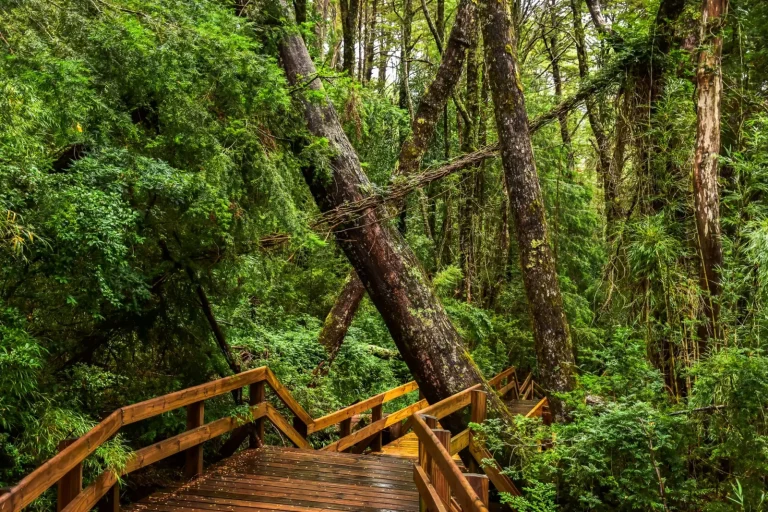
The forest floor isn’t uniform. Sections of the trail feature exposed root systems that create a natural staircase effect. These roots are stable and actually helpful for traction going uphill, but they demand careful foot placement. The rhythm of walking changes. You can’t settle into a steady stride the way you might on a smoother path. Instead, you’re constantly making micro-adjustments, stepping over and around obstacles. This uses different muscle groups and burns energy in ways that elevation gain alone doesn’t explain.
Downhill through the forest presents its own challenge. The temptation to move faster is strong, especially when you’re tired and the end feels close. But the combination of roots, rocks, and uneven ground makes speed dangerous. I’ve seen ankle injuries happen on these lower sections precisely because people relax their concentration. The forest doesn’t feel as serious as exposed terrain, so the mental guard drops. The physical demands are actually quite high on descent, even if it doesn’t feel that way initially.
Sections of the trail pass through areas where fallen trees create minor obstacles. Sometimes these are cleared seasonally, sometimes they’re not. A tree across the trail isn’t insurmountable, but it does require you to step up and over or navigate around it. These aren’t major delays individually, but they accumulate. A walk that should take four hours might take four and a half simply because of these small interruptions. It’s worth factoring into time estimates, especially if you’re hiking with people of varying fitness levels.
Weather and Seasonal Variation
The forest canopy provides shelter from direct sun and some wind protection, which sounds beneficial until you realize it also traps moisture and can make the air feel colder than it actually is. On cool days, the forest feels significantly colder than the same temperature would feel on open terrain. Layering becomes important not just for warmth but for managing moisture. The forest air is humid, and you’ll perspire differently than you would in drier conditions. This affects how quickly you cool down during breaks.
Rain changes the forest dramatically. Wet vegetation brushes against you constantly, and even with rain gear, you end up damp. The trail becomes genuinely slippery, and what was a manageable walk becomes something requiring real focus. I’ve done this walk in light rain, and it’s doable but noticeably more demanding. Heavy rain makes it genuinely unpleasant and increases the risk of slipping significantly. The forest’s drainage is generally adequate, but water does pool in certain sections, creating muddy patches that are hard to avoid.
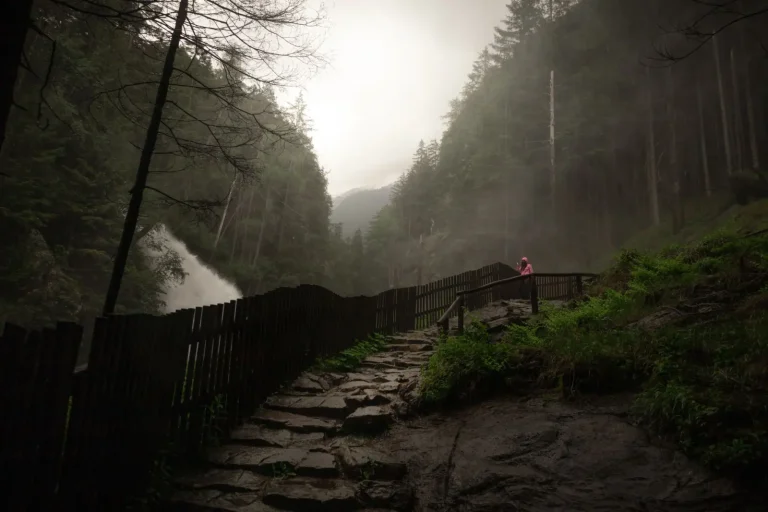
Fog is common in the forest, particularly in spring and early summer. It doesn’t necessarily mean the higher elevations are fogged in, but it can create a disorienting experience where you can only see thirty or forty meters ahead. This makes the walk feel longer than it is and can trigger mild anxiety in people who aren’t used to limited visibility. The trail is still clear, but the psychological effect of fog shouldn’t be underestimated. Some people find it meditative. Others find it oppressive. It’s worth knowing your own response before committing to a walk in these conditions.
Practical Realities and Pacing
Most people underestimate how long the forested section takes. The elevation gain is moderate, but the technical nature of the terrain – roots, rocks, uneven ground – slows pace more than hikers anticipate. A person who can move steadily on a well-maintained trail at four kilometers per hour might manage only three kilometers per hour through this forest. That’s not a failure of fitness. It’s just the reality of the terrain.
Fatigue hits differently in the forest. Because you’re not seeing distant views or having the psychological boost of open terrain, mental fatigue can compound physical fatigue. The repetitive visual environment, the constant attention required for foot placement, and the enclosed feeling all contribute to a sense of weariness that’s as much mental as physical. Taking regular breaks helps, but the breaks themselves feel less restorative in the forest than they do on open ground where you can sit and look at the view.
The walk is manageable for most people with reasonable fitness, but it’s not passive. It demands attention, appropriate pacing, and realistic time estimates. Those who treat it as a casual stroll often find themselves moving more slowly than expected and arriving at the next destination later than planned. Those who respect the terrain’s demands and adjust their pace accordingly generally have a more positive experience. The difference isn’t about being fit or unfit. It’s about understanding what the forest actually requires.