
After years of working in tropical watersheds, I’ve noticed something that doesn’t always make it into textbooks: the relationship between standing trees and healthy streams is less about romance and more about physics. A rainforest doesn’t protect a stream because it’s “pristine” or “untouched.” It protects a stream because of what the trees are actually doing, moment by moment, in ways that become obvious only when they stop.
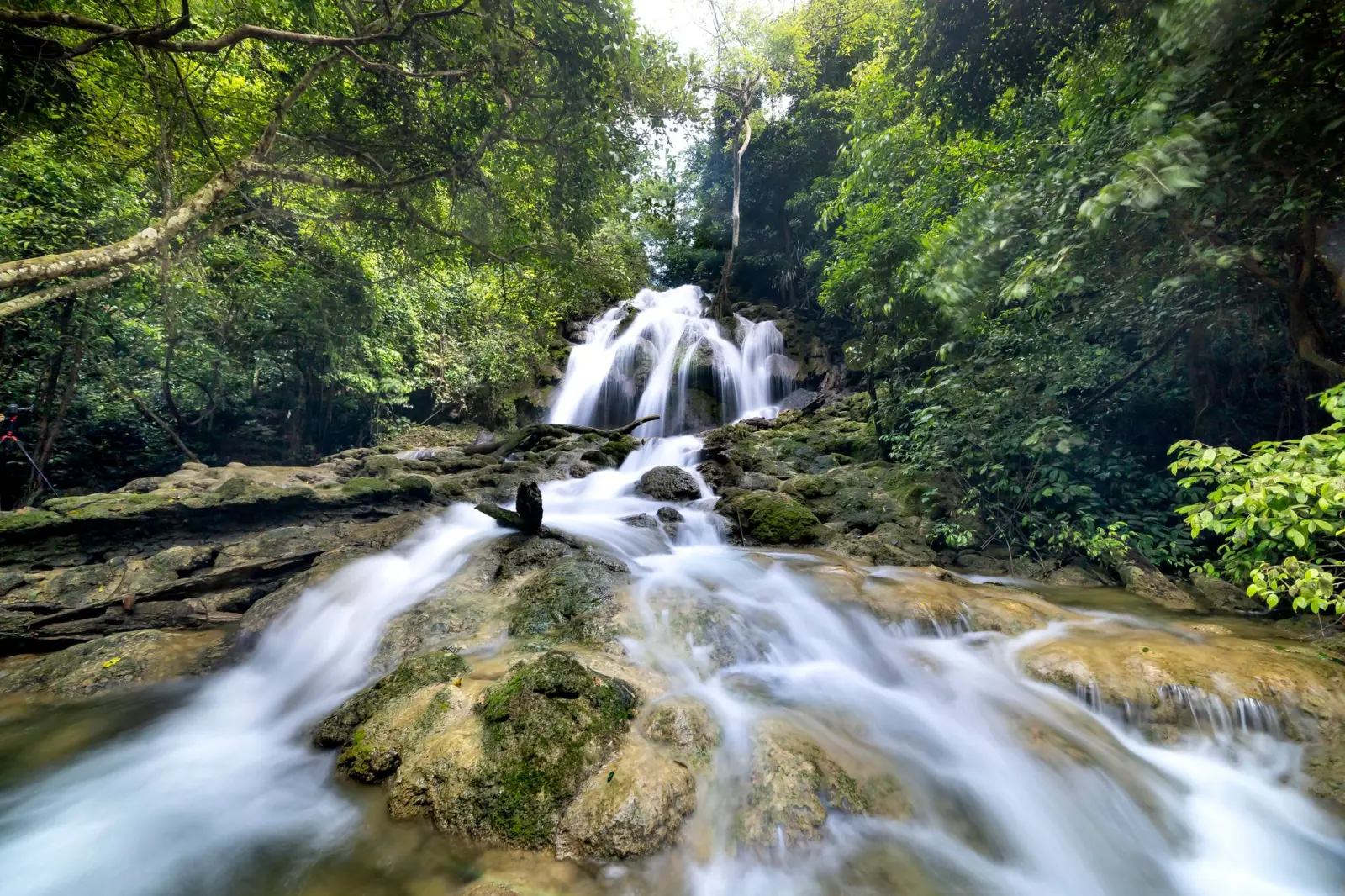
The first time I saw what happens when that protection disappears, I was surveying a stream in a cleared section adjacent to intact forest. The difference wasn’t subtle. The cleared stream ran higher and faster after rain, carried visible sediment loads that turned the water opaque, and had lost the stable pool-and-riffle structure that existed just upstream where the forest remained. The intact forest stream, by contrast, absorbed rainfall differently. It rose more slowly, stayed clearer, and maintained deeper pools. That wasn’t coincidence. It was the forest working.
The Canopy as a First Filter
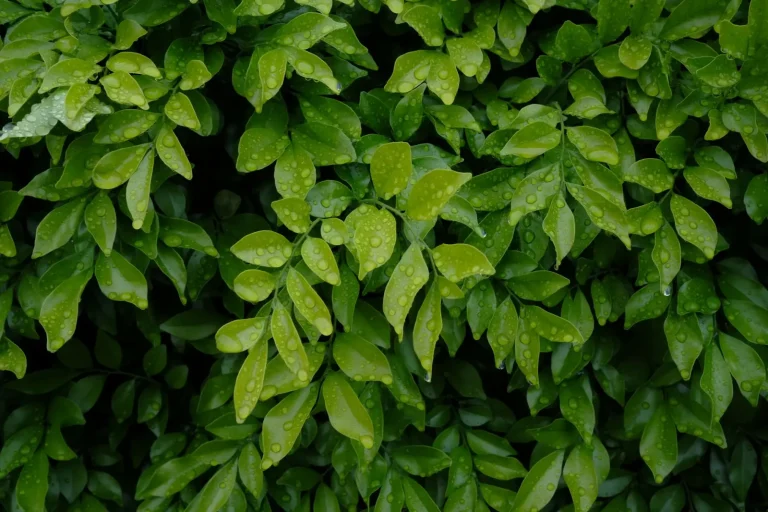
The rainforest canopy intercepts rainfall before it ever reaches the ground. This isn’t just about reducing the volume of water that falls directly on soil – though that matters. It’s about changing how that water arrives. A raindrop falling from 30 meters up hits with real force. When it strikes the forest floor directly, it dislodges soil particles and creates erosion. When it hits a leaf 20 meters up, gets redirected to a branch, drips onto another leaf, and eventually slides down a trunk, the energy is dissipated. By the time water reaches the soil, it’s moving slowly enough that it can actually infiltrate rather than run off.
I’ve measured this difference in the field. After a heavy rain, a cleared area produces immediate runoff – water moving across the surface within minutes. The same rain falling on intact forest results in much slower surface flow. Some water drips directly from leaves and branches. Some flows down trunks as stemflow, concentrated but slow-moving. The majority soaks into the leaf litter and soil. This matters enormously for streams because it means less water arrives all at once, demanding less from the channel to contain it.
Root Networks and Soil Stability
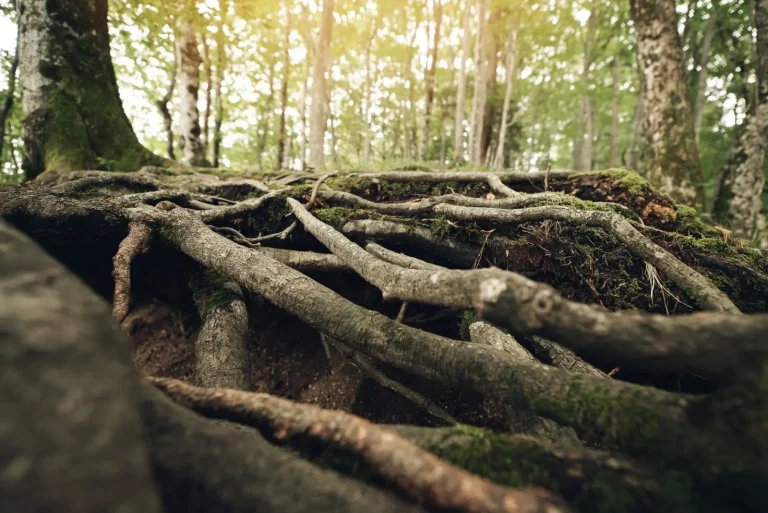
What’s happening underground is equally important, though it’s invisible. Rainforest trees develop extensive root systems that bind soil together. These aren’t just the large structural roots visible at the base of the trunk. The real work is done by fine roots and root hairs that penetrate deep into the soil profile, creating a kind of biological mesh that holds particles in place.
When you remove the forest, you remove that mesh. Soil becomes vulnerable. Heavy rain doesn’t just produce runoff – it produces sediment-laden runoff. I’ve documented this in streams where the riparian forest had been cleared for agriculture. Within one heavy rainfall event, the stream bed would accumulate a visible layer of fine sediment. Over time, this smothers the substrate where aquatic insects and fish spawn. It also fills pools, reducing the stream’s capacity to store water during dry periods.
The root systems of riparian trees – those growing right at the stream’s edge – have an additional function. They stabilize the banks themselves. Without them, stream banks collapse during high flows. With them, banks hold firm even during significant discharge events. I’ve seen streams with intact riparian forest maintain stable banks through flood events that would have caused major erosion in deforested areas.
Organic Matter and Stream Chemistry
Rainforest streams receive a continuous input of organic matter: leaves, twigs, fallen branches, and the occasional large tree. This isn’t debris that degrades water quality. It’s the foundation of the stream ecosystem. The leaves and smaller organic material provide food for invertebrates that form the base of the food web. The larger wood creates habitat structure – forming pools behind fallen logs, creating refuges for fish during high flows, and slowing water movement.
The decomposition of this organic matter also influences stream chemistry. As leaves break down in the water, they release tannins and other compounds that lower pH slightly and reduce light penetration. This sounds negative until you realize that reduced light suppresses algal growth, which in turn prevents the oxygen depletion that occurs when algae blooms and then decompose. I’ve compared streams with and without adequate leaf litter input, and the difference in dissolved oxygen levels is measurable and significant.
In cleared areas where organic matter input stops, streams develop different problems. Algae blooms become common. Dissolved oxygen can drop dangerously low, particularly in pools during warm afternoons. The invertebrate community shifts toward species tolerant of these conditions – often species with lower ecological value. Fish populations decline, not because the water is toxic, but because the habitat has fundamentally changed.
Temperature Regulation
The forest canopy also regulates stream temperature. Shade from overhanging vegetation prevents direct solar heating. This is particularly important in tropical regions where unshaded water can warm rapidly. I’ve measured temperature differences of 5 to 8 degrees Celsius between shaded forest streams and streams running through cleared areas on the same day. For cold-water fish species and temperature-sensitive invertebrates, this difference can be the difference between survival and local extinction.
Temperature also affects water chemistry. Warmer water holds less dissolved oxygen. It also accelerates chemical reactions, including the decomposition of organic matter, which further depletes oxygen. A stream that loses its forest shade doesn’t just get warmer – it becomes chemically stressed in ways that cascade through the ecosystem.
Nutrient Cycling and Water Flow
The forest around a stream isn’t just protecting it from external stresses. It’s actively managing the stream’s internal processes. Leaf litter and woody debris create surfaces where bacteria and fungi colonize and break down organic material. This microbial activity is essential for nutrient cycling. Nitrogen and phosphorus are captured, processed, and made available to aquatic plants and invertebrates in forms they can use. Without this processing, nutrients either accumulate in the water (leading to eutrophication) or are lost downstream.
The root systems of riparian trees also interact with groundwater. They draw water from the soil during dry periods, which reduces pressure on the water table and affects how groundwater flows toward the stream. They also take up excess nutrients, preventing them from leaching into the stream. This nutrient uptake is particularly important in areas where human activity has increased nutrient loading. A healthy riparian forest acts as a filter, removing excess nitrogen and phosphorus before they reach the stream.
What I’ve observed repeatedly is that stream protection isn’t a single mechanism. It’s a system of overlapping processes – physical, biological, and chemical – all working simultaneously. Remove the forest, and you don’t lose one function. You lose dozens. The water runs faster and hotter. Sediment loads increase. Organic matter input stops. Temperature fluctuations become extreme. Nutrient cycling breaks down. The stream doesn’t just become “degraded.” It becomes a fundamentally different system, one that supports a different community of organisms and provides different services to the landscape.
The practical reality is that protecting streams means protecting the forest around them. Not just in some abstract sense, but in the specific, measurable ways that trees stabilize banks, intercept rainfall, regulate temperature, and maintain the biological and chemical conditions that streams depend on. When I see a stream in trouble, the first place I look is upslope and along the banks. Usually, that’s where the answer is.