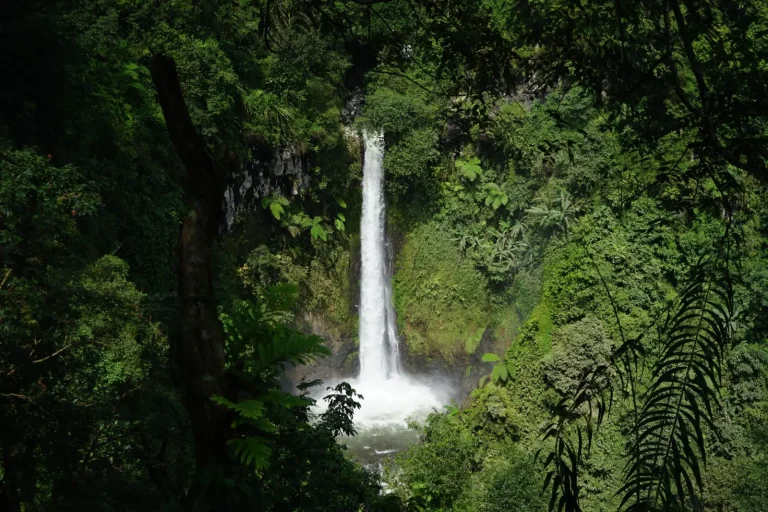
The forest around Kureelpa Falls sits in a pocket where the terrain changes character without much warning. I’ve walked this area enough times to notice patterns that don’t always make it into trail descriptions. The waterfall itself is the obvious draw, but the forest surrounding it presents its own set of conditions that shift depending on when you visit and how recently the weather has turned.
Most people arrive expecting a straightforward walk to a waterfall. What they encounter instead is a network of approaches, each with different ground characteristics. The main track is reasonably well-maintained, but the forest floor itself tells you more about movement than any sign does. After rain, the soil becomes compacted clay that holds moisture for days. The fern understory, which looks benign from a distance, becomes slippery in a way that catches people off guard because it doesn’t look particularly steep.
Ground Conditions and What They Mean
The forest floor around Kureelpa Falls is dominated by volcanic soil that drains poorly in certain sections. You’ll notice this most clearly in the gullies where water naturally collects. The rock underneath isn’t far down, which means water sits rather than soaks through. This creates a specific problem: the ground feels firm enough to walk on, but your boot can slip sideways on the wet fern fronds that cover the compacted earth. It’s not the kind of slipperiness you get on muddy slopes. It’s more subtle and catches people who think they’re on stable ground.
The canopy coverage is dense enough that the ground stays damp even when the wider area has dried out. I’ve been there two days after heavy rain and found sections still boggy while the surrounding ridges were already dry. The ferns here grow thick and close to the ground, which means you’re often stepping on vegetation rather than soil. This changes your foot placement instinctively. You can’t commit your weight the same way you would on open ground.
Rock outcrops appear unexpectedly throughout the forest. They’re not dramatic cliff faces but rather scattered boulders and ledges that interrupt the fern coverage. These rocks can be slick, particularly on their upper surfaces where moss and algae accumulate. The rock itself is often smoother than you’d expect, which matters when you’re using it for balance or footing. I’ve seen people slip on what looked like a simple step up because they underestimated how little grip the moss-covered surface would provide.
Seasonal Shifts in Accessibility
Winter and spring bring different challenges. During winter, the fern fronds are less lush but the ground remains consistently damp. The reduced vegetation actually makes movement easier in some ways because you can see the ground better, but it also means fewer handholds if you need to steady yourself on vegetation. Spring brings rapid growth, and the ferns can become so thick that they obscure the actual track in places. This isn’t dangerous in itself, but it slows you down because you’re constantly checking your footing.
Summer is when the ground dries most completely, but the heat and humidity create their own fatigue factor. The forest canopy keeps direct sun off you, which is valuable, but the lack of air movement means the air feels thick. People tire faster in these conditions even though the ground is firmer. The ferns also become less springy when dry, which changes how your legs feel after an hour of walking.
Autumn brings leaf drop from the scattered eucalypts above, which creates a layer of debris that can hide uneven ground. This is when people most commonly catch their feet on hidden roots or step awkwardly into small holes. The debris also traps moisture, so the ground underneath stays damp even when the surface looks dry.
Navigation Patterns That Actually Matter
The main track to the falls is marked, but the forest around it has several secondary routes that branch off. These aren’t official tracks in most cases, but they’re worn enough to be visible. They typically develop where people have tried to find alternate routes around particularly boggy sections or where they’ve been drawn toward interesting rock formations or side views. Following these alternate routes adds time and often brings you back to the main track anyway.
Water crossings are a feature of this forest that people often underestimate. There are small streams and seepage areas that aren’t dramatic but require careful footing. The rocks in these crossings are often covered with a slick film of algae. I’ve watched people attempt to cross by stepping on what looks like a stable rock, only to have their boot slide sideways. The water itself is usually shallow, but the rocks underneath are uneven and can turn an ankle if you’re not careful.
The approach to the falls themselves narrows as you get closer. The fern coverage becomes denser and the rock becomes more prominent. This is where the terrain becomes genuinely steep in sections, though not dramatically so. The ferns here are thick enough that they can mask the actual slope angle. You might think you’re on a gentle slope when you’re actually on something steeper because the vegetation is doing much of the work of supporting you. This creates a false sense of security that can lead to people moving faster than the terrain actually allows.
What Slows You Down More Than You’d Expect
Fatigue in this forest accumulates differently than on open terrain. The constant attention to footing, the slight instability of the fern-covered ground, and the humidity all combine to create a cumulative tiredness that’s disproportionate to the actual distance covered. People often report that what should be a 45-minute walk took them 75 minutes, and they’re not sure why. It’s usually because the ground demanded more active balance and attention than they anticipated.
The forest is also disorienting in a subtle way. The dense canopy and uniform vegetation mean there are few visual landmarks. People lose their sense of how far they’ve come or how far they have to go. This psychological factor actually increases fatigue because you’re not getting the mental reward of seeing progress.
Light levels change throughout the day in ways that affect perception of the terrain. Early morning, when the sun is lower, creates shadows that make the ground texture more visible and actually helps with footing. By mid-afternoon, when the sun is higher, the shadows flatten out and the terrain becomes harder to read. This is a minor point but worth noting if you’re planning a walk.
The forest around Kureelpa Falls isn’t technically difficult, but it rewards attention and patience. The terrain isn’t forgiving of rushed movement or inattention, not because it’s dangerous but because it’s unforgiving of poor footing. Understanding this distinction changes how you move through it. You’re not climbing or scrambling, but you’re also not on a casual walk. It’s something in between, and that’s where most people’s expectations diverge from reality.