
The forest around Millaa Millaa Falls operates on its own schedule, and that schedule doesn’t always align with what visitors expect. I’ve walked these tracks in different seasons, different times of day, and under various weather conditions, and the experience shifts considerably depending on when you arrive and what you’re prepared for. The falls themselves are straightforward – a short walk, well-maintained, heavily trafficked. But the surrounding forest is where the actual complexity lives.
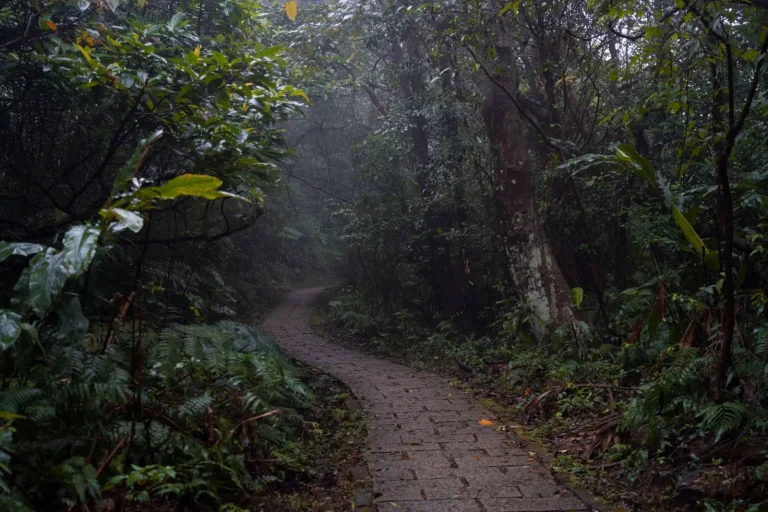
Most people arrive at the car park, do the main falls circuit, and leave. That’s a legitimate way to experience the place, but it means missing what the forest actually offers. The rainforest here is dense, wet, and structurally intricate in ways that only become apparent when you move beyond the main paths. The canopy is high and thick enough that even in full sun, the forest floor sits in perpetual shade. This affects everything: how quickly water drains, how slippery surfaces remain, what plants establish themselves, and how your body manages temperature and humidity.
The Reality of Wet Season Walking
If you’re walking here between November and March, you’re dealing with a rainforest that’s actively functioning as a water system. Creeks that are ankle-deep in dry season become serious obstacles. The walking tracks themselves don’t flood, but they become slick in ways that are deceptive. The problem isn’t that they’re underwater – it’s that the soil underneath the leaf litter has absorbed so much moisture that the whole surface becomes almost frictionless. Boots with good tread help, but they’re not a complete solution. I’ve watched experienced walkers slip on sections that look completely manageable.
The wet season also brings humidity that’s difficult to describe to someone who hasn’t experienced it. It’s not just uncomfortable; it affects your pace and your decision-making. You fatigue faster because your body can’t cool itself efficiently through sweat evaporation. A walk that takes forty minutes in June might take fifty-five in January, and that’s assuming you maintain consistent effort. Most people don’t. They slow down, stop more often, and sometimes turn back earlier than planned. This isn’t weakness – it’s how the human body responds to sustained heat and humidity.
Dry Season Advantages and Hazards
The dry season, roughly May through September, presents a completely different set of conditions. The tracks are firm, visibility is better, and the air is actually breathable. This is when most people visit, which means the tracks are also busier and sometimes more eroded. Popular sections show genuine wear – compacted soil, exposed roots becoming more pronounced, and in places, the track has widened as people step around muddy patches that are now just hard-packed earth.
What catches people off guard in dry season is that the forest is drier but not dry. Moisture still lingers in the shade, and fallen logs and rocks can be slippery even when the track itself is firm. The leaf litter is thicker and can conceal uneven ground. I’ve seen more twisted ankles in dry season than wet season, partly because people move faster when conditions feel easier, and partly because the hazards are less obvious.
Understanding the Track Network
Beyond the main falls circuit, there are several walking options, though they’re not all equally well-maintained or well-marked. The Zillie Falls track branches off and adds genuine distance and effort. It’s quieter than the main circuit, which appeals to people seeking solitude, but it also means fewer people maintaining the track through regular use. Fallen branches accumulate, and sections can become overgrown surprisingly quickly. The creek crossings are more substantial here, and in wet season they’re genuine obstacles that require careful footing or, sometimes, a decision to turn back.
The Palmerston section of the track system offers a longer walk with elevation change. This is where fatigue becomes a real factor. The climb isn’t steep, but it’s sustained, and the rainforest doesn’t offer many psychological breaks – you’re constantly surrounded by dense vegetation, so distance covered doesn’t feel as satisfying as it might on an open hillside. People often underestimate how tiring this walk is because the gradient feels manageable. They’re usually tired by the time they reach the top.
Creek Crossings and Water Levels
The creeks around Millaa Millaa respond quickly to rainfall. A heavy downpour in the catchment can raise water levels noticeably within hours. If you’re planning to walk in wet season or immediately after rain, check the creek levels before you commit. The main circuit is designed to handle high water, but some of the side tracks become genuinely impassable. I’ve turned back from the Zillie Falls track on multiple occasions because the creek crossing was too high to safely navigate.
What’s “safe” is subjective and depends on your experience, footwear, and physical capability. Creeks that are knee-deep with a strong current are genuinely dangerous. People have died in Australian rainforest creeks by underestimating current strength and slipping on submerged rocks. This isn’t fear-mongering – it’s a practical reality. If you’re uncertain, it’s not a failure to turn back. It’s the correct decision.
Timing, Crowds, and Practical Logistics
The car park fills quickly, especially on weekends and during school holidays. If you arrive after 10 a.m., expect to either park some distance away or return later. This affects your walk in ways that aren’t immediately obvious. If you’re parked far away, you’re already fatigued before you start the actual walk. If you delay your visit, you’re walking in hotter conditions and finishing later in the day. Neither is ideal, but both are common scenarios.
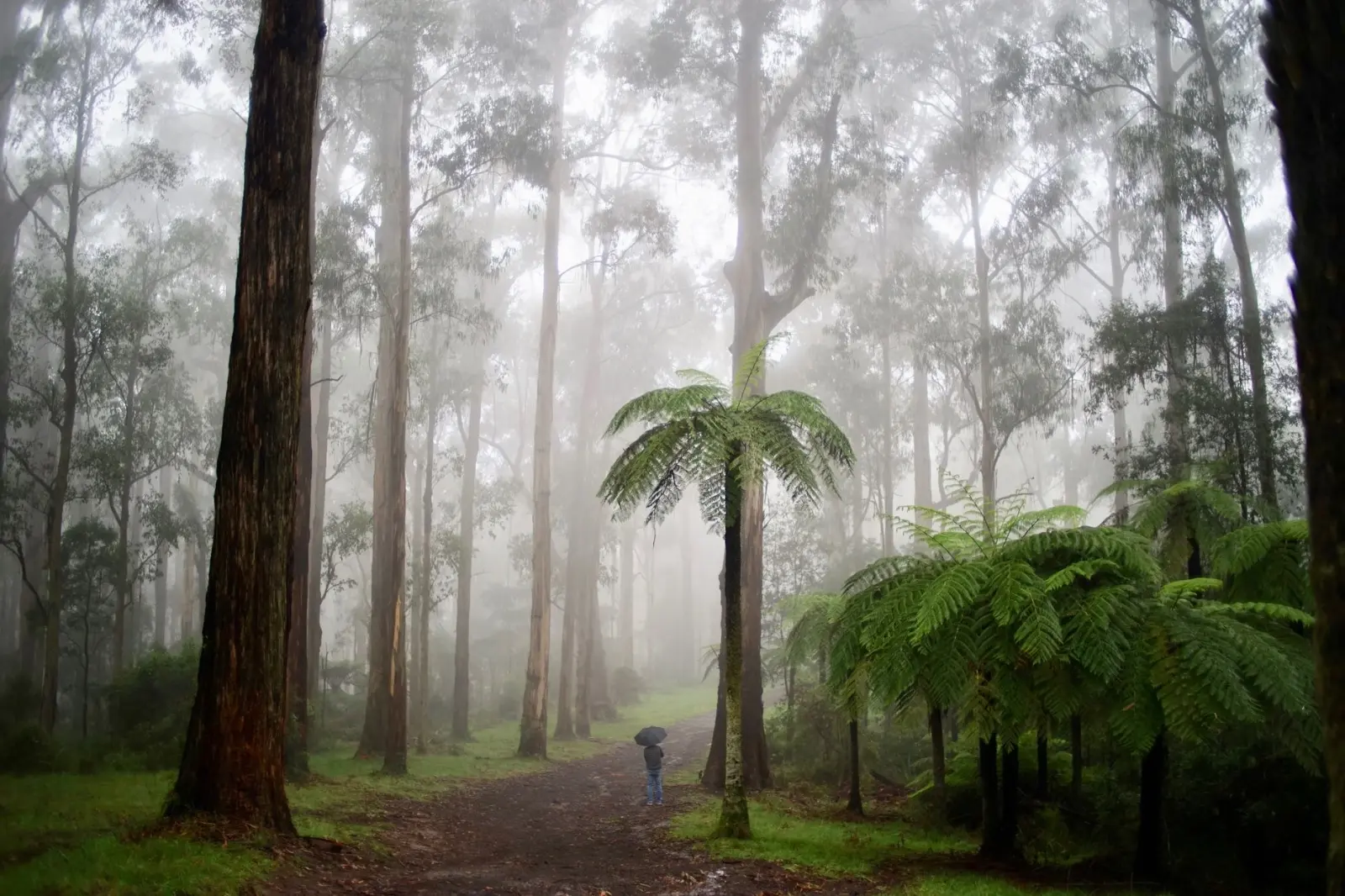
Early morning walks are genuinely different. The forest is quieter, cooler, and you encounter far fewer people. The trade-off is that the light is lower, which means you need to be more careful with footing, and certain features of the forest are less visually distinct. Mist often lingers in the forest until mid-morning, which can be atmospheric but also reduces visibility on the track.
The walk itself is achievable for most fitness levels, but “achievable” doesn’t mean comfortable. If you’re unfit or carrying excess weight, the combination of heat, humidity, and sustained walking will challenge you. This isn’t judgment – it’s observation. I’ve seen people complete the walk who were clearly struggling, and I’ve seen fit people tire faster than expected because they didn’t account for the humidity. Pacing yourself and accepting that you might move slowly is more important than maintaining a particular speed.
What the Forest Itself Reveals
The vegetation around Millaa Millaa is classic rainforest: multiple canopy layers, vines, ferns, and a complex understory. If you’re paying attention, you notice things that casual walkers miss. The trees are old and massive. Buttress roots are everywhere, and they’re genuinely treacherous if you’re not watching your footing. Fallen logs in various stages of decay create obstacles and, occasionally, hazards if they’re positioned in ways that could cause a fall.
The biodiversity is real, but it’s not immediately obvious. You won’t see large animals on a casual walk. You might hear them – birds, occasionally a cassowary crashing through the undergrowth – but seeing them is rare. Insects are everywhere, and some of them bite or sting. Leeches are present in wet season and can be annoying without being dangerous. Mosquitoes are occasional but not usually a major issue around the falls themselves.
The forest is also actively recovering from historical logging and land clearing. Some of the larger trees are old growth, but much of the understory is secondary growth. This doesn’t diminish the experience, but it does mean the forest is younger and more dynamic than it might appear. Sections are denser than others, and you can sometimes see where different logging cohorts have created variations in the vegetation structure.
Walking around Millaa Millaa Falls is straightforward in practical terms, but the forest itself is complex and responds to conditions in ways that deserve respect. The experience is genuinely different depending on when you arrive, what the weather has been doing, and how prepared you are for the actual physical demands. The falls are worth seeing, but the forest around them is where the real engagement happens.