The Big Scrub, once a continuous subtropical rainforest stretching across northern New South Wales, now exists as scattered fragments. What remains tells a particular story about land use, time, and what happens when you try to move through a landscape that has been fundamentally reshaped. Most visitors who come to this region expecting a cohesive rainforest experience encounter something more complicated: patches of dense vegetation separated by cleared land, agricultural holdings, and roads that slice through what were once connected ecosystems.
The scale of the original forest is difficult to grasp when you’re standing in one of the remaining sections. The Big Scrub once covered roughly 75,000 hectares. Today, less than one percent survives in protected areas and scattered private reserves. This isn’t a minor retreat. It’s the difference between moving through an integrated ecosystem and navigating between islands of vegetation. The practical implications are immediate: there are no long rainforest walks that feel continuous, no sense of deep immersion into an unbroken wild space. Instead, you move between reserves, often retracing steps or driving short distances between locations.
What Fragmentation Actually Means on the Ground
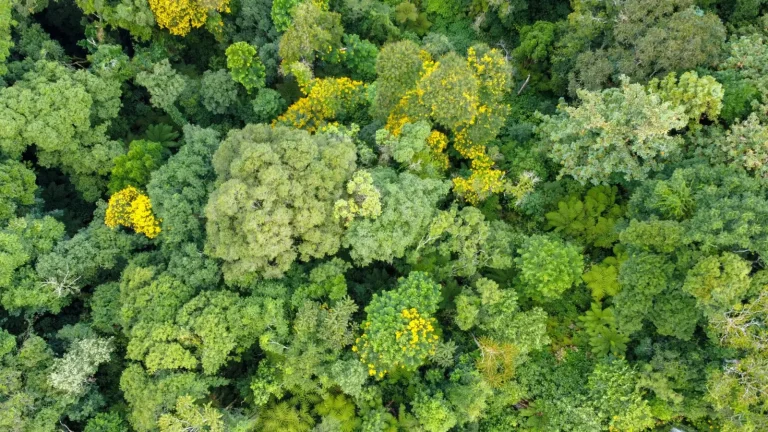
Fragmentation changes more than just the visual experience. The ecological consequences ripple through everything that lives here. Smaller patches support fewer species, particularly those that require large territories or specific microhabitats. Edge effects become dominant. Where rainforest meets pasture or cleared land, the microclimate shifts noticeably. Temperature fluctuations are sharper, humidity drops more steeply, and wind penetration increases. Plants and animals adapted to the stable interior conditions of a large forest struggle at these edges.
Walking through one of the larger remnants, you notice the composition shifts gradually. The core areas tend to have taller trees, denser understorey, and more complex layering. As you approach the boundary, the vegetation thins, pioneer species become more common, and you can often see out to the surrounding landscape. This isn’t a subtle change. It’s the difference between walking in deep shade with limited sightlines and being in a more open, brighter space. The temperature difference can be five degrees or more.
Fauna movements are constrained by these gaps. Birds that once moved freely across continuous canopy now face barriers. Ground-dwelling species encounter unsuitable habitat between patches. Seed dispersal becomes less efficient. The genetic isolation of populations in separate reserves creates long-term vulnerability. These aren’t abstract concerns. They determine whether certain species persist or gradually disappear from the region entirely.
Accessing the Remnants
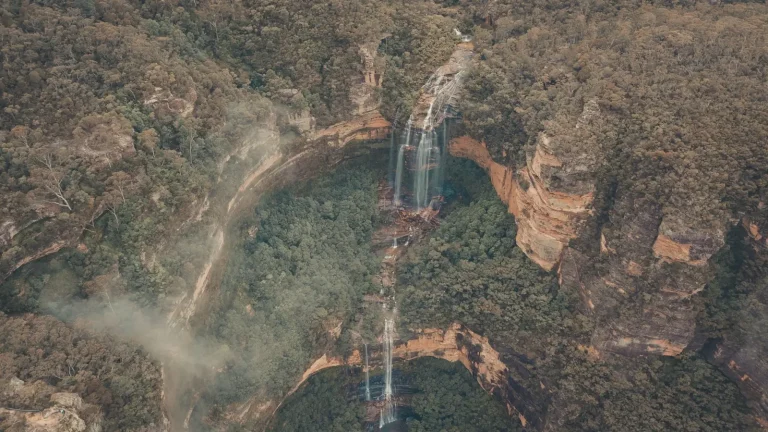
The practical reality of visiting these fragments is that you’re managing multiple small experiences rather than one extended immersion. The main accessible reserves include Minyon Falls, Nightcap National Park, and several smaller protected areas scattered across the region. Each requires separate planning and often separate trips. Minyon Falls involves a steep walk down into a gully system where the rainforest is more concentrated and the microclimate more stable. Nightcap offers ridge-top walks with views outward to cleared land, which actually provides perspective on just how much forest has been removed.
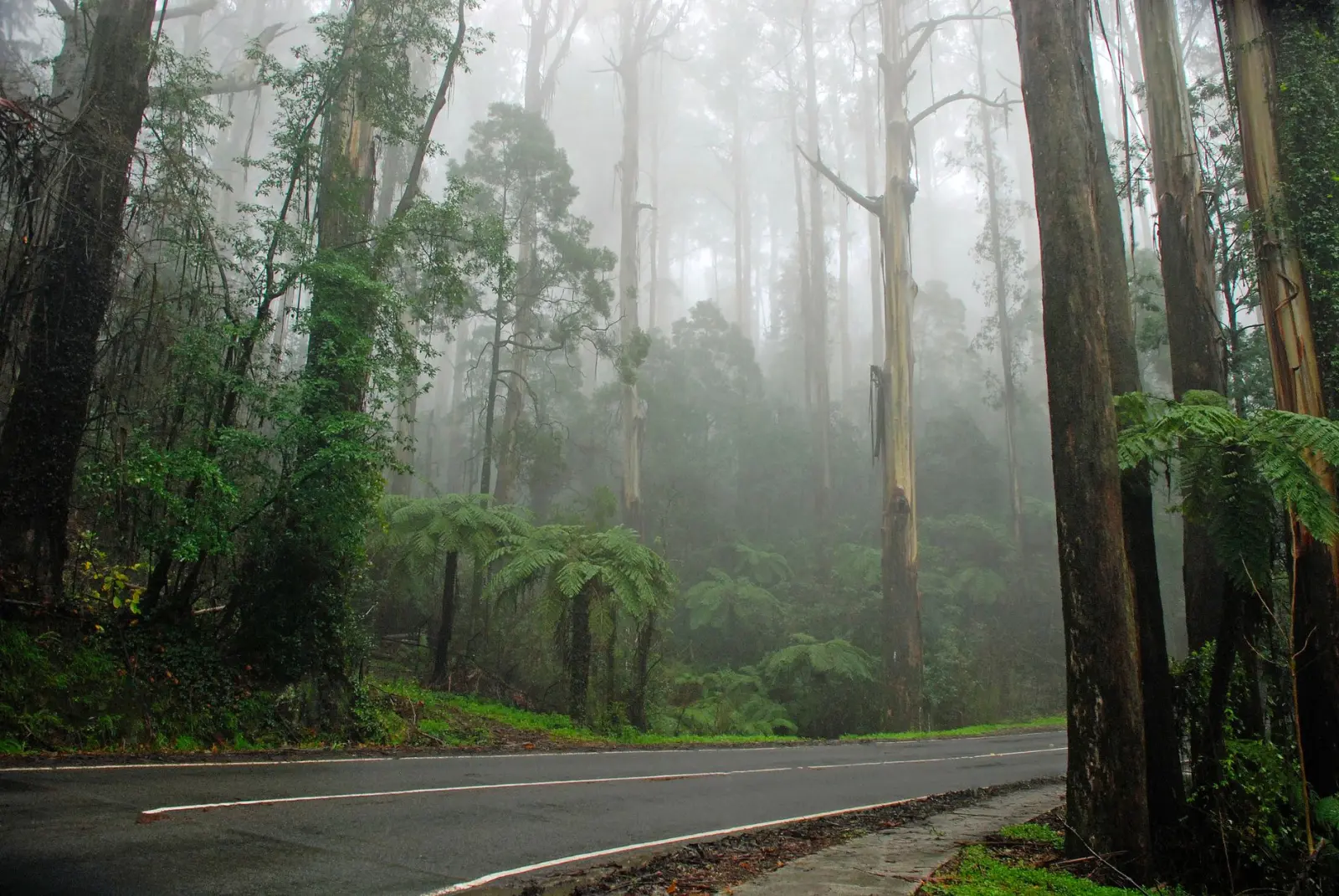
The logistics of moving between these sites reveal the fragmentation more clearly than any description. You drive through agricultural land, often dairy country, with views of pasture and scattered trees. The forest patches appear suddenly, dense and distinct against the open landscape. There’s no gradual transition, no sense of moving deeper into wilderness. You arrive at a carpark, walk into the reserve, and then walk back out. The experience is compressed.
Timing matters significantly. The subtropical rainforest climate means high humidity and regular rainfall, but the season affects accessibility and comfort. Winter (June to August) offers cooler temperatures and lower insect pressure, but some walking tracks can be muddy and slippery. Spring and early summer bring wildflower displays and active fauna, but heat and humidity intensify. Late summer and autumn see increased leeches after rain. These aren’t minor inconveniences. They shape how long you can comfortably spend in the forest and what you’ll actually experience.
What the Remaining Forest Reveals
Despite the fragmentation, the surviving rainforest sections contain species found nowhere else. The Big Scrub has high endemism, particularly among plants and invertebrates. Walking through these patches, you’re moving through a botanical archive of subtropical rainforest that has persisted for millions of years. The tree species composition, the epiphytic plants clinging to branches, the fern diversity, and the complex ground layer all reflect this deep history.
The presence of certain indicator species marks these as genuinely significant ecosystems. Strangler figs, which require specific conditions and often depend on seed dispersal by particular bird species, still establish themselves in the larger remnants. Rainforest palms persist in protected gullies. Primitive plant families that have existed for tens of millions of years still grow here. These aren’t decorative features. They’re evidence that the ecosystem, though fragmented, retains functional complexity.
The fauna you encounter reflects both the richness and the constraints of fragmented habitat. You’ll see lyrebirds, which are adaptable and can move between patches. You’ll encounter various frog species, particularly in wetter gullies. Reptiles are present but often require specific microhabitat conditions that may only exist in core areas. Bird diversity is notable, though some species that historically occurred here are now absent or rare. The absence is as informative as the presence.
Conservation Reality and Ongoing Challenges
The Big Scrub’s future depends on maintaining what remains and, where possible, expanding protected areas. Several private landholders have committed sections of rainforest to conservation, which helps. However, the fundamental challenge of fragmentation persists. Connecting patches through habitat corridors is theoretically sound but practically difficult in a landscape where land values are high and agricultural use is established.
Invasive species present a constant management issue in these remnants. Without the competitive pressure of a large, intact ecosystem, introduced plants can establish themselves more easily. Weeds that wouldn’t survive in the interior of a vast rainforest can flourish at edges and in disturbed areas. Managing this requires ongoing intervention, which is resource-intensive and never fully resolved.
Climate change adds another layer of complexity. The subtropical rainforest is adapted to specific temperature and rainfall ranges. Shifts in these parameters, even gradual ones, will affect which species thrive and which struggle. Fragmented populations have less capacity to adapt through migration or gene flow. The long-term outlook depends on whether the climate envelope these forests require remains stable or shifts beyond their tolerance.
Visiting the Big Scrub’s rainforest remnants offers genuine ecological and botanical value, but it requires accepting that you’re experiencing something fundamentally altered from its historical form. The fragments are worth seeing precisely because they’re rare and because they demonstrate both the resilience of these ecosystems and the profound impact of land clearing. Understanding what you’re looking at means understanding not just what’s present, but what’s absent and why.