Gibraltar Range sits in the Northern Tablelands of New South Wales, and the forest here behaves differently depending on which section you’re moving through and what time of year you arrive. I’ve spent enough time on these trails to recognize the patterns – where the ground stays firm, where it turns to bog, how quickly weather can shift, and which routes people tend to underestimate. The park doesn’t present itself as particularly difficult on paper, which is partly why people arrive unprepared.
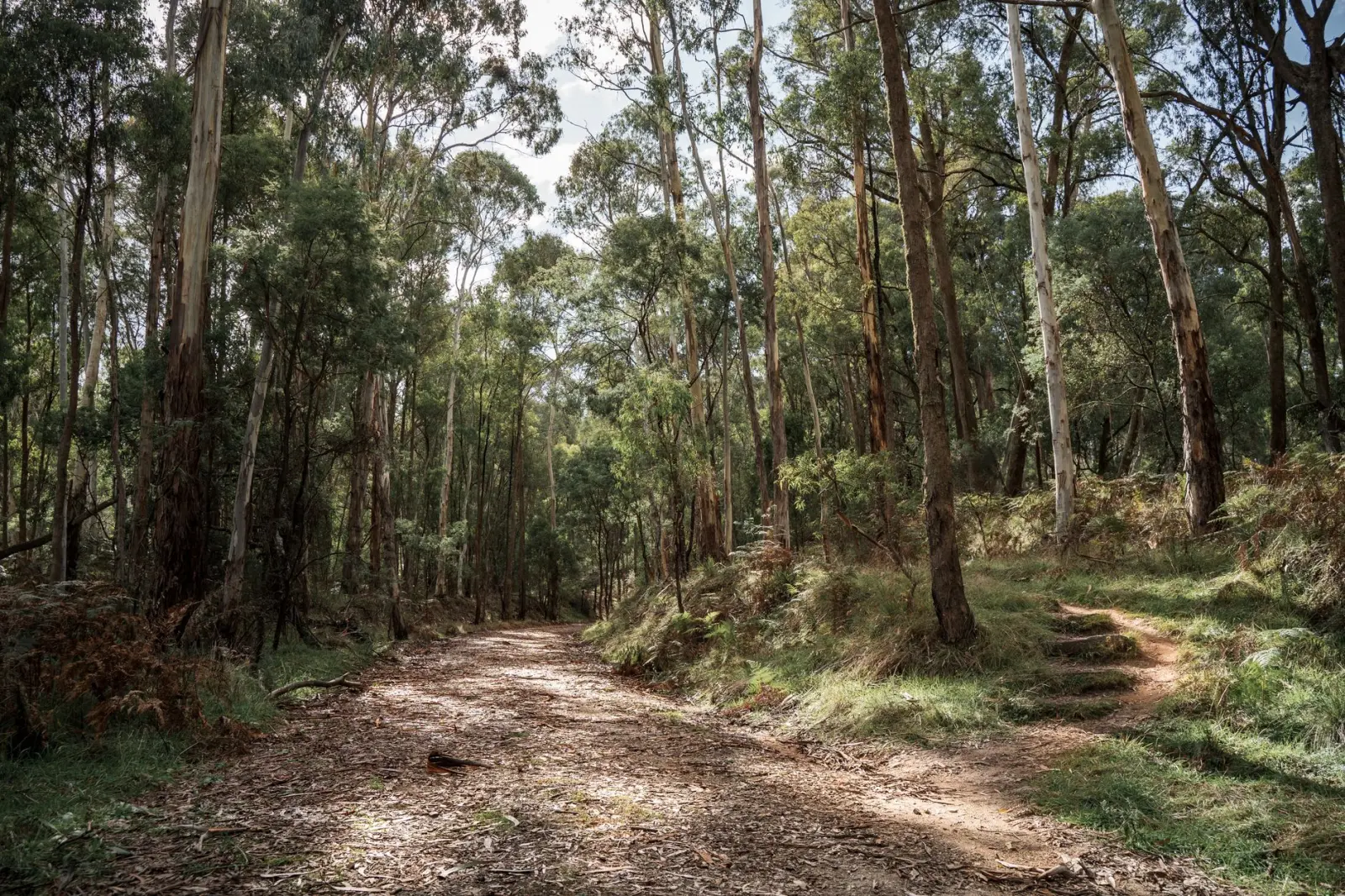
The forest itself is a mix of dry sclerophyll woodland at higher elevations and subtropical rainforest in the gullies. This transition isn’t gradual. You can step from relatively open eucalypt forest into dense canopy within a few hundred meters. The light changes noticeably. Temperature drops. Humidity climbs. Your sense of direction becomes less reliable because the forest closes in and landmarks disappear. This shift catches people’s attention quickly, but what matters more is understanding how it affects your pace and energy expenditure. Walking through closed rainforest requires constant attention to foot placement. The ground is uneven, often root-strewn, sometimes slippery even when it hasn’t recently rained. You move slower. Your legs work differently. People who’ve only walked open trails often don’t account for this physical difference.
Navigation and Trail Conditions
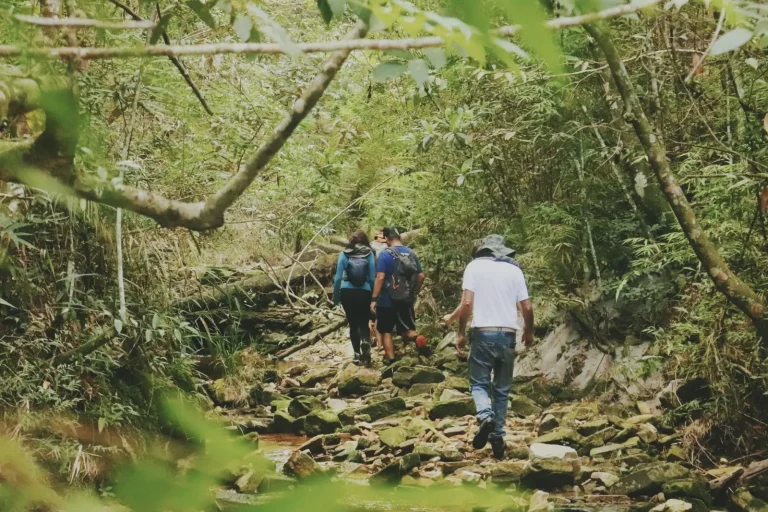
The marked trails are reasonably well-maintained, but “marked” doesn’t mean obvious. Blazes are there – paint marks on trees, sometimes cairns – but they’re spaced far enough apart that if you’re not actively looking for the next marker, you can drift off-trail without immediately noticing. This happens most often in the rainforest sections where the undergrowth is thick enough to obscure the actual path. I’ve watched experienced walkers miss turns because they were focused on foot placement rather than navigation. The forest floor is also deceptive. Fallen logs, dense ferns, and leaf litter can all conceal the trail, making it feel like you’re walking through wilderness when you’re actually still on the marked route.
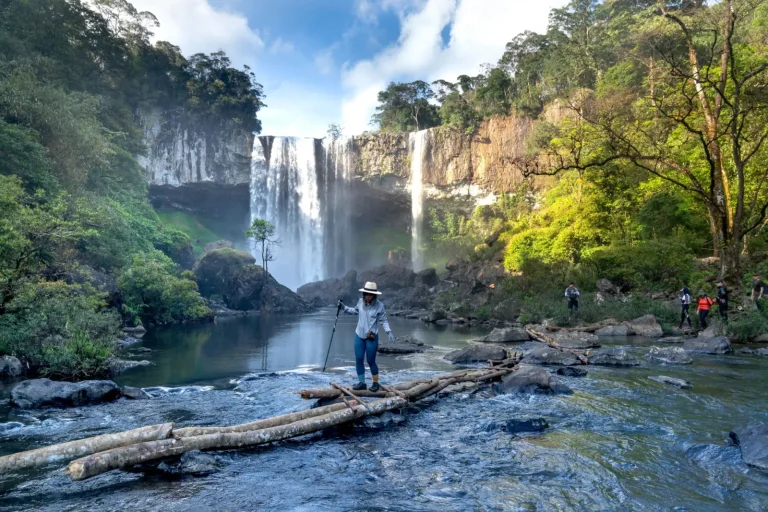
Water crossings appear on most longer walks. These aren’t typically dangerous, but they’re often underestimated. After rain, creeks swell quickly and the rocks become genuinely slippery. The water itself is cold year-round – it comes from high elevation and moves fast through the gullies. Crossing in poor conditions requires deliberate movement and proper footwear. I’ve seen people attempt creek crossings in inadequate shoes and nearly slip. The current isn’t strong enough to sweep you away, but a fall onto rocks is a real possibility. The other issue is that wet feet in cool forest conditions lead to rapid heat loss. People don’t always connect the dots between a creek crossing and the chill they feel thirty minutes later.
Weather Patterns and Seasonal Shifts
The weather in Gibraltar Range is influenced by elevation and proximity to the Great Dividing Range. Conditions at the trailhead can be completely different from conditions at higher points. Fog rolls in from the coast and settles in the gullies, particularly in autumn and early winter. I’ve watched visibility drop to ten meters in minutes. The temperature can fall several degrees in the same timeframe. This creates a genuine navigation problem because landmarks disappear and the forest becomes visually monotonous. Your sense of direction becomes unreliable when you can’t see more than a few meters ahead.
Summer brings heat and insects. The humidity in the rainforest sections is significant, and the lack of breeze means sweat doesn’t evaporate efficiently. Dehydration happens faster than people expect. The insects – particularly mosquitoes and March flies – are present and aggressive during warm months. Insect repellent helps, but it’s not a complete solution. Long sleeves and pants are genuinely more effective, though they increase heat stress. This creates a practical trade-off that people often resolve poorly by wearing minimal clothing and getting bitten repeatedly.
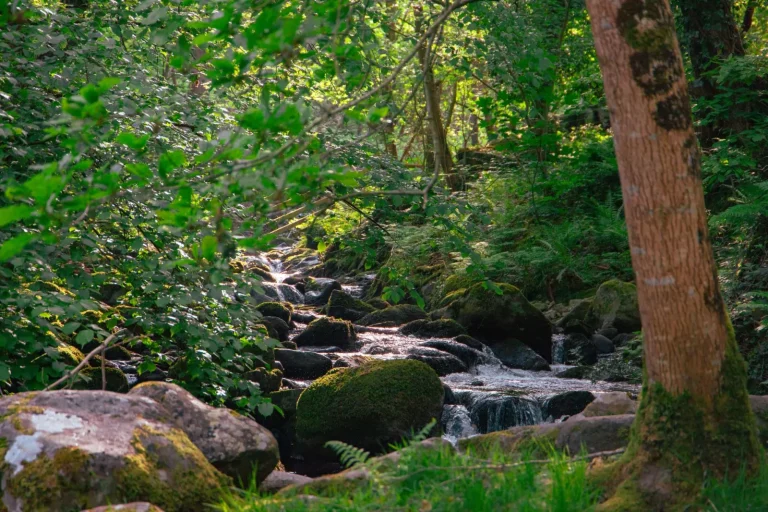
Winter and spring are generally the most pleasant walking periods. Temperatures are moderate, insect pressure is lower, and the risk of extreme weather is reduced. However, the forest is wetter during these seasons. Moss covers rocks and logs. The ground retains moisture longer. What looks like a stable surface might be slick underneath. I’ve found that winter walking here requires more careful foot placement than summer walking, even though the temperature is more comfortable.
Physical Demands and Pacing
The elevation gain on most Gibraltar Range walks is moderate – typically between 300 and 600 meters depending on the route – but the terrain makes it feel more demanding than the numbers suggest. The forest floor is rarely smooth. You’re constantly stepping over roots, navigating around rocks, and adjusting for uneven ground. This requires active engagement from your stabilizer muscles, not just your major leg muscles. Your ankles and hips work harder than they would on a well-maintained track. People who’ve trained for distance on flat or gently graded terrain often find Gibraltar Range more tiring than expected.
The descent is where this becomes obvious. Coming down through rainforest on a rooty, rocky trail places significant demand on your knees and ankles. The impact is repetitive and the terrain requires constant micro-adjustments. By the time people reach the bottom, their legs are often fatigued in ways they didn’t anticipate. This affects decision-making. Tired walkers make navigation errors. They move less carefully around water crossings. They’re more likely to slip or turn an ankle on unstable ground.
Pacing matters more here than on many other walks. Moving too quickly through this terrain increases injury risk without saving much time. The forest doesn’t reward speed. A steady, deliberate pace that allows for proper foot placement and navigation is more effective. I’ve noticed that people who start fast typically need to stop and rest more frequently than people who maintain a moderate pace from the beginning. The forest is patient. Rushing through it tends to backfire.
What People Typically Overlook
Most walkers arrive with adequate water and basic navigation tools. What they often miss is the cumulative effect of the forest environment. The combination of uneven terrain, navigation attention, humidity, temperature shifts, and physical engagement adds up. People underestimate how tired they’ll feel. They don’t account for the time lost to careful foot placement. They assume navigation will be straightforward because the trails are marked, then find themselves moving slowly through sections where the markers are spaced far apart.
Footwear is another area where people make poor choices. Trail running shoes with minimal ankle support are popular but not ideal here. The terrain benefits from boots or shoes with genuine grip and some ankle stability. Wet rocks and root-covered ground are slippery, and a twisted ankle in the forest is a genuine problem – you’re not close to help, and you still need to walk out.
The forest in Gibraltar Range is forgiving in most respects. It’s not technical climbing or exposed ridgeline walking. But it demands attention and respect. It rewards preparation and deliberate movement. The people who struggle most are typically those who treat it as a casual stroll rather than a walk that requires engagement with the environment. The forest doesn’t punish carelessness dramatically – you won’t face life-threatening situations on marked trails – but it does make careless walking uncomfortable and slower. That distinction matters when you’re several hours into a walk and still have significant distance to cover.