
The wet tropics draws people to waterfalls the way a magnet pulls iron. There’s something about the promise of cascading water, cool pools, and dense rainforest that overrides the usual hesitations. After spending years moving through these forests – sometimes guiding, sometimes just walking – I’ve learned that the gap between expectation and reality on these trails is wider than most people anticipate. The waterfalls themselves are real enough. What changes is everything else: the actual time required, the state of the track after rain, the crowds at certain times, and what your body feels like at the end.
The wet tropics region, primarily around Cairns and the Atherton Tablelands in Far North Queensland, sits in a climate that works against the hiker. High humidity, intense sun exposure despite the canopy, and the sheer density of vegetation all conspire to make even short walks feel longer than their distance suggests. A 4-kilometre return walk here doesn’t feel like a 4-kilometre return walk in the Blue Mountains or anywhere else. It feels like 6. Your legs know the difference between a gentle slope and a rainforest slope, even when the gradient looks modest on paper.
The seasonal factor matters more than most guides acknowledge. The “wet season” officially runs November through March, but the forest doesn’t follow a calendar. Waterfalls are most impressive after heavy rain, which sounds obvious until you’re standing at a trailhead realizing that the track is now a creek and the “short walk” has become a navigation puzzle. Conversely, in the dry season, some falls reduce to a trickle. The sweet spot – when water flow is good but the ground is stable – tends to be April through October, with May and June offering the most reliable conditions and the fewest crowds.
Josephine Falls and the Realities of Popular Routes
Josephine Falls, near Innisfail, is one of the most visited walks in the region. The track is well-maintained, the waterfall is genuinely impressive, and the walk itself is only 2.6 kilometres return. On paper, this sounds perfect. In practice, you’ll encounter crowds almost every day of the year, and the parking area fills early. If you arrive after 9 am on a weekend, you’re looking at parking on the roadside and adding time to your day. The walk itself is straightforward – mostly downhill on the way in, which means mostly uphill on the way out when you’re already tired. The pool at the base is swimmable and cold, which is welcome, but the rocks are slippery and the current is stronger than it appears. People slip here regularly. Nothing catastrophic usually, but enough that you notice the risk.
The real issue with Josephine Falls isn’t the walk itself. It’s the expectation management. Many people treat it as a quick morning activity, then feel disappointed because the experience is crowded and rushed. The walk works better as a deliberate outing where you arrive early, spend time at the pool, and accept that you’ll be sharing the space. The alternative is to visit on a weekday, which transforms the experience entirely. A Tuesday in June at Josephine Falls is a different proposition from a Saturday in July.
Millaa Millaa Falls and the Circuit Option
Millaa Millaa Falls sits on the Atherton Tablelands and offers something different: a proper circuit walk that includes two other falls – Zillie and Ellinjaa. This is a 6-kilometre loop that takes most people two to three hours depending on pace and time spent at each pool. The forest here is thick and the canopy is genuine protection from the sun, which matters when you’re walking in the tropics. The falls themselves are beautiful, and the circuit format means you’re not retracing your steps, which psychologically makes the walk feel less monotonous.
What tends to catch people out is the middle section. Between Millaa Millaa and Zillie, the track descends steeply and then climbs just as steeply. It’s only about a kilometre, but it’s where most people feel the cumulative effect of humidity and effort. The track surface is often wet, even when it hasn’t rained recently, because the forest floor stays moist. Proper footwear matters here – not just for grip, but for ankle support on the uneven ground. I’ve seen people turn back at this point, which is fine, but it’s worth knowing before you start.
Cedar Creek Falls and Lower-Traffic Alternatives
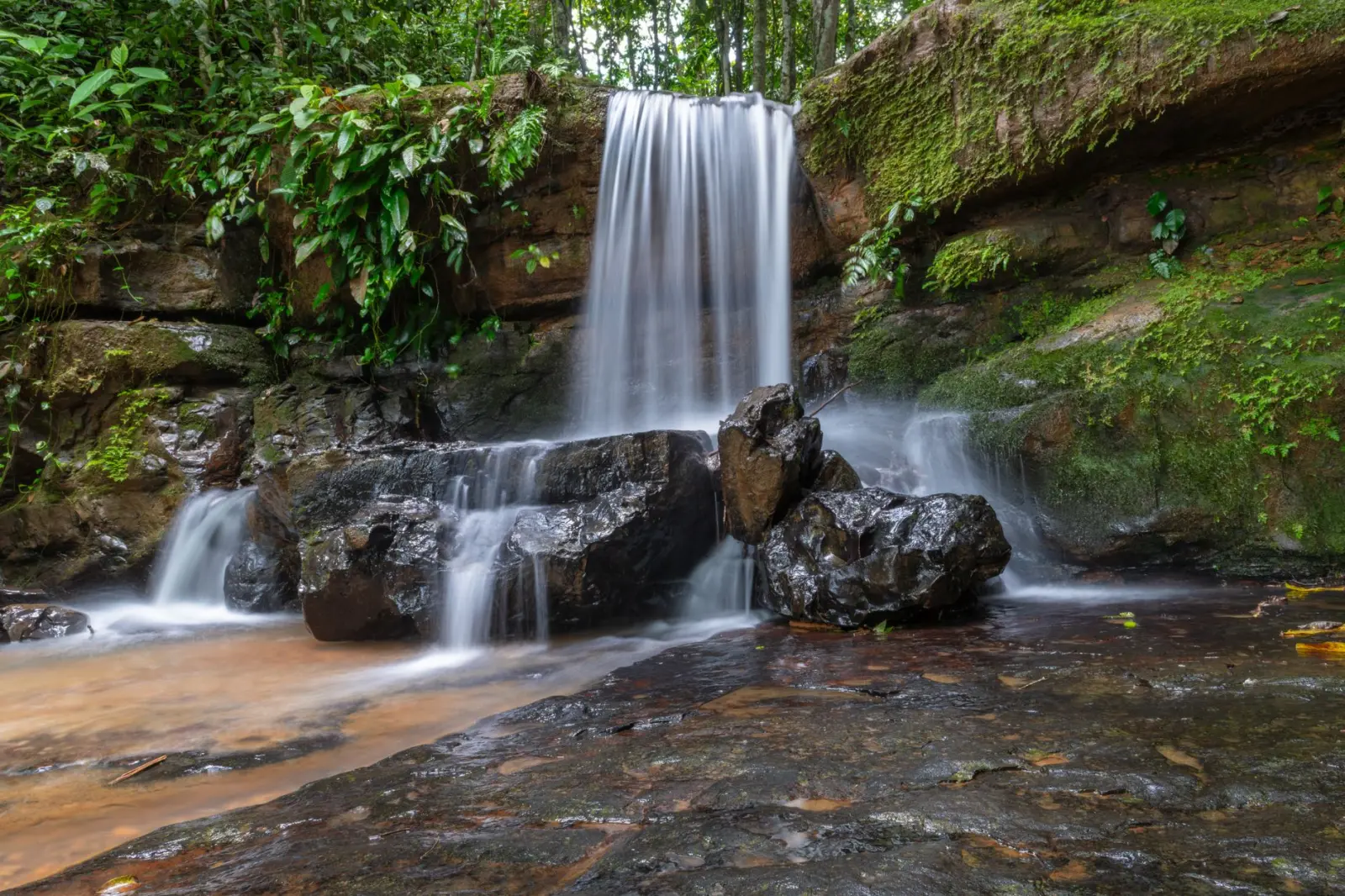
If crowds genuinely bother you, Cedar Creek Falls near Mena Creek offers a less-visited option. The walk is about 3 kilometres return, and it’s steeper than Josephine Falls. The payoff is solitude and a genuinely wild-feeling forest. The falls are smaller than some of the major attractions, but the setting is more intimate. The track can be muddy, and there are sections where the path is narrow and requires careful footing. This is the kind of walk where you actually need to pay attention, rather than moving on autopilot.
The trade-off with Cedar Creek is that it’s less maintained than the popular routes. After heavy rain, fallen trees can block the track. The parking area is tiny – maybe four or five cars. If you’re looking for a walk that feels like an actual forest experience rather than a tourist activity, this delivers. But it requires more self-sufficiency. You can’t rely on other people being around if something goes wrong.
Practical Realities That Matter
Water safety is the factor that most visitors underestimate. The pools at the base of these falls look inviting, and they are, but they’re also fed by fast-moving water and surrounded by slippery rocks. The current is deceptively strong. People drown in these pools most years. It’s not common, but it happens, usually to people who were confident swimmers or who didn’t perceive the risk. If you swim, do it cautiously. If you don’t, don’t start at a rainforest waterfall pool.
Insects are present but less of an issue than people expect. Mosquitoes exist, particularly in the wet season, but they’re not the swarm you might imagine. Leeches, however, are real. They’re not dangerous, but they’re unpleasant, and they’re more common on the ground after rain. Wearing gaiters or tucking your pants into your socks sounds absurd until you’re picking leeches off your ankles. Salt or insect repellent removes them quickly.
Fitness level matters more in the tropics than elsewhere. The combination of heat, humidity, and uneven terrain means that a walk that would be easy in a temperate climate becomes genuinely taxing. People regularly overestimate their capacity in these conditions. Starting early – before 8 am – makes a significant difference to how the walk feels. The forest is cooler, the light is better, and you’ll finish before the day’s heat peaks.
Navigation is straightforward on the main tracks. They’re well-marked and heavily trafficked. Getting lost isn’t the risk. The risk is overextending yourself and finishing the walk depleted. Bring more water than you think you need. Bring food. The forest doesn’t provide shade breaks in the way you might expect. There are places to stop, but you’re often standing on exposed rocks or in a small clearing. Having snacks and water means you can rest properly rather than just stopping to breathe.
The wet tropics is genuinely worth experiencing on foot. The walks are accessible, the scenery is unlike anywhere else in Australia, and the physical experience of moving through a rainforest is something that changes how you understand landscape. The key is approaching it with realistic expectations about timing, effort, and conditions. The waterfalls are real. The experience of reaching them is real. But so is the fatigue, the humidity, and the need for proper preparation. Respect those factors, and the walks deliver exactly what they promise.