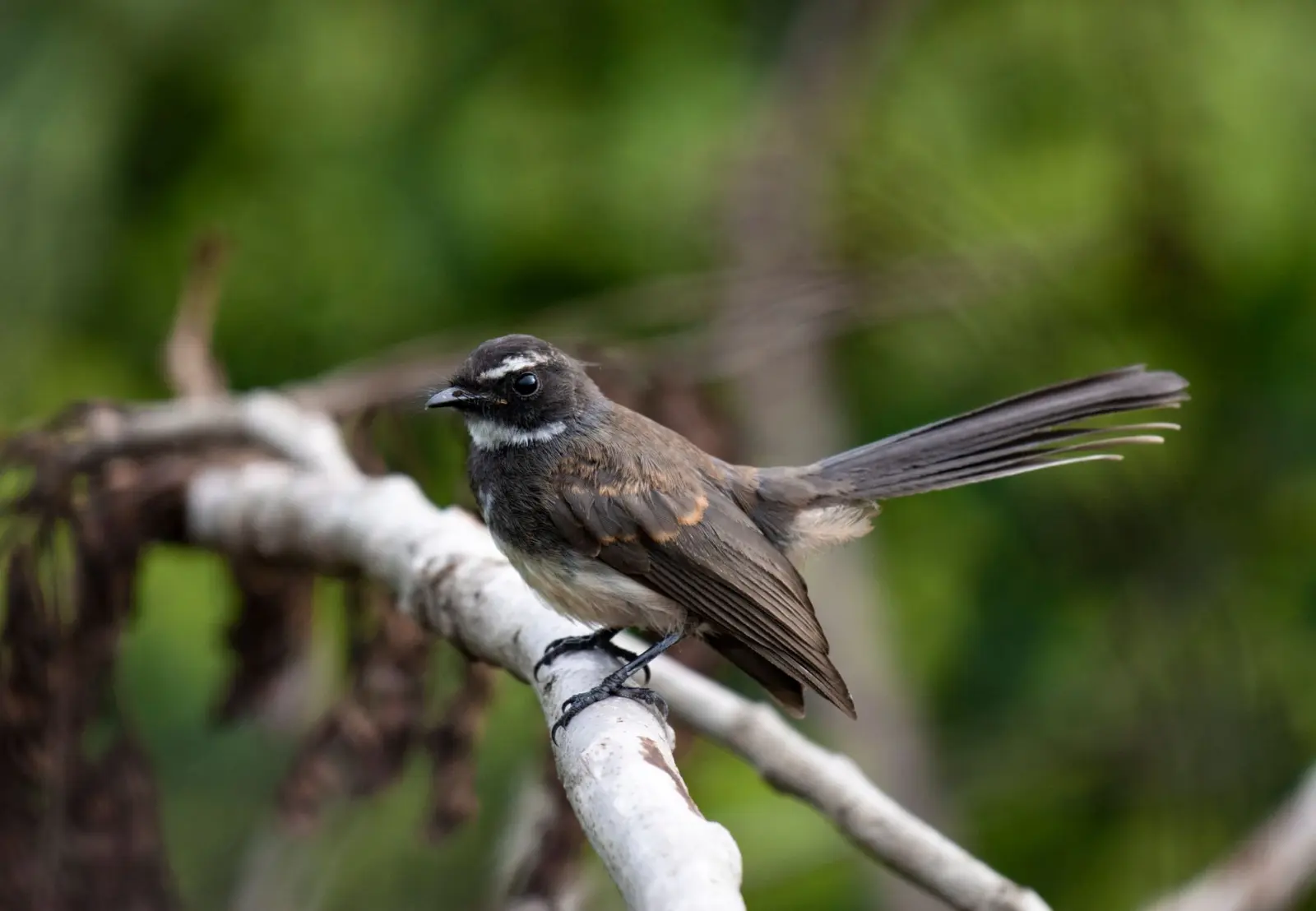
Rufous fantails are small, restless birds that inhabit the rainforests of northeastern Australia, and after spending considerable time watching them in their natural environment, I can tell you they’re far more active and unpredictable than most field guides suggest. They’re not the kind of bird you sit down and observe methodically. They move constantly, often in loose groups, and their presence is frequently announced by their sharp, repetitive calls before you actually see them. The distinctive reddish-brown plumage that gives them their name is visible enough in good light, but the rainforest canopy rarely offers ideal viewing conditions.
The rufous fantail’s relationship with the rainforest structure is worth understanding if you want to encounter them reliably. They’re not canopy specialists in the way that some larger birds are, nor are they ground feeders. Instead, they occupy the mid-story and lower canopy layers, moving between dense foliage and semi-open branches with equal comfort. This positioning keeps them close enough to dense cover to escape quickly, but exposed enough to spot aerial insects. I’ve noticed they tend to concentrate in areas where the canopy is broken or where flowering trees attract insect activity. During the wetter months, when insect populations peak, they’re more visible and vocal. In drier periods, they become harder to locate, though they don’t disappear entirely.
Feeding Behavior and Seasonal Patterns
Rufous fantails are insectivores, and their entire daily rhythm revolves around finding and catching small flying insects. What’s interesting is how their feeding technique differs from many other small rainforest birds. They don’t typically glean insects from foliage like some species do. Instead, they sally out from a perch, snapping insects out of the air with audible clicks, then return to the same or a nearby branch. This behavior makes them relatively conspicuous when they’re actively feeding, but it also means they’re most visible during peak insect activity hours – typically mid-morning and late afternoon. During the hottest part of the day, they become quieter and less active, spending more time sheltering in dense vegetation.
The seasonal availability of insects in the rainforest directly affects rufous fantail presence and behavior. During the breeding season, which typically runs from September through January in Queensland, they’re more territorial and vocal. Pairs establish feeding territories that they defend against other fantails, and this territorial behavior makes them more predictable in location, even if their movements remain erratic. Outside the breeding season, they become more nomadic, moving between different areas depending on where insect activity is highest. I’ve tracked the same general area over multiple years and noticed that fantail activity can vary significantly from one season to the next based on rainfall patterns and resulting insect populations.
Social Structure and Group Dynamics
Unlike many rainforest birds that are strictly solitary or pair-bonded, rufous fantails often move in small, loose associations. You might see a pair, or you might encounter four or five birds moving through the same section of forest together. These groups don’t appear to be family units persisting beyond the fledgling stage. Instead, they seem to be loose aggregations of individuals taking advantage of the same resource-rich area. The birds tolerate each other’s presence reasonably well, though occasional chasing and squabbling does occur, particularly when feeding opportunities are concentrated in a small space.
The vocalizations of rufous fantails are worth paying attention to if you’re trying to understand their social behavior. They have several distinct calls – a sharp, repeated “chip-chip-chip” that seems to function as a contact call, a more complex warbling that appears during territorial or courtship contexts, and various alarm calls. The contact calls are particularly useful for tracking their movements through dense vegetation. Once you learn to distinguish their calls from the dozens of other bird sounds in a rainforest, you can often locate them before you see them. This is practical knowledge that no amount of reading prepares you for; it requires time in the forest listening carefully.
Nesting and Breeding Challenges
Rufous fantails build small, cup-shaped nests suspended from thin branches, typically in the lower canopy or mid-story level. The nests are remarkably delicate structures, woven from spider web and plant down, and they’re surprisingly difficult to spot even when you know roughly where they are. During breeding season, if you locate a territory where a pair is actively defending space, there’s a reasonable chance a nest exists somewhere nearby, but finding it requires patience and luck. The birds don’t lead you directly to it; they’re cautious about revealing nest locations, particularly when humans are nearby.
Predation and nest failure are significant factors in rufous fantail breeding success. The small, exposed nests are vulnerable to various rainforest predators, and I’ve observed that nesting attempts often fail, particularly early in the breeding season. Pairs may make multiple nesting attempts throughout the season, and the birds seem to adjust their timing and location based on previous failures. Weather also plays a role – heavy rain can damage nests or reduce insect availability when chicks are being fed, both factors that increase breeding failure rates.
Practical Observations for Rainforest Visitors
If you’re spending time in Australian rainforests and want to encounter rufous fantails, there are patterns worth knowing. They respond to playback of their calls, though this should be used sparingly and responsibly. They’re more active in areas with mixed vegetation structure – not pure dense forest, but areas where the canopy is somewhat broken and flowering or fruiting plants are present. Early morning visits to rainforest edges and gaps tend to be more productive than midday walks. The birds are year-round residents in most of their range, so timing isn’t as critical as it is for migratory species, but seasonal variation in activity levels is noticeable.
One thing that often surprises people who spend time watching these birds is how much energy they expend relative to their body size. Rufous fantails are constantly moving, constantly calling, constantly feeding. There’s no downtime in their daily routine except during the hottest hours or in poor weather. This high activity level is necessary for their survival – small insectivorous birds have high metabolic demands and can’t afford to be inefficient. Understanding this helps explain their behavior patterns and why they seem so frantic compared to larger, more sedentary rainforest birds. It’s not nervousness or anxiety; it’s simply the reality of being a small predator in a competitive environment.