Walking through the Gondwana rainforests of northeastern Australia, you notice something that doesn’t quite fit the rhythm of modern ecosystems. The plants and animals around you move with a slowness that feels deliberate, almost archaic. Many of them have remained virtually unchanged for tens of millions of years, persisting in a landscape that has transformed dramatically around them. This isn’t accident or luck. It’s the result of specific geological and ecological conditions that have allowed these forests to function as a living museum of deep time.
The Gondwana rainforests exist as fragmented patches across the Queensland-New South Wales border, remnants of a vast forest system that once covered much of eastern Australia. What makes them unusual isn’t their size or their biodiversity alone, but their age and the evolutionary stasis they contain. Species found nowhere else on Earth – primitive flowering plants, ancient ferns, insects with lineages stretching back over 100 million years – persist here in concentrations found nowhere else. Understanding why requires looking at both the deep past and the present conditions that sustain these living relics.
The Gondwana Legacy and Continental Isolation
The story begins with the breakup of the supercontinent Gondwana around 80 to 100 million years ago. Australia separated from Antarctica and South America, drifting northward into warmer latitudes. This separation was not instantaneous. For millions of years, Australia remained connected to Antarctic landmasses through cooler, wetter climates that supported extensive rainforests across the continent. As Australia moved north and the climate gradually became drier, these forests retreated to refugial areas – pockets where conditions remained wet and stable enough to support rainforest vegetation.
The northeastern corner of Australia, where the Great Dividing Range meets the coastal lowlands, became one of these critical refugia. The combination of altitude, ocean influence, and orographic rainfall created a pocket of stability. Species that had evolved during the Gondwanan period – when Australia was still connected to other southern continents – found themselves isolated on an island continent. Unlike species in Africa, South America, or Southeast Asia, which could migrate across connected landmasses in response to climate shifts, Australian rainforest species had nowhere to go. They either adapted to the drying landscape or retreated into these shrinking refugial zones.
This isolation is fundamental. A species that persists in a small, stable habitat for 50 million years accumulates very little evolutionary pressure to change. There are no new predators arriving from adjacent continents. There are no competing species migrating in from neighboring ecosystems. The selective pressures that drive rapid evolution – invasion by new competitors, emergence of novel pathogens, shifts in food availability – remain muted. In the absence of major disturbance, stasis becomes the default condition.
Climate Stability as an Evolutionary Anchor
What strikes anyone who has spent time in these forests is their consistency. Year after year, the wet season brings reliable rainfall. Temperatures fluctuate within a narrow band. The forest floor remains damp. The canopy structure – the layering of vegetation from ground to emergent trees – remains relatively stable. This consistency is not universal in tropical rainforests. Many tropical systems experience significant seasonal variation or episodic droughts that force rapid adaptation or local extinction.
The Gondwana rainforests, by contrast, have experienced relatively minor climate fluctuations over the past 20 million years. During the ice ages that gripped much of the Northern Hemisphere, northeastern Australia remained warm and wet. The rainforests contracted and expanded slightly, but they never disappeared entirely. Species that had evolved under stable, warm, wet conditions never faced the intense selection pressure that comes from surviving a major climate shift. A plant that produces seeds once every three years, or an insect with a three-year lifecycle, can persist indefinitely in a stable environment. The same species would be rapidly eliminated in a system where drought or temperature swings create unpredictable mortality.
This stability has allowed species to maintain traits that would be selected against in more variable environments. Some Gondwanan plants produce seeds in very small quantities, relying on slow, steady recruitment rather than boom-and-bust reproduction. Some insects have lost the ability to enter dormancy, a trait that would be essential in a seasonal climate. These characteristics are not disadvantages in a stable forest; they simply reflect adaptation to conditions that have remained constant for millions of years.
The Role of Forest Structure and Microhabitat Persistence
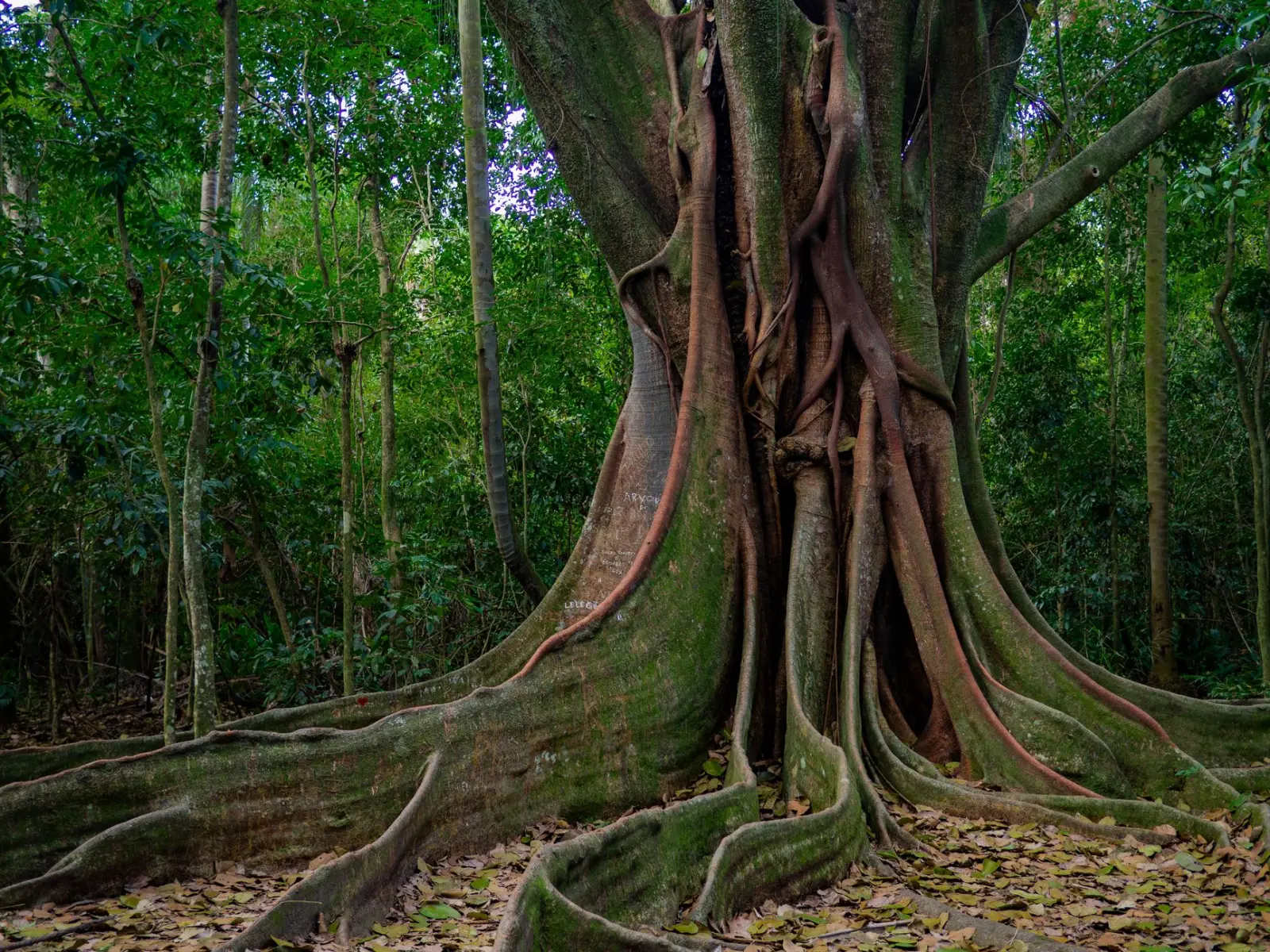
The physical structure of the Gondwana rainforests also contributes to the persistence of ancient species. These are not simple, uniform forests. They contain multiple canopy layers, a complex understory, and a diverse array of microhabitats – fallen logs in various stages of decay, epiphytic communities on tree branches, seepage areas with specialized vegetation. This structural complexity creates numerous ecological niches, each with its own set of conditions and selective pressures.
An organism that specializes in a particular microhabitat – say, the moist leaf litter beneath a specific type of fern, or the bark of a particular tree species – can persist for millions of years as long as that microhabitat remains available. In a more disturbed or simplified forest, such specialization would be a liability. But in a stable, structurally complex system, it becomes an advantage. The species avoids competition with generalists and occupies a niche that few other organisms can exploit.
The fallen logs deserve particular mention. In the Gondwana rainforests, large trees that die remain on the forest floor for decades, slowly decaying and providing habitat for countless species of fungi, invertebrates, and small vertebrates. This process of decay is slow and steady, not interrupted by fire or major disturbance. Species have evolved to exploit this predictable resource. Remove the fallen logs – as happens in managed or disturbed forests – and you eliminate habitat for organisms that have no alternative.
Limited Gene Flow and Genetic Conservatism
Fragmentation of the Gondwana rainforests has actually reinforced evolutionary stasis in some cases. When a population becomes isolated from others of the same species, gene flow stops. Without new genetic variation entering from outside, the population becomes more genetically uniform. This might seem like a disadvantage, but in a stable environment, genetic uniformity can reduce the variation that drives evolutionary change. If every individual in a population is well-adapted to local conditions, there is little advantage to producing offspring with different traits.
Many Gondwanan species exist in multiple isolated populations across the rainforest patches. These populations have been separated for thousands or even millions of years, yet they remain virtually identical to one another. This suggests that the selective pressures maintaining the ancestral form are strong and consistent across all populations. Any mutation that alters the basic body plan or life history is selected against because it reduces fitness in the stable rainforest environment.
The result is a kind of evolutionary conservatism. Species change very slowly, if at all. A plant species found in the Gondwana rainforests today might be nearly indistinguishable from its ancestor from 20 million years ago. This is not because evolution has stopped – mutation and selection continue – but because the selective environment has remained constant enough that the ancestral form continues to be optimal.
What Happens When Conditions Shift
The vulnerability of these evolutionary relics becomes apparent when conditions do change. Clearing of rainforest for agriculture or development removes habitat and increases isolation between remaining patches. This fragmentation can disrupt the gene flow that, while limited, still occurs between populations. Climate change introduces novel conditions – warmer temperatures, altered rainfall patterns – that species evolved for stable conditions may not tolerate well.
Many Gondwanan species have narrow thermal tolerances. They evolved in a warm, wet environment and have no experience with the physiological stress of temperature extremes or drought. A warming trend that might be minor in other ecosystems can be catastrophic for species with no evolutionary history of dealing with such variation. Similarly, species with specialized habitat requirements cannot easily shift to new areas if their current habitat becomes unsuitable.
The very traits that allowed these species to persist for millions of years – specialization, narrow ecological requirements, slow reproduction – become liabilities in a rapidly changing world. A generalist species that reproduces quickly and tolerates a wide range of conditions can adapt to new circumstances. A specialist that has remained unchanged for 50 million years cannot. This is why conservation of the Gondwana rainforests is not simply about preserving biodiversity in the abstract, but about maintaining the conditions that allow these living fossils to continue existing.