Spending time in Australian rainforests means you will encounter flying foxes. They are not rare or hidden – they are woven into the daily rhythm of these forests, especially in the wet tropics of Queensland and parts of northern New South Wales. If you visit during the right season or camp near fruiting trees, you will hear them before you see them. The noise alone catches most people off guard. A colony of hundreds or thousands of flying foxes creates a sound that is part screech, part argument, part chaos. It is not the quiet, orderly behaviour many expect from wildlife.
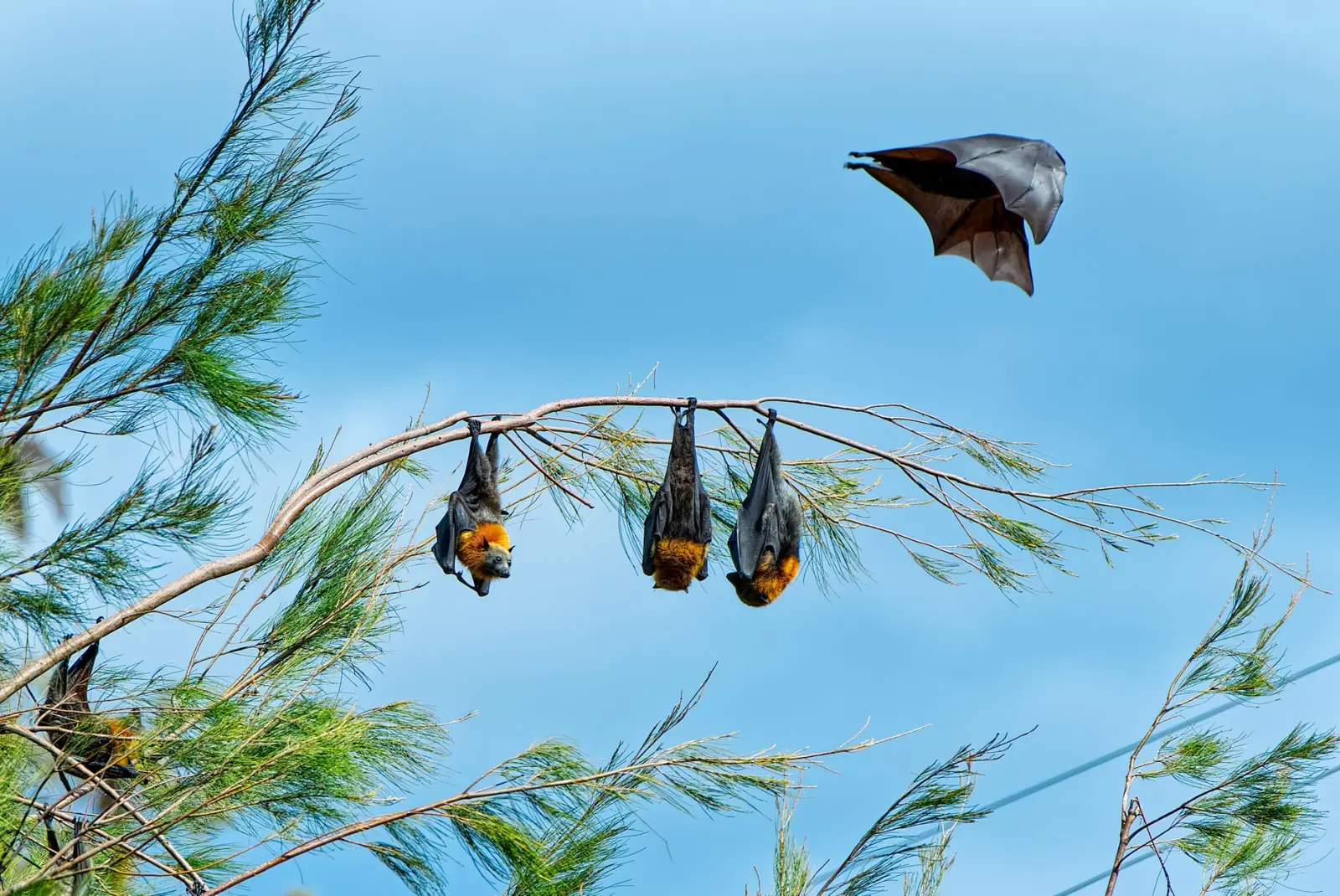
What strikes you first is their sheer size. Flying foxes are not small bats. The larger species, particularly the black flying fox and the spectacled flying fox, have wingspans that can exceed a metre. When they move through the canopy at dusk, their silhouettes are unmistakable. They do not flit and dart like smaller bat species. Their flight is deliberate and heavy, more like a bird than the aerial acrobatics people associate with bats. This matters when you are trying to identify them in low light or when they pass overhead in groups.
Seasonal Patterns and Movement
Flying fox presence in any given rainforest area is not constant. They follow fruit availability, which means their camps shift across the landscape through the year. In the wet season, when fig trees and other fruiting species are abundant, colonies establish themselves in particular groves or sections of forest. By the dry season, they may have moved on to other areas where food remains available. This is not random wandering – it is a predictable pattern once you understand the fruiting cycles of the forest.
The camps themselves are temporary but substantial. A single camp can hold thousands of individuals hanging from the same trees, often the tallest emergent species in the forest. The weight and constant movement of these animals causes visible damage to branches. You will see trees with broken limbs, stripped bark, and a distinctive appearance of overuse. The ground beneath a camp is covered in fallen fruit, droppings, and debris. The smell is intense – a combination of fermenting fruit and animal waste that becomes part of the sensory experience of being near an active camp.
Behaviour and Daily Rhythms
Flying foxes are active primarily at night, but their day is not silent. In the late afternoon, as light begins to fade, activity in the camp intensifies. There is constant movement, vocalisation, and what appears to be jostling for position. Some of this is genuine conflict – males competing for space or females, territorial disputes, or simply the friction of thousands of animals in close proximity. The noise peaks around dusk and continues through the night as they forage.
When they leave to feed, they do so in waves. You might see dozens or hundreds departing in the same direction, heading toward known food sources. Rainforest figs are a primary target, but they also feed on eucalypt flowers, native fruits, and cultivated crops at the forest edge. They navigate using a combination of memory and smell, following established routes each night. If you are camped near a fruiting tree, you will witness the arrival of feeding bats. They are not delicate feeders. They grasp fruit, bite into it, extract juice and soft pulp, then drop the remainder. A feeding session by a group of flying foxes leaves the ground beneath a tree littered with partially consumed fruit.
Practical Realities for Visitors
If you are planning to spend time in rainforest areas where flying foxes are present, there are practical considerations that matter. The smell of an active camp carries significant distance. If you are camping or staying in accommodation near a major camp, you will notice it. Some people find it unpleasant; others become accustomed to it quickly. The noise is similar – it is present and noticeable, particularly in the hour or two after sunset and before dawn.
Disease risk is often overstated in casual conversation but worth understanding accurately. Flying foxes can carry viruses, including Australian bat lyssavirus and Hendra virus. Direct contact is the primary risk factor. Bats do not attack people, and they do not become aggressive unless handled or threatened. The practical risk to a visitor who observes them from a distance is minimal. Handling a sick or injured bat, or consuming fruit that has been contaminated by bat saliva without washing it first, represents a genuine but manageable risk.
The best time to observe flying foxes is during the transition hours – late afternoon when they become active in the camp, or early morning when they return. Binoculars are useful if you want to see detail, but they are not essential. The behaviour is visible from the ground even without magnification. If you are interested in photography, the light conditions during these periods are challenging, and the constant movement of the animals makes tracking them difficult. Patient observation from a fixed position tends to yield better results than trying to follow individual animals.
Ecological Role and Forest Health
Flying foxes are not incidental to rainforest ecosystems – they are fundamental. As they feed on fruit and flowers, they disperse seeds across the landscape. Undigested seeds in their droppings establish new plants in areas far from the parent tree. For flowering trees, they are essential pollinators. The relationship between flying foxes and rainforest plants is so close that some tree species have evolved flowers and fruiting patterns specifically timed to flying fox activity.
The presence of a healthy flying fox population is often an indicator of forest health. If colonies are absent or significantly reduced, it usually signals broader ecological stress. Habitat loss, food scarcity, or environmental change affects flying fox numbers before it becomes obvious in other ways. In this sense, they function as an early warning system for the forest itself. When you encounter a large, active camp, you are looking at a forest that is still functioning well enough to support substantial wildlife populations.
Over the years of observing these animals in rainforest settings, what becomes clear is that flying foxes are neither mysterious nor particularly difficult to understand. They follow predictable patterns based on food availability and seasonal change. They are large, vocal, and present. They fill an essential ecological role. For a visitor to Australian rainforests, they are simply part of what makes these forests work – visible, audible, and integral to the ecosystem you are moving through. Understanding their basic patterns and behaviour removes much of the uncertainty around encounters and allows you to appreciate them as the functional, necessary animals they are.